
The Race for London’s Sky: Balancing Density and Livability in a Growing City
As London grapples with increasing housing demand, the debate intensifies over how to build upwards responsibly, ensuring new developments enhance rather than detract from the city's unique character and the quality of life for its residents.


The relentless pressure of population growth and housing demand in London has placed the city’s skyline under an unprecedented spotlight. The question is no longer *if* London needs to build more, but *how* and *where*. As the metropolis seeks to accommodate a rising population, the debate over increasing urban density, particularly through vertical development, has become a defining characteristic of contemporary urban planning discourse. This column explores the intricate balancing act required to foster necessary density while safeguarding the very qualities that make London a desirable place to live and visit.
Why This Matters
London, like many global cities, faces a dual challenge: a critical shortage of affordable housing and the imperative to accommodate future growth sustainably. The concept of “building up” is often presented as the most straightforward solution. Higher density can lead to more efficient land use, reduced urban sprawl, and potentially lower infrastructure costs per capita. Furthermore, well-designed tall buildings can become iconic landmarks, contributing to a city’s unique identity and economic vitality. However, the pursuit of density can also lead to a range of negative consequences if not managed with foresight and sensitivity. These include overshadowing, loss of sunlight, increased wind tunnel effects, strain on existing infrastructure, and the erosion of established neighbourhood character. For Londoners, the impact is deeply personal, affecting their daily environment, access to light and green space, and the overall liveability of their communities.
What Sources Show
Official policy documents from the Greater London Authority (GLA) and various borough councils consistently advocate for increased housing delivery, often referencing density as a key strategy. The London Plan, for instance, sets ambitious housing targets and promotes higher densities in areas with good public transport access. Transport for London (TfL) also plays a role, identifying Opportunity Areas around its network where significant development, including taller buildings, is encouraged to maximise the return on public transport investment.
However, a review of planning applications and appeals reveals a persistent tension. While the strategic intent is clear, individual proposals for tall buildings frequently face local opposition citing concerns over the impact on the existing streetscape, heritage assets, and the quality of public realm. Specialist publications and research groups, such as the Commission for Architecture and the Built Environment (CABB) and various urbanism think tanks, often highlight case studies where density has been successfully integrated, but also where poorly conceived high-rise developments have negatively impacted the urban fabric.
A compact table illustrates the typical considerations in assessing tall building proposals in London:
| Consideration | Description | Potential Impacts |
|---|---|---|
| Urban Context & Character | How the building fits within its immediate surroundings and the wider city. | Loss of historic views, visual disharmony, impact on sense of place. |
| Scale & Massing | The size, shape, and bulk of the building. | Overshadowing of public and private spaces, wind effects, overwhelming street level experience. |
| Public Realm Integration | How the building addresses the street and interacts with public spaces at ground level. | Poorly designed ground floors can create dead frontages, unsafe or unpleasant pedestrian environments. |
| Infrastructure Capacity | The ability of existing services (transport, utilities, schools) to cope with increased population. | Overcrowding on public transport, strain on utilities, inadequate local services. |
| Environmental Impact | Energy performance, material use, and impact on local microclimate (sunlight, wind). | Increased energy demand, contribution to urban heat island effect, reduced daylight access for neighbours. |
| Housing Mix & Affordability | The type and affordability of housing provided within the development. | May not address the most pressing housing needs if not genuinely affordable or if it displaces existing residents. |
Competing Readings
One reading of the situation is that London is simply following a global trend towards urban intensification, a necessary evolution for a thriving capital. Proponents argue that clinging to low-density development is an outdated model that exacerbates sprawl and car dependency. From this perspective, resistance to tall buildings is often seen as nimbyism – a desire to preserve the status quo at the expense of future generations’ housing needs. They point to successful examples of high-density, high-quality urban living in cities like Singapore or parts of continental Europe, suggesting that with the right design and planning, density can enhance, not diminish, urban life.
Conversely, a significant counter-argument emphasizes the intrinsic value of London’s historic fabric and its human scale. Critics of rapid vertical development warn against a “Manhattanisation” of London, where unique neighbourhood character is sacrificed for generic towers. They argue that true livability is not just about housing numbers, but about access to light, air, green space, and a sense of community – elements that can be profoundly undermined by poorly sited or designed high-rise buildings. This perspective often champions a more nuanced approach to density, favouring mid-rise developments, sensitive infill, and the regeneration of underutilised brownfield sites over the wholesale replacement of existing urban forms.
What Remains Unclear
The precise long-term impact of current development trends on London’s social equity and environmental resilience remains a subject of ongoing research and debate. While density is promoted as a solution to housing affordability, evidence suggests that many new, high-density developments do not deliver genuinely affordable homes, or can inadvertently lead to gentrification and displacement. Furthermore, the cumulative environmental impact of widespread high-rise construction – from material sourcing to energy consumption and the exacerbation of urban heat island effects – requires more robust, long-term analysis. The challenge lies in developing measurable metrics that truly capture “livability” beyond simple population density figures, and ensuring these metrics are embedded in planning decision-making.
Practical Checks for Londoners
For London residents concerned about development in their area, several practical steps can be taken:
Engage with Local Planning Authorities: Understand your borough’s Local Plan and any specific policies relating to tall buildings or development in your neighbourhood.
2. Review Planning Applications: Monitor planning portals for applications affecting your street or local area. Many councils have online systems where you can view plans, make comments, and track decisions.
3. Understand Design Guidance: Familiarise yourself with London-wide and borough-specific design guides, which often set out principles for good tall building design and public realm integration.
4. Join Community Groups: Local residents’ associations and amenity groups often campaign on planning issues and can provide collective advocacy.
5. Focus on Specific Impacts: When commenting on applications, focus on tangible impacts such as overshadowing, loss of privacy, impact on heritage, or inadequate infrastructure, rather than broad objections to development itself.
The future of London’s skyline is a complex negotiation between the undeniable need for growth and the imperative to preserve the city’s soul. Successful urbanism will require a commitment to not just building *more*, but building *better* – with designs that enhance density, foster community, and ensure London remains a truly livable city for all.
Related updates

Seattle-Area Race Highlights Diverging Approaches to Housing, Transit and Tech Taxation
A Washington State legislative race in the 32nd District pits incrementalism against urgency on housing supply, transit funding and tech regulation, with…
Read update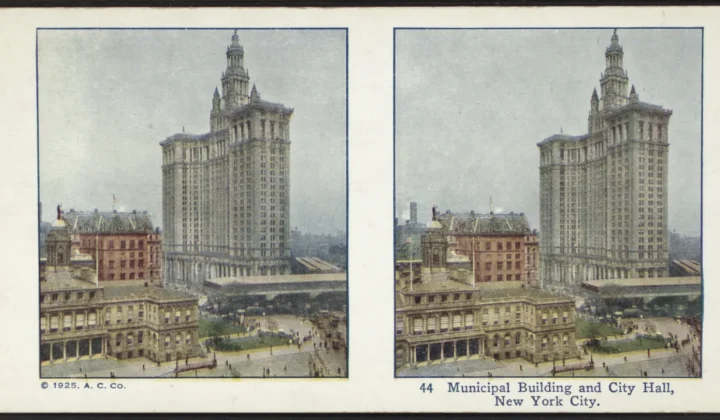
New York court ruling on sanctuary policies carries implications for city-level immigration enforcement across the US
A federal judge has dismissed the Trump administration’s attempt to override New York City’s restrictions on immigration enforcement cooperation, citing state sovereignty.…
Read update
Automated license plate readers raise privacy, contract and oversight questions for UK cities
A new US-focused analysis of automated license plate recognition cameras highlights contract, privacy and oversight issues that London boroughs and Transport for…
Read update
Oregon’s “fix it first” dilemma: what London’s transport planners can learn from a revolt against megaprojects
Surveys show Oregonians overwhelmingly want existing roads repaired before new megaprojects are funded, and trust in the state’s transport agency has collapsed.…
Read updateWiki relacionada

Transport for London: The Backbone of Transit, Street and Service Reporting
Transport for London (TfL) is the UK’s most comprehensive source for transit data, street management and service-quality reporting. This reference page explains…
Read update
Transport for London: The Backbone of Transit, Street and Service Reporting
Transport for London (TfL) operates the city’s buses, Tube, trams, river services, roads and cycling infrastructure. This reference page explains how TfL…
Read update
Understanding the London Plan: A Guide to the Capital’s Spatial Development Strategy
The London Plan sets the strategic framework for development, housing, transport and the public realm across the capital. This guide explains its…
Read update
Transport for London as a Source for Transit, Street and Service-Quality Reporting
Transport for London is one of the most comprehensive urban data providers in the world. This reference page explains how journalists, planners…
Read update