
Understanding the London Plan: A Guide to the Capital’s Spatial Development Strategy
The London Plan sets the strategic framework for development, housing, transport and the public realm across the capital. This guide explains its structure, key policies and how you can engage with the next review.
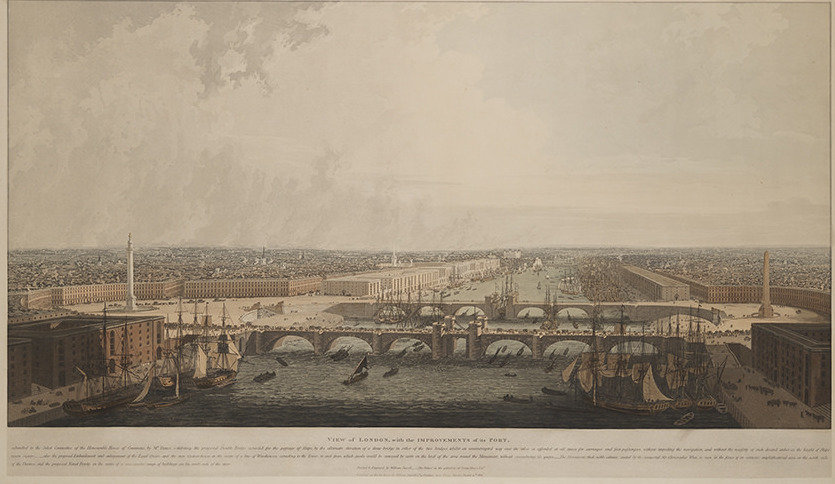
Every London borough operates under its own local development framework, but above those local documents sits a single overarching spatial strategy that dictates the capital’s physical growth. Officially designated as the Spatial Development Strategy for Greater London under the Greater London Authority Act 1999, the London Plan is drafted and published by the Mayor of London to coordinate land use, economic development, transport infrastructure, and environmental protection across all 32 boroughs and the City of London. Practitioners navigating the planning system, developers preparing major site applications, and community groups challenging inappropriate urban interventions must understand how this strategic document supersedes or shapes local borough rules. Official guidance and source documentation can be referenced directly through the Greater London Authority portal at https://www.london.gov.uk/programmes-strategies/planning/london-plan.
Core Legal Status and Borough Alignment
The statutory weight of the London Plan derives from primary legislation, requiring local planning authorities to ensure their individual local plans are in general conformity with the mayor’s broader spatial vision. This means a borough council cannot unilaterally adopt housing targets, employment land re-designations, or design codes that actively contradict the spatial priorities established at the regional level.
When a draft local plan goes through examination, the appointed planning inspector rigorously tests its alignment with the London Plan. If a local authority attempts to suppress housing delivery numbers or lower environmental performance standards below the baseline set by the Greater London Authority, the Mayor possesses formal intervention powers to direct binding modifications. Consequently, applicants and objectors alike find that local planning decisions are ultimately anchored in regional policy compliance.
Document Structure and Key Policy Chapters
Adopted in March 2021 after extensive public examination, the current iteration of the London Plan spans twelve distinct chapters addressing specialized urban planning domains. Each chapter pairs overarching objectives with detailed policy statements and explicit numerical metrics that govern development control.
Chapter Focus Area Primary Policy References Core Implementation Metric
Good Growth GG1 to GG6 Sustainable development, inclusion, and health integration London’s growth must support equal access to economic opportunities and social infrastructure.
Spatial Development SD1 to SD10 Opportunity areas, town centres, and regeneration frameworks Focus growth in areas with high public transport accessibility levels (PTALs).
Design Quality D1 to D14 Architecture, public realm, security, and tall buildings Strict criteria restricting tall buildings to designated zones without harming strategic views.
Housing H1 to H13 Strategic housing targets, density, and affordable provision Enforces a baseline strategic housing target alongside threshold approaches to affordable homes.
Economy E1 to E11 Offices, industrial land, workspace retention, and retail Protects industrial land and restricts unmitigated loss of employment floor space.
Housing Targets and Density Frameworks
The delivery of new homes represents one of the most contentious elements of the regional strategy. Under Policy H1, the plan establishes an aggregated strategic housing target requiring thousands of new completions across the capital annually. To distribute these numbers, the GLA evaluates local capacity through strategic housing land availability assessments.
Rather than relying on rigid density maximums, the current plan deploys a design-led approach tied to public transport accessibility levels, known as PTAL scores ranging from 0 to 6b. Sites located near major transport interchanges with high PTAL ratings are expected to accommodate higher residential densities. Furthermore, Policy H6 enforces a threshold approach to affordable housing, requiring major residential schemes to meet specific percentage minimums without public subsidy unless rigorous financial viability testing proves otherwise.
Tall Buildings and Heritage Protection
Managing vertical growth across a historic urban landscape requires strict spatial controls. Policy D9 of the strategic plan dictates that tall buildings—defined locally by boroughs, typically anything significantly taller than surrounding context—must be directed to specific, pre-allocated zones within local plans.
Applicants must prove that proposed towers do not compromise the integrity of designated London protected vistas, historic parks, world heritage sites, or conservation areas. A comprehensive townscape, landscape, and visual impact assessment is mandatory for these applications, giving local communities tangible grounds for objection if a scheme overwhelms the existing human scale or damages local microclimates and daylight access.
Green Infrastructure and Climate Resilience
Environmental protection is embedded deeply within the strategic framework to counteract the urban heat island effect and manage flood risks. Policy G2 offers stringent protection to the metropolitan green belt, prohibiting inappropriate development unless very special circumstances are successfully argued. Similarly, Metropolitan Open Land receives equivalent safeguarding to prevent the gradual erosion of urban green space.
Complementing green space policies, the sustainable infrastructure chapters mandate strict carbon reduction targets for all major developments. Schemes must demonstrate net-zero carbon performance through energy efficiency measures, on-site renewable energy generation, and contributions to carbon offset funds managed by the respective local authorities.
Engaging with the Next Plan Review Cycle
The Greater London Authority continuously monitors the implementation of the 2021 strategy, initiating periodic reviews to adapt to macroeconomic shifts, housing demand updates, and climate policy evolutions. Stakeholders wishing to influence future iterations can participate at distinct statutory consultation milestones.
The initial phase typically involves an issues and options consultation, inviting public bodies, professional institutes, and community networks to submit evidence on emerging urban challenges. Once a draft replacement plan is formulated, a formal consultation period opens via the GLA online engagement portal, where detailed, evidence-backed submissions carry significantly more weight than generic form letters.
Following consultation, the Secretary of State oversees an independent examination in public, during which appointed planning inspectors evaluate contested policy areas through formal hearings. Monitoring these stages enables developers to anticipate policy pivots and empowers local residents to protect community amenity before regional strategies become legally binding.
Historial de cambios
Ultima revision y actualizacion: 31 July 2026.
Latest related updates

Washington state election result has no London planning consequence — item held for review
An Urbanist report on Democratic gains in the Washington State House is being held rather than published: it concerns US state electoral…
Read update
Record Campaign Spending in Washington State Prompts Questions About Money in Local Planning Politics
A Seattle specialist outlet reports unprecedented corporate and billionaire spending ahead of the 2026 US midterms, including a Microsoft-backed PAC targeting a…
Read update
Post-storm waste collection is a resilience test London boroughs cannot schedule
A look at how two US cities treated storm debris clearance as a pre-planned system rather than an emergency scramble, and what…
Read update
Chicago’s sewage overflows are a warning for London’s combined sewers
Chicago's Racine Avenue pumping station has discharged more than 10 billion gallons of combined sewage into the Chicago River this year, despite…
Read update