
Dar es Salaam’s Public Transport Future Shaped by Jakarta and Dakar’s BRT Successes
A recent study tour saw Dar es Salaam officials visit Jakarta and Dakar to learn from their established Bus Rapid Transit systems, focusing on institutional strength, sustainable financing, and contracting models to guide the Tanzanian city's expanding network.
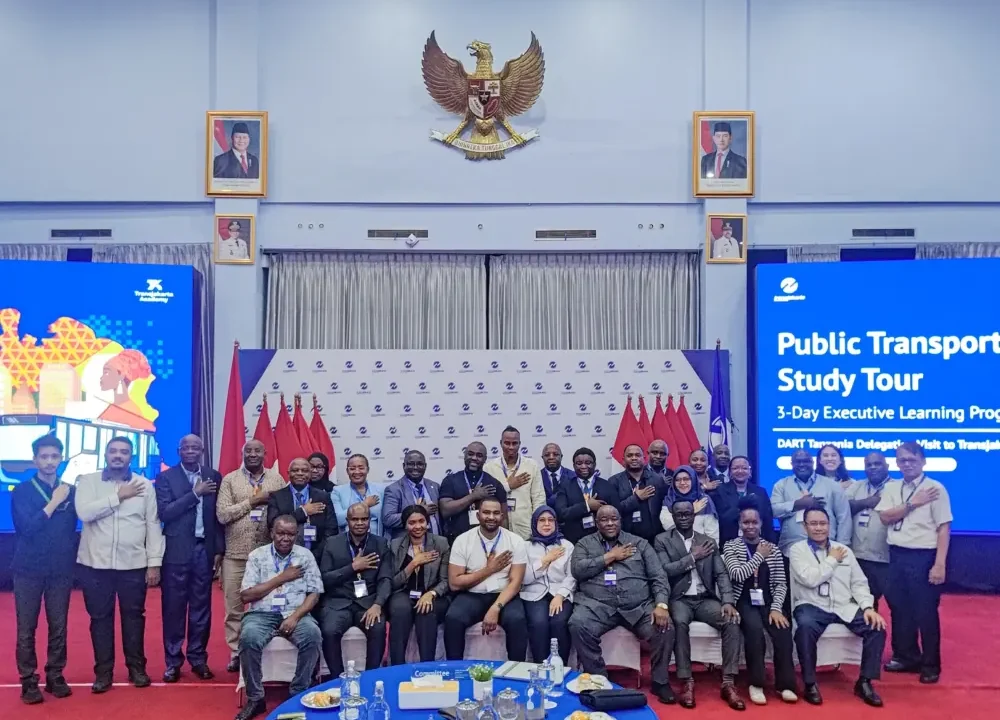
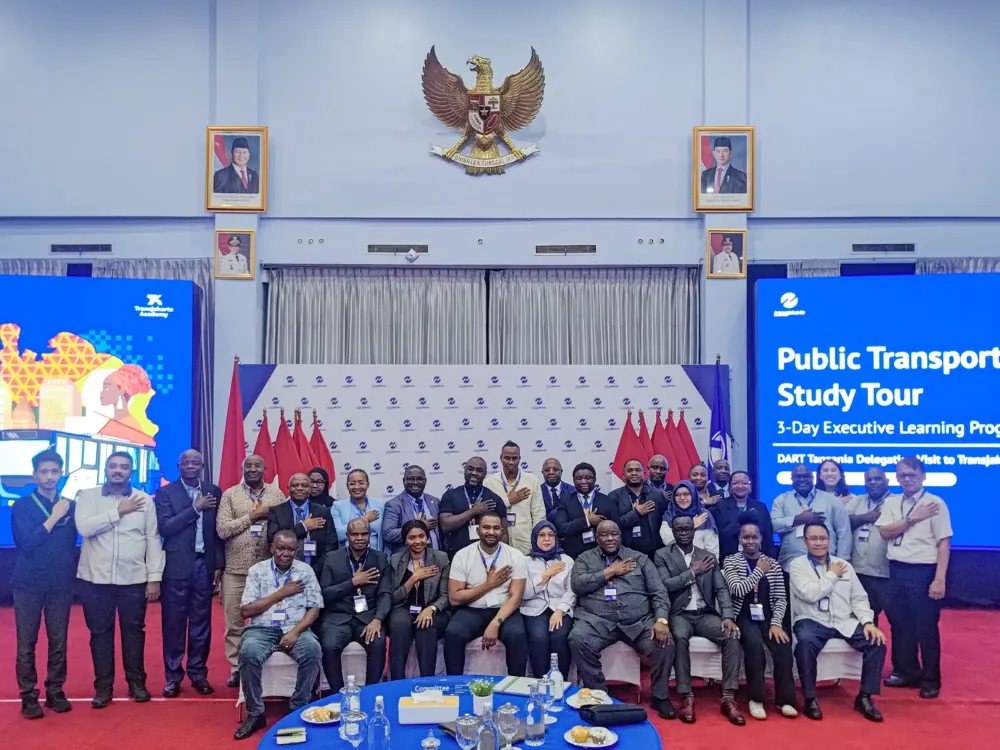
Dar es Salaam is at a critical juncture in its public transport development, with its Bus Rapid Transit (BRT) system already serving passengers and further corridors under construction. To ensure the long-term success and sustainability of its growing network, representatives from Dar es Salaam’s transport authorities, government ministries, and public transport operators recently undertook a study tour to Jakarta, Indonesia, and Dakar, Senegal. The visit, organised by ITDP Africa with support from the World Bank’s Dar es Salaam Urban Transport Improvement Project (DUTP), aimed to facilitate knowledge exchange and draw on the experiences of these two cities, which offer distinct yet valuable lessons for Dar es Salaam’s transport future.
The study tour focused on understanding the institutional frameworks, financial models, and operational contracting structures that underpin successful BRT systems. As Dar es Salaam expands its infrastructure, the emphasis is shifting from the initial build-out to the complex task of establishing robust governance and management practices that will support sustained high-quality service delivery.
Institutional Foundations for Growth
A key takeaway from the visit was the importance of strong, dedicated institutions in managing and evolving urban transport networks. In Jakarta, the delegation observed how TransJakarta has grown from a single BRT corridor into a comprehensive citywide mobility system over two decades. This expansion has been underpinned by a clear division of responsibilities: the Jakarta Provincial Government sets policy and provides funding, while TransJakarta acts as the central coordinating body, overseeing infrastructure, fare integration, service planning, and network operations. Private operators are engaged through performance-based contracts, ensuring a clear alignment of incentives with service quality.
Dakar’s experience highlighted the critical role of a dedicated transport authority. CETUD has been instrumental in coordinating efforts to realise an ambitious vision, including the development of one of Africa’s first Bus Rapid Transit (BRT) systems. CETUD’s function in bringing together various government agencies, managing concession agreements, and overseeing the broader public transport network restructuring has created the institutional foundation necessary for successful long-term partnerships between public and private entities. The delegation noted how clear responsibility allocation, effective contract management, and consistent stakeholder coordination foster trust and ensure that investments translate into reliable passenger service.
Sustainable Financing and Affordable Fares
Maintaining affordable fares while ensuring financial viability is a persistent challenge for public transport systems globally. Both Jakarta and Dakar demonstrated approaches that treat fare affordability as a public policy objective. Jakarta has managed to keep its base fare at approximately USD 0.21 for nearly two decades, even as its network expanded and operating costs increased. This has been achieved through a Public Service Obligation (PSO) framework, where government subsidies cover the difference between fare revenue and operational expenses, prioritising accessibility and ridership.
Dakar employs a different strategy with a zonal fare structure and integrated pricing for BRT and feeder services. Revenue-sharing mechanisms and targeted social tariffs help balance affordability with financial sustainability. Annual fare adjustments linked to inflation provide a predictable financial framework. These examples underscore the necessity of transparent subsidy frameworks, clear fare policies, and sustainable funding mechanisms that support service quality while ensuring public transport remains accessible.
Contracting Models and Service Quality
The study tour also shed light on how contracting structures directly influence operational performance and reliability. Jakarta’s private operators are contracted under gross-cost agreements, paid based on kilometres operated and performance metrics rather than passenger numbers. This model mitigates incentives for operators to compete on the road and allows TransJakarta to maintain centralised control over routes, schedules, fares, and customer service standards. Service Level Agreements (SLAs) and performance monitoring systems hold operators accountable for safety, punctuality, fleet reliability, and the passenger experience.
Dakar’s BRT operates under a Public Service Delegation (DSP) concession model, managed through Dakar Mobilité, a special purpose vehicle that combines international expertise with local operator involvement. This concession framework clearly delineates responsibilities, risks, and performance obligations between public and private sectors, while maintaining public oversight of strategic transport objectives. Although the models differ, both Jakarta and Dakar illustrate that successful public transport systems depend on clear contracts, robust oversight, and performance-based accountability.
Key facts
| Aspect | Jakarta (TransJakarta) | Dakar (CETUD/Dakar Mobilité) | Dar es Salaam (DART) – Potential Focus |
|---|---|---|---|
| Institutional Model | City Government policy, TransJakarta coordination | Dedicated Transport Authority (CETUD) | Evolving BRT system, seeking governance enhancement |
| Financing Approach | Public Service Obligation (PSO) subsidies | Zonal fares, integrated pricing, revenue sharing | Needs sustainable funding and fare policy clarity |
| Contracting Model | Gross-cost agreements, performance-based | Public Service Delegation (DSP) concession | Focus on service reliability and operator accountability |
| Key Lesson | Long-term evolution, integrated citywide network | Rapid transformation, strong dedicated authority | Institutional strength, financial sustainability, oversight |
The lessons learned from Jakarta and Dakar are directly applicable to Dar es Salaam as it continues to develop its BRT system. By focusing on strengthening institutional capacity, implementing sustainable financing mechanisms, and refining contracting models, Dar es Salaam can build upon its infrastructure achievements to create a truly world-class and enduring public transport network that benefits all its residents.
Source: Institute for Transportation and Development Policy, “How These Two Cities Are Inspiring Dar es Salaam’s Public Transport Future,” https://itdp.org/2026/07/02/jakarta-dakar-inspiring-dar-es-salaam-brt/
Fuente
ITDP Publicacion original: 2026-07-02T23:40:27+00:00
Related updates

When zoning reform meets private covenants: the HOA obstacle to backyard cottages
As more US cities rewrite zoning rules to allow accessory dwellings, private homeowners’ association covenants remain a barrier that reform alone cannot…
Read update
Seattle-Area Race Highlights Diverging Approaches to Housing, Transit and Tech Taxation
A Washington State legislative race in the 32nd District pits incrementalism against urgency on housing supply, transit funding and tech regulation, with…
Read update
New York court ruling on sanctuary policies carries implications for city-level immigration enforcement across the US
A federal judge has dismissed the Trump administration’s attempt to override New York City’s restrictions on immigration enforcement cooperation, citing state sovereignty.…
Read update
Automated license plate readers raise privacy, contract and oversight questions for UK cities
A new US-focused analysis of automated license plate recognition cameras highlights contract, privacy and oversight issues that London boroughs and Transport for…
Read updateWiki relacionada

Urban Planning Terms: Density, Public Realm and Transit-Oriented Development
A living glossary for terms that appear again and again in planning and development stories.
Read update