
New York Parks Highlight London’s Need for Shade Amid Rising Heat
A New York City park's playground reaching extreme temperatures due to lack of shade serves as a stark warning for London's urban planning and climate resilience strategies.
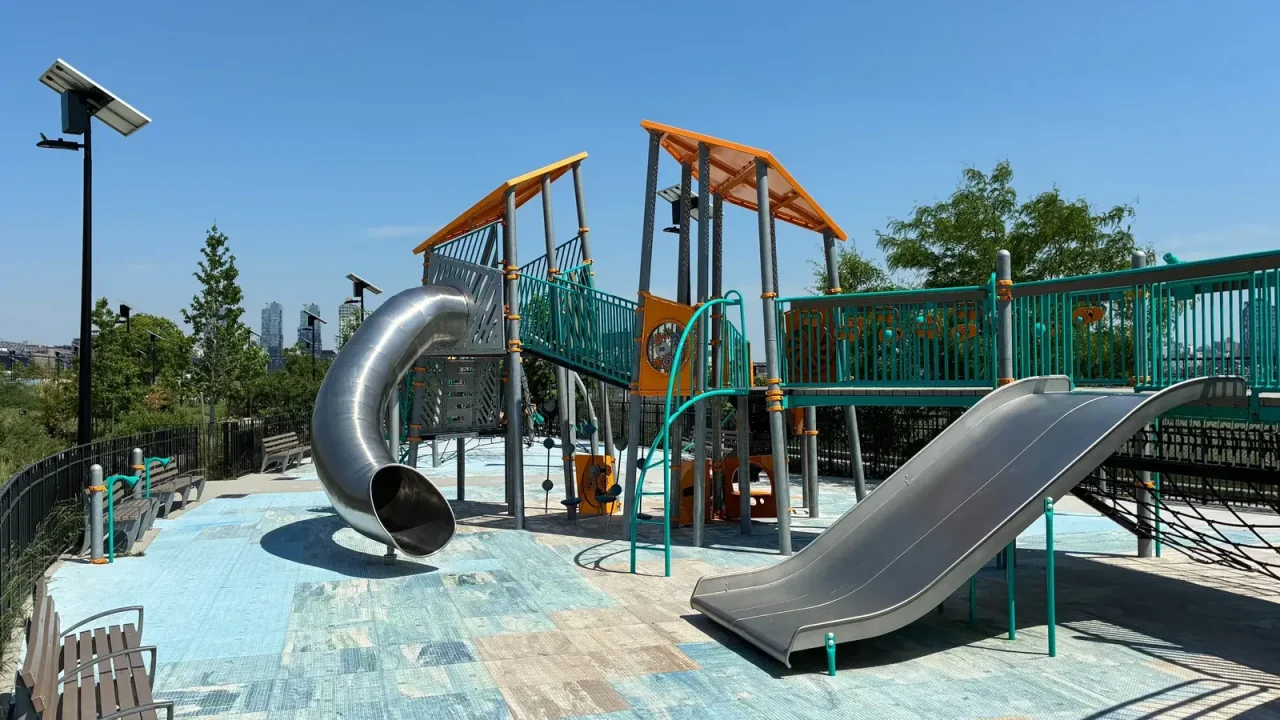
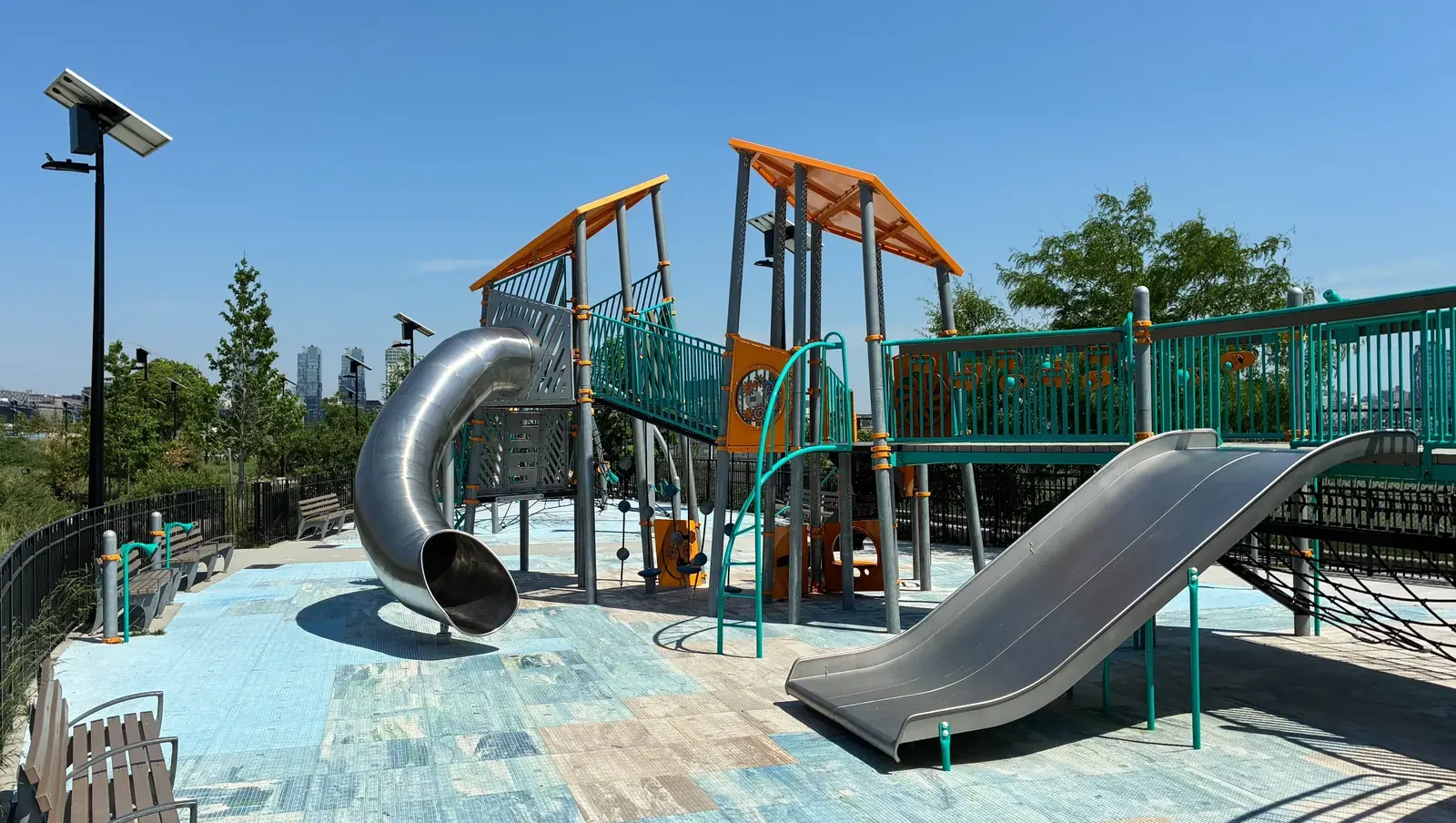
A recent report from New York City has underscored the critical importance of urban shade in mitigating the effects of rising temperatures, offering a timely case study for London. The article details how a new waterfront park, Pier 42, designed as part of a climate adaptation project, paradoxically became significantly hotter than its surroundings due to a lack of adequate tree cover and shade structures in its playground area. This situation serves as a potent reminder for London’s urban planners and policymakers to prioritise shade provision in public spaces.
Extreme Heat in New York Parks
The New York City experience at Pier 42 revealed alarming temperature spikes within the playground, reaching 100 degrees Fahrenheit with a heat index of 129 degrees Fahrenheit, classified as “extreme danger” by the National Weather Service. The wet-bulb globe temperature, a comprehensive measure of heat stress, also reached levels where outdoor activity is deemed unsafe. This occurred despite the park being part of a larger initiative to protect the area from floods and rising seas, highlighting a potential oversight in addressing the more immediate and pervasive threat of extreme heat.
The playground’s design, constrained by underground infrastructure for flood mitigation and safety standards requiring clear fall zones, limited the planting of mature canopy trees. The existing trees, clustered along the south edge, are expected to provide meaningful shade only in the shoulder seasons, not during the peak summer heat. The use of rubber surfacing and metal slides, common in modern playgrounds for safety and maintenance reasons, further exacerbates the heat absorption.
Lessons for London’s Urban Realm
London, like many global cities, is facing an increasing threat from extreme heat events. The Met Office has warned of more frequent and intense heatwaves, posing significant risks to public health, particularly for vulnerable populations such as children, the elderly, and those without access to cooling. The New York example demonstrates that even newly developed public spaces can inadvertently worsen urban heat island effects if shade is not a primary design consideration.
The article points out that while some New Yorkers suggested avoiding overly hot areas, this perspective overlooks the purpose of public parks: to provide accessible and safe recreational spaces for all residents, especially those who cannot afford air conditioning. The significant taxpayer investment in Pier 42, estimated at $34 million, makes the expectation of usable outdoor space a reasonable one.
Strategies for Shade Creation
The New York report highlights that effective shade can be achieved through various means beyond just trees. While trees are the most effective natural solution, offering cooling benefits through evapotranspiration and direct shading, the article also mentions the successful use of engineered shade structures. Examples include fabric sails over sandboxes and pergolas, which can be strategically placed to protect play equipment and users. Cities like Miami, Los Angeles, and Phoenix are cited for their proactive implementation of shade solutions in response to consistently high temperatures.
London’s own efforts in increasing tree canopy and implementing green infrastructure are crucial. However, the Pier 42 case suggests a need to integrate shade provision more explicitly into the design process for all new and refurbished public spaces, from playgrounds to wider public realm projects. This includes understanding the limitations imposed by underground utilities and playground safety regulations, and finding innovative design solutions to overcome them.
Addressing the Urban Heat Island Effect
The urban heat island effect, where cities are significantly warmer than surrounding rural areas due to human activities and materials like concrete and asphalt, is a growing concern. The lack of shade in urban parks contributes directly to this phenomenon by reducing the cooling effect of vegetation and increasing the absorption and re-radiation of solar energy by built surfaces.
For London, this means a concerted effort to:
1. Increase tree planting, focusing on species that can tolerate urban conditions and provide significant canopy cover.
2. Integrate shade structures, such as pergolas and sails, into the design of new parks, playgrounds, and public squares.
3. Review playground design standards to better accommodate shade provision without compromising safety.
4. Consider the thermal performance of surfacing materials in public spaces.
5. Educate the public and policymakers on the health risks associated with extreme heat and the benefits of urban greening and shade.
The New York City experience at Pier 42, while specific to its context, serves as a potent warning. It underscores that climate adaptation must encompass not only protection from floods and sea-level rise but also proactive measures against the increasingly severe threat of extreme heat. London’s urban planners have an opportunity to learn from this and ensure its public spaces remain cool, safe, and welcoming for all residents, even as temperatures continue to climb.
Key facts
| Aspect | New York City (Pier 42 Playground) | London (Implication) |
|---|---|---|
| Temperature Extremes | Reached 100°F air temp, 129°F heat index, ~95°F wet-bulb globe temp | Increasing risk of similar or worse conditions with climate change |
| Cause of Heat | Lack of sufficient tree canopy, limited shade structures, rubber surfacing | Potential for similar design oversights in new/refurbished public spaces |
| Design Constraints | Underground utilities, playground safety fall zones | Need for innovative design to integrate shade within existing constraints |
| Recommended Solutions | Increased tree planting, engineered shade structures (sails, pergolas) | Prioritise shade in urban planning, retrofitting existing spaces, public education |
| Public Health Concern | Heat illness, burns, reduced access to safe outdoor recreation | Significant risks to vulnerable populations, reduced usability of public spaces |
Source: Streetsblog NYC, https://nyc.streetsblog.org/2026/06/18/we-need-shade
Fuente
Streetsblog NYC Publicacion original: 2026-06-18T04:04:00+00:00
Related updates
US Surface Transport Funding Extended to December, Transit Faces Sharp Cuts
President Trump has signed a continuing resolution that funds surface transportation through mid-December but cuts public transit funding by 20% and passenger…
Read update
Digital twins and zoning: what the Esri conference means for London planning
A planner’s report from the 2024 Esri User Conference examines how ArcGIS Urban and CityEngine are reshaping scenario testing, development review and…
Read update
US offshore wind retreat leaves East Coast grid under pressure as UK projects face separate headwinds
The Trump administration has spent roughly $4bn to cancel offshore wind leases in federal waters, wiping out 21GW of potential capacity. For…
Read update
US Federal Actions Under Trump Reshape Urban Planning Landscape: What It Means for UK Practitioners
A new weekly tracker from Planetizen monitors how Trump-era executive orders and federal actions are affecting housing, transport, and land-use planning in…
Read update