
The Rise of London’s “15-Minute Neighbourhoods”: A Vision for Urban Living
Exploring the concept of 15-minute neighbourhoods in London, its potential benefits for residents, and the challenges in implementation across the capital's diverse boroughs.


The concept of the “15-minute neighbourhood” is rapidly gaining traction globally, promising a more localized, convenient, and sustainable way of urban living. At its core, this vision proposes that residents should be able to access most of their daily needs—such as work, shopping, education, healthcare, and leisure—within a 15-minute walk or bike ride from their homes. For a sprawling metropolis like London, with its diverse boroughs and established transport networks, the adoption of such a model presents both exciting opportunities and significant challenges. This article delves into what 15-minute neighbourhoods could mean for Londoners, examining the potential benefits, the existing landscape, and the hurdles that need to be overcome to realise this urban ideal.
Why This Matters for London
London’s urban fabric is a complex tapestry of distinct neighbourhoods, each with its own character and set of amenities. The 15-minute neighbourhood concept aligns with broader goals of reducing car dependency, promoting active travel, enhancing local economies, and fostering stronger community ties. As the city grapples with issues like air quality, housing affordability, and the increasing demands on its public transport system, a decentralized approach to daily living could offer a compelling solution. By bringing essential services closer to home, it can reduce the need for long commutes, free up public space currently dominated by cars, and create more vibrant, resilient local centres. This shift could particularly benefit those with limited mobility or those who cannot afford or access private transportation, making urban life more equitable.
What the Landscape Shows
While not explicitly branded as “15-minute neighbourhoods,” many of London’s boroughs are already moving towards policies that support this vision. The Greater London Authority (GLA) has incorporated principles of “liveability” and “localism” into its planning strategies. For instance, the London Plan emphasizes the importance of providing local services and amenities to support housing growth and reduce the need for travel. Borough-level strategies often focus on improving high streets, supporting local businesses, and enhancing pedestrian and cycling infrastructure.
Transport for London (TfL) plays a crucial role through its “Healthy Streets for London” approach, which prioritizes walking, cycling, and public transport. Investments in Cycleways, improvements to pedestrian crossings, and the promotion of bus and Tube networks all contribute to making areas more accessible by active and sustainable modes.
A look at specific boroughs reveals ongoing initiatives:
- Camden: The borough has been actively promoting “active travel” and has implemented schemes to reduce traffic in residential areas, encouraging local shopping and community engagement.
- Hackney: Known for its vibrant local centres, Hackney has focused on improving its high streets and public spaces, making them more attractive for residents to spend time and access services locally.
- Lambeth: The borough has explored “low traffic neighbourhoods” (LTNs) and initiatives aimed at creating more pedestrian-friendly environments and supporting local businesses.
These examples demonstrate a growing awareness and a practical application of principles that underpin the 15-minute neighbourhood idea.
Competing Readings and Criticisms
Despite the evident appeal, the 15-minute neighbourhood concept is not without its critics and complexities. One primary concern is the potential for gentrification and displacement. As neighbourhoods become more desirable due to improved amenities and walkability, property values can rise, potentially pushing out long-term residents and lower-income households.
Another significant challenge lies in the inherent diversity of London. While some inner-London areas might more easily adapt to a 15-minute model due to higher density and a concentration of services, outer-London boroughs often have a more car-dependent infrastructure and a greater geographical spread of amenities. Implementing the concept uniformly across the city would require significant investment and tailored approaches for different contexts.
Furthermore, the definition of “necessities” can vary. For many Londoners, accessing specialized employment, higher education institutions, or unique cultural venues might still necessitate travel across the city. The challenge is to enhance local provision without sacrificing access to wider opportunities. There’s also the risk that an overemphasis on hyper-localism could lead to a fragmentation of the city, reducing the sense of shared urban experience.
| Aspect | Potential Benefit | Potential Challenge |
|---|---|---|
| Convenience | Reduced travel time for daily needs | May limit access to specialized city-wide services |
| Sustainability | Lower emissions, reduced car use | Requires significant infrastructure investment |
| Community | Stronger local connections, vibrant high streets | Risk of gentrification and displacement |
| Economic Impact | Boost to local businesses | Potential for increased local costs, reduced city-wide competition |
| Equity | Improved access for non-drivers | Risk of creating two-tier cities (well-served vs. underserved) |
What Remains Unclear
The full impact of widespread adoption of 15-minute neighbourhoods in London remains to be seen. Key unknowns include:
- Funding and Implementation: How will the substantial investment required for infrastructure changes, public space improvements, and local service enhancements be funded, especially across all boroughs?
- Gentrification Mitigation: What robust policies can be put in place to ensure that the benefits of 15-minute neighbourhoods are shared equitably and do not lead to increased housing inequality?
- Balancing Local and City-Wide Access: How can the concept be implemented in a way that strengthens local communities without compromising access to the wider opportunities and cultural offerings that make London a global city?
- Adaptability to Different Boroughs: What are the most effective strategies for tailoring the 15-minute neighbourhood model to the unique demographic, economic, and geographical characteristics of London’s diverse boroughs?
Practical Checks for Londoners
For residents interested in the development of 15-minute neighbourhoods in their area, several practical checks can be made:
- Local Planning Documents: Review your local borough’s Local Plan, Neighbourhood Plans, and any specific documents related to high street regeneration, active travel, or public realm improvements. These often outline current and future strategies.
- Transport for London (TfL) Resources: Explore TfL’s “Healthy Streets for London” strategy and any borough-specific transport plans to understand how active travel and public transport are being prioritized.
- Community Engagement: Participate in local consultations, planning committee meetings, and community forums. Your input can directly influence local development.
- Observe Local Amenities: Assess the current availability and accessibility of essential services, shops, and green spaces within a 15-minute walk or cycle from your home. Identify gaps and opportunities.
The move towards 15-minute neighbourhoods in London is an evolving process, reflecting a global shift in urban planning priorities. While the vision offers a promising path towards a more livable, sustainable, and equitable city, its successful implementation will depend on careful planning, significant investment, and a commitment to addressing the inherent complexities and potential inequalities. The conversation is ongoing, and the future of London’s urban living is being shaped by these forward-thinking concepts.
Related updates
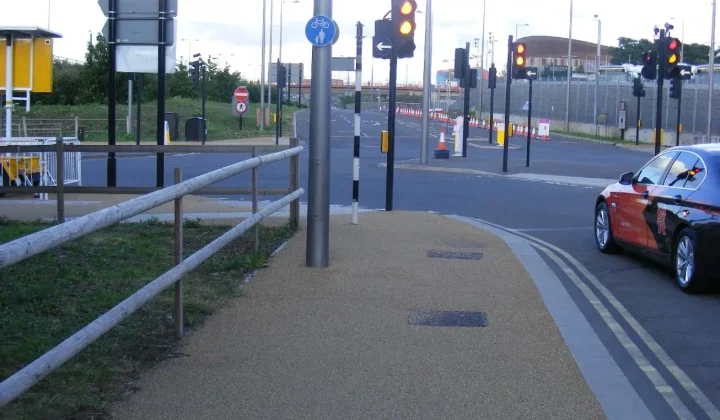
US DOT road safety plan targets congestion and AV strategy, with implications for London’s Vision Zero approach
The US Department of Transportation’s 2026 National Roadway Safety Strategy prioritises rural and tribal communities and advanced technology to cut preventable crashes.…
Read update
Why the predicted Portland ‘Carmaggedon’ never arrived — and what London can learn about traffic evaporation
A month-long closure of a mile-long section of I-5 in Portland was forecast to triple commute times. Instead, morning peak journeys increased…
Read update
What the fall of Angkor reveals about the risks of low-density urban sprawl
A new analysis of the fall of Angkor, the ancient Khmer capital, draws parallels between its sprawling, low-density infrastructure and the vulnerabilities…
Read update
Why urban beauty matters for community wellbeing and civic pride
Research and everyday experience show that beautiful places foster stronger communities, better mental health, and greater civic engagement. What can London learn…
Read updateWiki relacionada
Transport for London: The Backbone of Transit, Street and Service Reporting
Transport for London (TfL) is the UK’s most comprehensive source for transit data, street management and service-quality reporting. This reference page explains…
Read update
Transport for London: The Backbone of Transit, Street and Service Reporting
Transport for London (TfL) operates the city’s buses, Tube, trams, river services, roads and cycling infrastructure. This reference page explains how TfL…
Read update
Understanding the London Plan: A Guide to the Capital’s Spatial Development Strategy
The London Plan sets the strategic framework for development, housing, transport and the public realm across the capital. This guide explains its…
Read update
Transport for London as a Source for Transit, Street and Service-Quality Reporting
Transport for London is one of the most comprehensive urban data providers in the world. This reference page explains how journalists, planners…
Read update