
What the NYC Motoclick case means for London’s gig delivery workers
A New York court has heard how a delivery app called Motoclick is openly refusing to pay workers for on-call time, undermining a city minimum wage law. The case offers a warning for London, where similar subcontracting loopholes could emerge as regulators eye pay standards for gig workers.
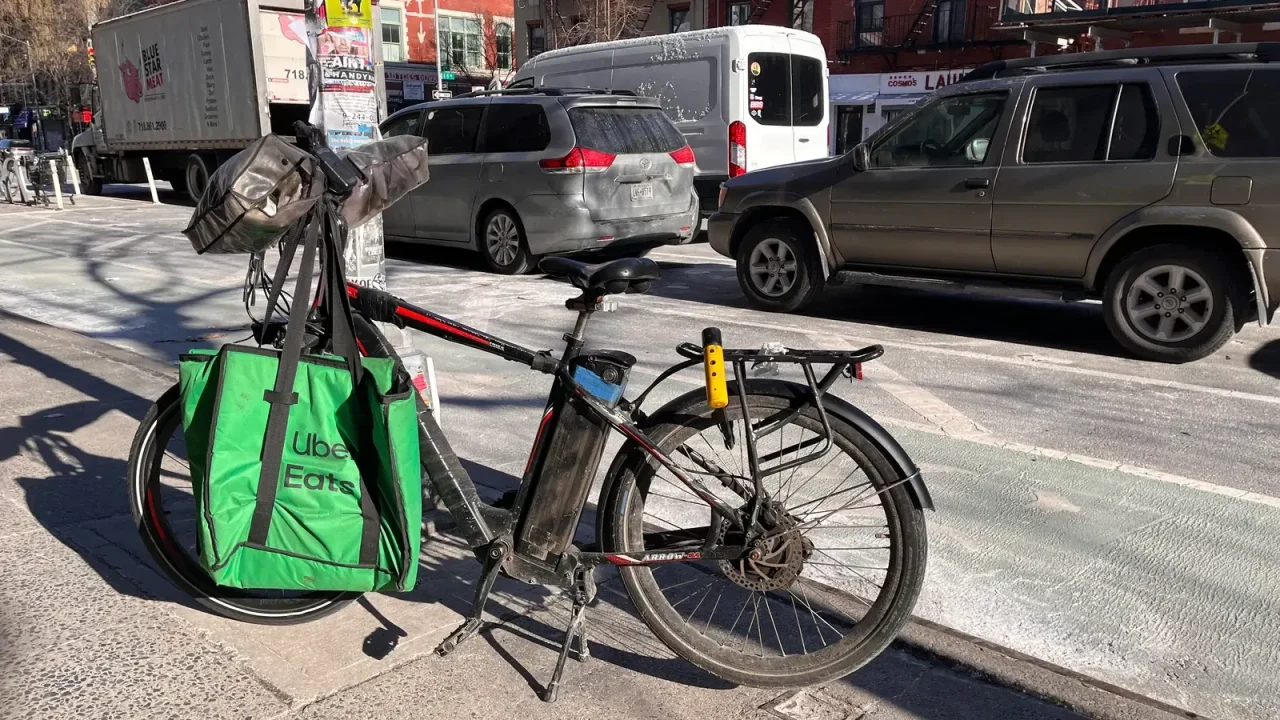
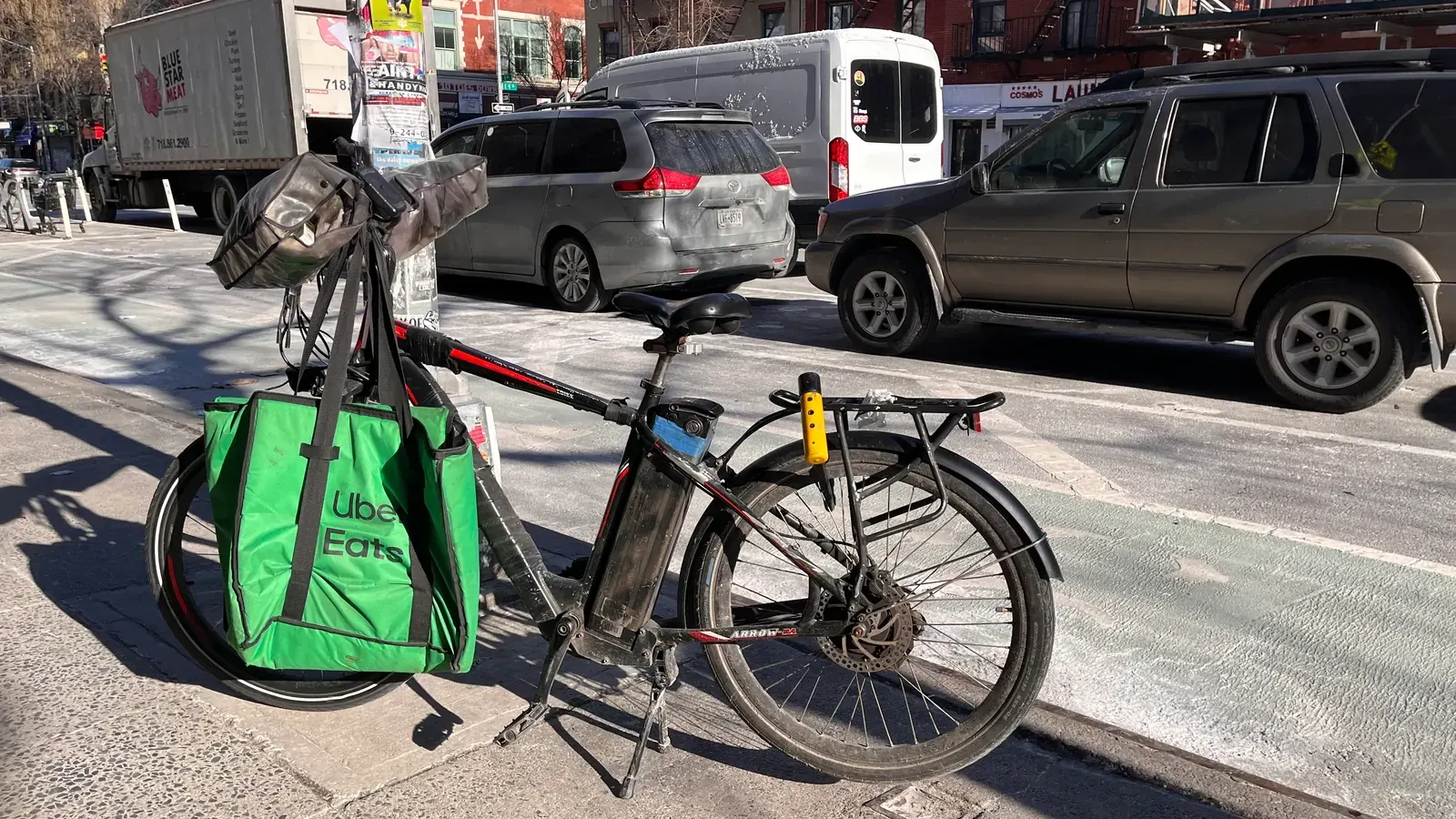
A New York delivery app called Motoclick has admitted in federal court that it does not pay workers for the time they spend waiting for orders – a practice that city regulators say violates the city’s minimum pay law for delivery workers. The case, brought by the New York City Department of Consumer and Worker Protection (DCWP), reveals a subcontracting loophole that could be exploited in London and other cities trying to set fair wages for gig workers.
The court hearing, which lasted five hours on 23 July 2026, featured testimony from an anonymous delivery worker and an economist. The city is seeking an injunction to force Motoclick to either comply with the law or shut down. The judge is expected to rule after further cross-examination on 5 August.
How Motoclick sidesteps the wage law
The key issue is “on-call time” – the period a delivery worker spends waiting for an order. New York’s minimum pay law, introduced in 2023, requires apps to pay workers at least $22.13 per hour for the time between picking up and delivering an order, plus an additional amount for on-call time calculated from the total time workers spend waiting.
Motoclick’s lawyers argued in court that the company does not believe it should pay for on-call time. The company’s own reports to the city show that some workers earned as little as $3.67 to $4.67 per hour in May 2026, according to the DCWP lawsuit.
The app operates as a business-to-business service, taking “overflow” deliveries from larger platforms such as Uber Eats and DoorDash. Motoclick’s chief marketing officer, Alan Chaparro, stated in court filings that more than 90 percent of the company’s revenue comes from handling deliveries that the larger apps chose not to dispatch themselves.
The city’s deputy commissioner, Elizabeth Wagoner, said after the hearing: “Motoclick admits that it does not pay for on-call time, it is brazenly violating the minimum pay law. We are hopeful the court will issue an injunction so Motoclick can no longer subcontract orders from larger apps who are benefitting from Motoclick’s illegal conduct.”
The larger apps deny involvement
Uber, DoorDash and Grubhub all told Streetsblog NYC that they have no direct contractual relationship with Motoclick. Uber suggested that a middleman company – such as Cartwheel or Shipday – could be passing orders to Motoclick without Uber’s knowledge.
DoorDash said that any restaurant using a third party like Motoclick would be in violation of its terms and conditions. “Any restaurant found to be violating contract terms faces a potential removal from our platform,” said spokesperson Samantha Ramirez.
Yet the subcontracting continues. John De Vito, senior enforcement counsel at DCWP, testified: “Every order that goes to Motoclick is not going to a DoorDash worker or an Uber Eats worker. They are subverting the entire market. We can’t even estimate the harm.”
What this means for London
London does not yet have a minimum pay standard for delivery workers, but the issue is on the agenda. The London Assembly has previously called for better protections, and the GLA’s “Good Work Standard” includes a commitment to fair pay for gig workers. In 2021, the Supreme Court ruled that Uber drivers must be paid at least the National Minimum Wage – but that ruling did not cover delivery workers, who are often classified as independent contractors.
The Motoclick case shows how a determined subcontractor can undercut a pay standard by refusing to count waiting time. If London introduces a similar minimum pay law – for example, linked to the London Living Wage – the same loophole could emerge. A restaurant could use a third-party delivery service that does not pay its workers for on-call time, effectively bypassing the law.
James Parrott, a senior fellow at the Center for New York City Affairs at The New School, warned: “That practice would clearly undermine the viability of the pay standard and would also erode the pay and the working conditions of the workers on the larger apps. It’s only a matter of time that the whole industry would be dragged down.”
Key facts at a glance
| Fact | Detail | Source |
|---|---|---|
| Motoclick’s minimum pay law violation | Does not pay for on-call time; admitted in court | DCWP lawsuit, court hearing 23 July 2026 |
| Worker hourly pay in May 2026 | $3.67 to $4.67 per hour, well below $22.13 minimum | DCWP alleges |
| Share of business from big apps | Over 90% of revenue from overflow deliveries from Uber Eats, DoorDash | Motoclick CMO Alan Chaparro court filing |
| Larger apps’ denial | Uber, DoorDash, Grubhub say no direct contract with Motoclick | Statements to Streetsblog NYC |
| London equivalent | No delivery worker minimum wage law yet; GLA’s Good Work Standard covers fair pay but not specific to on-call time | London Assembly, GLA publications |
What remains unclear
It is not yet known how many Motoclick workers are affected, or exactly how many big-app orders are being subcontracted. The judge has not ruled on the injunction. Motoclick claims it makes up only 2 percent of New York’s delivery market, but the DCWP argues that the practice could grow if left unchecked.
In London, no similar case has been brought, but the same subcontracting model could be operating – for example, through apps like Stuart or Delivery Hero. The GLA does not currently collect data on third-party delivery subcontractors.
The broader lesson for urban policymakers
The Motoclick case is a reminder that regulating gig work requires more than setting a wage floor. The way orders flow through multiple platforms and middlemen creates opacity that can be exploited. For London, the lesson is that any new pay standard must include all parties in the delivery chain – not just the most visible apps.
The court is expected to rule on the injunction after 5 August. If the city wins, Motoclick will have to either pay for on-call time or stop operating in New York. If it loses, the loophole may be cemented, and London’s regulators will be watching closely.
Source: Original story by Streetsblog NYC, published 27 July 2026, at https://nyc.streetsblog.org/2026/07/27/uber-doordash-motoclick-worker-protection
Fuente
Streetsblog NYC Publicacion original: 2026-07-27T04:03:00+00:00
Related updates

When zoning reform meets private covenants: the HOA obstacle to backyard cottages
As more US cities rewrite zoning rules to allow accessory dwellings, private homeowners’ association covenants remain a barrier that reform alone cannot…
Read update
Seattle-Area Race Highlights Diverging Approaches to Housing, Transit and Tech Taxation
A Washington State legislative race in the 32nd District pits incrementalism against urgency on housing supply, transit funding and tech regulation, with…
Read update
New York court ruling on sanctuary policies carries implications for city-level immigration enforcement across the US
A federal judge has dismissed the Trump administration’s attempt to override New York City’s restrictions on immigration enforcement cooperation, citing state sovereignty.…
Read update
Automated license plate readers raise privacy, contract and oversight questions for UK cities
A new US-focused analysis of automated license plate recognition cameras highlights contract, privacy and oversight issues that London boroughs and Transport for…
Read update