
Colorado River crisis holds lessons for London’s water security planning
As Lake Mead and Lake Powell hit record lows, the struggle to agree water cuts across seven US states highlights governance challenges that resonate with London’s own long-term water supply and demand management.
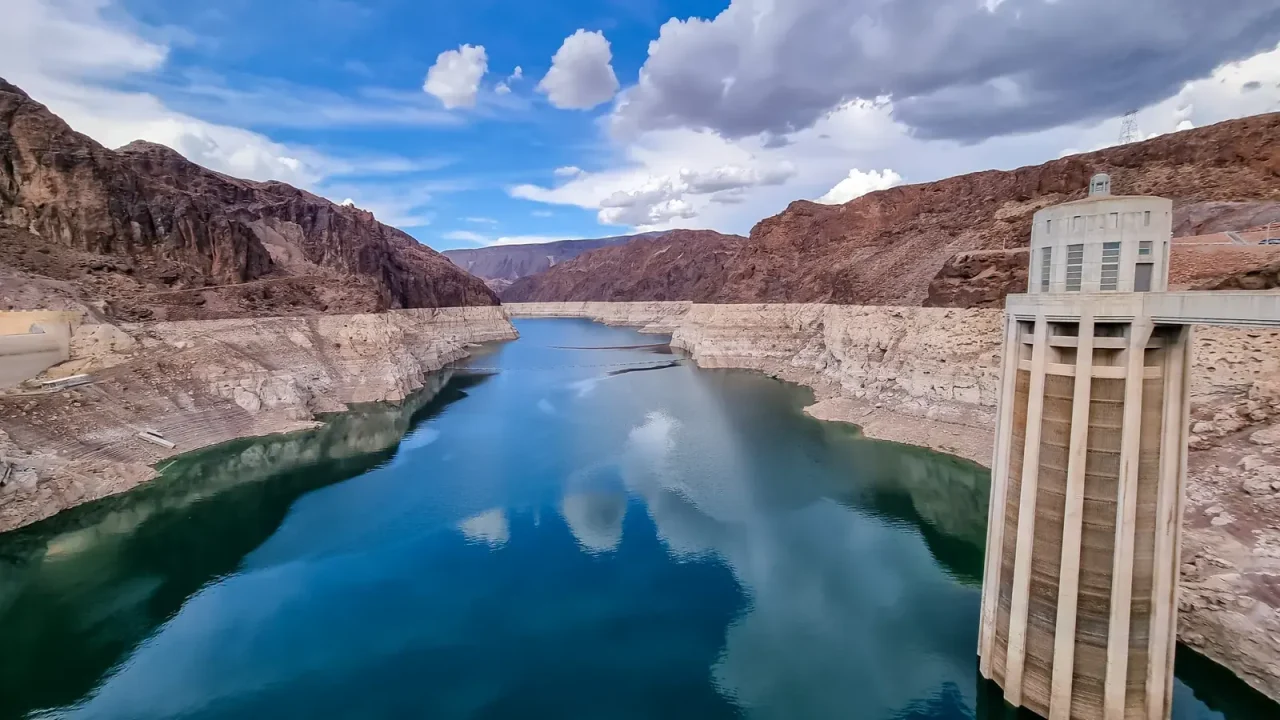
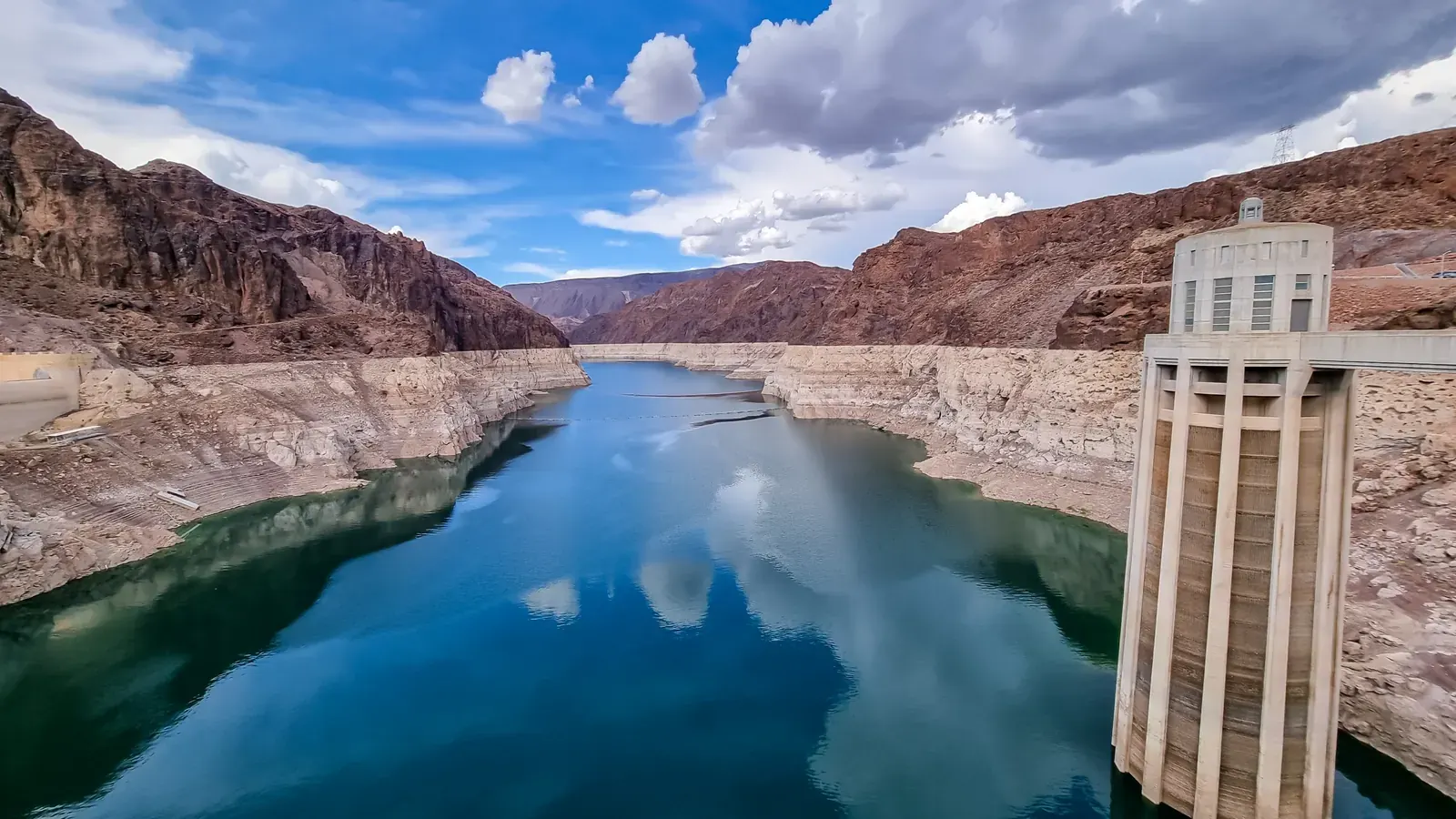
A water crisis unfolding across the southwestern United States offers a stark case study for London planners and policymakers grappling with the capital’s own long-term water security challenges. In August 2026, Lake Mead and Lake Powell – the nation’s two largest reservoirs, both on the Colorado River – hit their lowest levels since they first began to fill in 1936 and 1963 respectively. Despite urgent federal warnings, the seven Colorado River basin states have been unable to agree on who should cut water use and by how much.
The deadlock, analysed by urban policy researcher Christine McLaren in The Conversation, exposes the difficulty of managing shared water resources under climate stress, growing demand and legal frameworks built on outdated assumptions. For London, where Thames Water faces its own supply-demand gap projected to reach hundreds of millions of litres per day by 2050, the Colorado story highlights the risks of delayed agreement, the limitations of voluntary cuts, and the political complexity of allocating scarcity.
The scale of the shortfall
To stabilise the Colorado River system, the seven basin states and Mexico need to reduce annual water consumption by at least 3 million acre-feet (980 billion gallons) each year, and probably closer to 4 million acre-feet (1.3 trillion gallons). The Lower Basin states – Arizona, California and Nevada – have proposed further reductions for 2027 and 2028, alongside Mexico. These would be the biggest-ever cuts to Colorado River water use, but they would amount to only about 3.7 million acre-feet over two years – roughly half what is needed annually.
Without deeper conservation, the reservoirs could shrink to a point where only the water that naturally flows into the river each year is released downstream. This condition, known as “run of river”, would trigger drastic cuts to the Lower Basin’s water supply. If the 2026-27 winter is as dry as the previous one, that point could be reached by mid-2027. A wet winter might delay the crisis by a year or two, but it would not solve the underlying imbalance: people are using far more water from the reservoirs than nature replenishes.
Key facts
| Metric | Value |
|——–|——-|
| Annual reduction needed to stabilise system | 3-4 million acre-feet (980bn-1.3tn gallons) |
| Lower Basin proposed cuts (2027-28) | ~3.7 million acre-feet over two years (~half of annual need) |
| Annual evaporation from reservoirs | ~1.5 million acre-feet (~10% of allocated use) |
| Agriculture share of Colorado River water use | 70-75% |
Legal and political gridlock
The current allocation system dates to the 1922 Colorado River Compact, which divided water between the Upper and Lower Basins using an overoptimistic estimate of the river’s flow. In the past quarter-century, low snowpack and reduced runoff have meant flows cannot keep up with demand. Evaporation adds another layer: the US Geological Survey estimates annual evaporation from the massive reservoirs at about 1.5 million acre-feet – roughly 10 percent of what the seven states expect to use each year, and about half the total cuts needed.
The Lower Basin states have offered to reduce use by 1.6 million acre-feet per year, effectively covering the evaporation loss. But they insist the Upper Basin states – Colorado, New Mexico, Utah and Wyoming – must share additional conservation. The Upper Basin states counter that they already use far less than their compact apportionment and blame the shortfall on overuse in the Lower Basin.
Without a negotiated agreement, two legal battles loom. One is a Supreme Court fight over interpretation of the Colorado River Compact, which typically takes about a decade to resolve. The other involves a challenge to the federal Bureau of Reclamation’s approach announced in late July 2026; Arizona and Nevada have already threatened to sue. The result could be years of uncertainty over water availability for millions of people and vast agricultural areas.
What this means for London
London is not facing a Colorado-style crisis, but the parallels are instructive. The capital’s water supply relies on a combination of surface water from the Thames and Lee catchments, groundwater, and a small amount from reservoirs. Thames Water’s latest draft Water Resources Management Plan identifies a supply-demand deficit of up to 627 million litres per day by 2050 under a dry-year scenario, driven by population growth, climate change and environmental flow requirements.
The Colorado case highlights several governance lessons for London. First, voluntary agreements between multiple parties with competing interests are slow and fragile. In the Colorado basin, seven states, dozens of tribes, Mexico and multiple federal agencies all have stakes. In London, Thames Water must coordinate with the Environment Agency, Ofwat, the Greater London Authority, 32 boroughs, the Mayor of London, and neighbouring water companies. Each has different statutory duties, priorities and constituencies.
Second, the Colorado experience shows that relying on voluntary demand management alone is unlikely to close a large supply-demand gap. Even with the Lower Basin’s proposed cuts, the system remains in deficit. London’s current plan includes a mix of leakage reduction, metering, water efficiency programmes, new reservoirs, water reuse and a potential new transfer from the River Severn. But delivery of several of these measures has been delayed or faces funding gaps.
Third, the Colorado crisis underscores the importance of addressing evaporation and climate impacts directly. London’s reservoirs are far smaller and less exposed to extreme heat than Lake Mead and Lake Powell, but they are still vulnerable to hotter, drier summers. The Environment Agency’s latest UK Climate Projections indicate that summer river flows in the Thames catchment could decline by 50-80 percent by 2050 under a high-emissions scenario. That would reduce the amount of water available for abstraction, even if total rainfall remains similar.
The agriculture dimension
In the Colorado basin, agriculture uses 70-75 percent of all water. The cuts needed to protect the system cannot be achieved by urban conservation alone. Even if all grass watered with Colorado River water were removed, it would not close the gap. The hardest hit would be tribal and non-tribal agriculture along the river’s main stem, which has higher-priority rights but no alternative supply. Across the US, consumers would see higher costs and reduced availability of winter vegetables from Yuma County, Arizona, and Imperial County, California, as well as desert durum wheat used for pasta.
In London, agriculture is a much smaller share of total water use, but the principle holds: the most efficient and politically feasible cuts are not always the ones that achieve the greatest savings. Thames Water’s plan includes significant reductions in leakage – currently around 600 million litres per day – but progress has been slow. The company has faced criticism from the Environment Agency and consumer groups for missing leakage targets.
Next steps and uncertainties
The Colorado River basin states face a critical winter. If the 2026-27 snowpack is poor, the reservoirs could reach run-of-river conditions by mid-2027, forcing emergency federal intervention. The Bureau of Reclamation has made clear its commitment to maintaining hydropower production, but that does not guarantee water for cities or farms downstream. Legal challenges could further delay any agreement.
For London, the immediate next step is the publication of Thames Water’s final Water Resources Management Plan, expected later in 2026, which will set out the company’s preferred supply-demand strategy through 2050. The plan is subject to public consultation and approval by the Environment Agency and Ofwat. Separately, the Mayor of London’s Water Strategy, published in 2024, calls for a more integrated approach to water management, including green infrastructure, rainwater harvesting and demand reduction.
The Colorado River crisis does not provide a direct template for London, but it offers a warning about the consequences of delayed collective action on shared water resources. For planners and policymakers, the lesson is that the window for agreement can close faster than expected, and that voluntary frameworks may not be enough when the gap between supply and demand is large and growing.
Source: Planetizen News / The Conversation – Why a Colorado River water conservation agreement is so hard to reach. https://www.planetizen.com/features/138262-why-colorado-river-water-conservation-agreement-so-hard-reach
Datos clave
| Punto | Detalle |
|---|---|
| Fuente | Planetizen News |
| Fecha | 2026-08-21T12:00:00+00:00 |
| Tema | Why a Colorado River water conservation agreement is so hard to reach |
Fuente
Planetizen News Publicacion original: 2026-08-21T12:00:00+00:00
Related updates
Seattle-Area Race Highlights Diverging Approaches to Housing, Transit and Tech Taxation
A Washington State legislative race in the 32nd District pits incrementalism against urgency on housing supply, transit funding and tech regulation, with…
Read update
New York court ruling on sanctuary policies carries implications for city-level immigration enforcement across the US
A federal judge has dismissed the Trump administration’s attempt to override New York City’s restrictions on immigration enforcement cooperation, citing state sovereignty.…
Read update
Automated license plate readers raise privacy, contract and oversight questions for UK cities
A new US-focused analysis of automated license plate recognition cameras highlights contract, privacy and oversight issues that London boroughs and Transport for…
Read update
Oregon’s “fix it first” dilemma: what London’s transport planners can learn from a revolt against megaprojects
Surveys show Oregonians overwhelmingly want existing roads repaired before new megaprojects are funded, and trust in the state’s transport agency has collapsed.…
Read update