Waymo’s Chinese-made robotaxis open to all riders, raising questions for urban transport policy
Waymo has opened its Chinese-manufactured Zeekr Ojai robotaxis to all riders in the US, navigating steep tariffs and federal bans on connected-vehicle hardware. The story offers a useful comparison for London’s evolving approach to autonomous vehicle regulation and public transport integration.
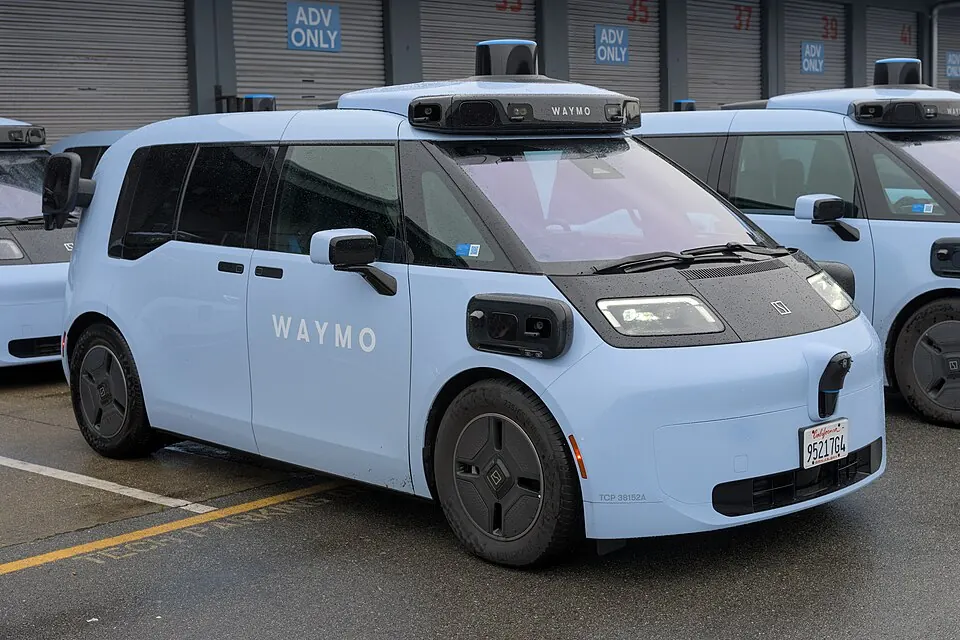
Waymo has expanded access to its Chinese-manufactured Zeekr Ojai robotaxis, allowing all riders to hail the vehicles for the first time. The development, reported by Electrek and summarised by Planetizen, marks a significant step in the rollout of autonomous ride-hailing services in the United States — and offers a comparative case for London as it develops its own autonomous vehicle framework.
The Ojai robotaxis, built by Chinese automaker Zeekr, have been operating with a limited pool of passengers since May 2026. Waymo has now opened the service to all users, with plans to allow riders to specifically request an Ojai vehicle in the near future. The expansion comes despite steep US tariffs on Chinese electric vehicles — currently around 127.5% — and federal rules that effectively ban the import of connected-vehicle hardware sourced from China or Russia.
Key facts
| Metric | Detail |
|——–|——–|
| Vehicles imported | More than 3,200 Zeekr vehicles through Port of Los Angeles since 2024 |
| 2026 arrivals | Over 2,600 vehicles arrived in 2026 alone |
| Tariff rate | Roughly 127.5% on Chinese EVs |
| Federal restriction | US Commerce Department connected-vehicle rule bans Chinese/Russian connectivity hardware |
| Cost comparison | Ojai expected to cost less than half of Waymo’s standard Jaguar I-PACE |
How Waymo navigated the tariff and regulatory hurdles
The Ojai’s base vehicle is imported from China at a price that Waymo considers acceptable despite the high tariff. The real value, according to the company, lies in the sensors and computing suite that are added after the cars arrive in the United States. This approach allows Waymo to bypass the Commerce Department’s connected-vehicle rule, which prohibits the installation of vehicle-connectivity and driver-assist hardware or software sourced from China or Russia.
Waymo has brought more than 3,200 Zeekr vehicles into the US through the Port of Los Angeles since 2024, with more than 2,600 of those arriving in 2026 alone. The company has paid the 127.5% tariff on Chinese EVs for each vehicle, but the total cost per Ojai is still expected to be less than half of what Waymo pays for its standard Jaguar I-PACE cars, according to reporting by Fred Lambert for Electrek.
Vehicle design and passenger features
The Ojai vehicles offer several design differences compared to the Jaguar I-PACE. They feature extra headroom and legroom, a low step-in height and sliding doors. Inside, passengers have access to charging ports, braille labelling for accessibility and three screens that display the route and allow users to control the car’s climate and music.
The design choices reflect Waymo’s effort to create a vehicle that is more accessible and user-friendly for a general ridership, rather than the premium SUV format of the Jaguar I-PACE. The lower step-in height and sliding doors are particularly relevant for passengers with mobility needs, a consideration that London’s transport planners have prioritised in the design of the city’s own taxi and bus fleet.
What this means for London’s autonomous vehicle planning
While the Waymo story is set in the United States, it carries direct relevance for London’s transport policy. Transport for London and the Greater London Authority are actively developing a regulatory framework for autonomous vehicles, with a focus on safety, accessibility and integration with existing public transport.
The Waymo case highlights several issues that London will need to address:
First, the tariff and supply chain question. The UK has not imposed the same level of tariffs on Chinese EVs as the United States, but the government is reviewing its trade policy with China. If London-based autonomous vehicle operators were to rely on Chinese-manufactured vehicles, the cost and availability of those vehicles could shift with trade policy.
Second, the connected-vehicle rule. The US Commerce Department’s ban on Chinese connectivity hardware is a national security measure. The UK has its own regime under the Telecommunications Security Act and the National Cyber Security Centre’s guidance on connected vehicles. Any autonomous vehicle operating in London would need to comply with these rules, which could limit the choice of vehicle platforms.
Third, the integration with public transport. Waymo’s robotaxis operate as a ride-hailing service, competing with taxis and private cars. In London, the mayor’s transport strategy prioritises public transport, walking and cycling over private car use. The introduction of autonomous vehicles would need to be designed to complement, not undermine, the city’s public transport network.
A comparative case for urban transport planners
The Waymo rollout also offers a practical case study in how autonomous vehicle services can scale. The company has moved from a limited test programme to a city-wide service available to all riders, using a vehicle platform that was not originally designed for the US market. The workarounds — importing the base vehicle and adding the autonomous hardware in the US — demonstrate the flexibility that operators may need in a fragmented regulatory environment.
For London, the lesson is that autonomous vehicle technology is advancing rapidly, and the regulatory framework will need to keep pace. The city’s approach to autonomous vehicle testing, currently focused on small-scale trials in controlled environments, may need to accelerate if London is to avoid falling behind other global cities.
Unknowns and limitations
The reporting from Electrek does not specify the exact ridership numbers for the Ojai vehicles, nor does it provide data on safety incidents or service reliability. The cost comparison with the Jaguar I-PACE is based on Waymo’s internal estimates, not independently verified figures. The tariff rate of 127.5% applies to Chinese EVs under US trade policy; the UK’s tariff regime is different and currently stands at 10% for electric vehicles from China.
The article also does not address whether Waymo plans to introduce the Ojai vehicles in other markets, including the UK. London’s regulatory environment for autonomous vehicles is still under development, and no operator has yet applied for a licence to operate a large-scale robotaxi service in the city.
Source: Planetizen News, “Waymo’s Ojai robotaxis from China now able to pick up all riders”, August 22, 2026. URL: https://www.planetizen.com/news/2026/08/138265-waymos-ojai-robotaxis-china-now-able-pick-all-riders
Datos clave
| Punto | Detalle |
|---|---|
| Fuente | Planetizen News |
| Fecha | 2026-08-22T12:00:00+00:00 |
| Tema | Waymo’s Ojai robotaxis from China now able to pick up all riders |
Fuente
Planetizen News Publicacion original: 2026-08-22T12:00:00+00:00
Related updates

California’s unused dam safety powers hold lessons for London’s ageing flood infrastructure
A California audit reveals the state has never used its enforcement powers against dam owners, despite 57 dams in poor condition. As…
Read update
New York Poll Shows Overwhelming Bipartisan Support for Apartments Near Transit, Highlighting Contrast with London’s Own Housing Debate
A new poll from Open New York finds 79% of voters support building multi-family homes near rail stations, as the governor’s race…
Read update
Seattle City Attorney Launches New Community Court and Repeat Offender Programme Amid Public Defender Concerns
Seattle City Attorney Erika Evans has launched Connection Court, a new community court programme, alongside a punitive High-Priority Repeat Offenses system. The…
Read update
Seattle’s Centers & Corridors Zoning Update Delayed by Environmental Review Ruling
A state hearings board ruling has forced Seattle to rework the environmental impact statement for its twenty-year growth plan, pushing the next…
Read updateWiki relacionada

Urban Planning Terms: Density, Public Realm and Transit-Oriented Development
A living glossary for terms that appear again and again in planning and development stories.
Read update