
Berlin’s Public Transport System Offers Lessons for London’s Urban Mobility
A recent op-ed reflects on the efficiency and accessibility of Berlin's public transport, contrasting it with car-dependent urban environments and suggesting potential insights for London's ongoing efforts to enhance sustainable urban mobility and reduce reliance on private vehicles.
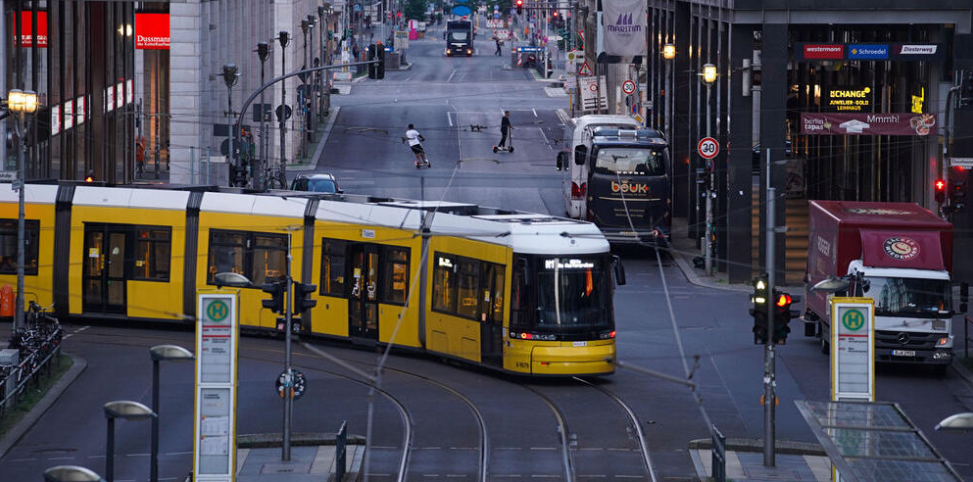
A recent commentary from Streetsblog SF has highlighted the transformative experience of living in Berlin with its extensive public transport network, drawing a stark contrast with car-centric cities and offering valuable perspectives for urban centres like London that are striving for more sustainable and accessible mobility. The author, reflecting on a study abroad programme in the German capital, described how readily available public transport reshaped their understanding of urban living, making a car feel like an impediment rather than an asset. This observation underlines a key challenge for many global cities, including London, in shifting away from private vehicle reliance towards integrated public and active travel solutions.
The commentary points to Berlin’s public transport system as an example of a “15-minute city” in practice, where essential services, amenities, and recreational spaces are easily accessible without the need for a car. This model, which London is also exploring through various planning initiatives, emphasises local accessibility and reduces travel times, fostering community and environmental benefits. The author’s experience of easily reaching a coffee shop, a park, and a grocery store via a tram stop mere minutes from their accommodation illustrates the practical advantages of such an integrated approach.
Rethinking Urban Mobility
The core argument put forward is that public transport offers significant benefits beyond individual convenience, positively impacting a city’s economy, fostering community spaces, and substantially reducing carbon emissions. Furthermore, it provides an equitable mode of transit, accessible across socioeconomic statuses and physical abilities, addressing a manufactured issue of urban fragmentation often exacerbated by car dependency. The piece advocates for a fundamental shift in attitude, moving away from individualism towards a collective understanding that environmental protection is an investment in human well-being, not a financial burden.
This perspective resonates strongly with London’s policy objectives, which frequently grapple with the balance between individual convenience and collective urban health. Transport for London (TfL) and the Greater London Authority (GLA) regularly publish strategies aimed at increasing public transport use, promoting walking and cycling, and reducing private car journeys, particularly within the Ultra Low Emission Zone (ULEZ) and central areas. The goal is to improve air quality, reduce congestion, and enhance public health, mirroring the broader societal benefits highlighted in the Berlin comparison.
Key facts:
- Source of Insight: Personal experience of public transport in Berlin during a study abroad program, contrasted with car-dependent urban living.
- Core Argument: Efficient public transport fosters 15-minute cities, benefits economies, builds community, reduces emissions, and offers equitable access, challenging car-centric urban planning.
- Implication: London and other global cities can learn from integrated public transport systems to reduce car dependency, improve urban liveability, and meet climate resilience goals.
- Policy Angle: Supports initiatives promoting sustainable transport modes, active travel, and the development of local urban hubs to reduce the need for private vehicle use.
Barriers and Solutions in London’s Context
While the Berlin example provides an aspirational model, the article also touches upon common arguments against public transit investment, such as the perceived high costs of installation and maintenance. In London, major infrastructure projects like Crossrail (Elizabeth Line) have demonstrated the vast scale of investment required, yet also the substantial benefits in terms of capacity, connectivity, and economic impact. The continuous investment in the Tube, DLR, Overground, and bus networks reflects an ongoing commitment to expanding and upgrading public transport, despite financial pressures.
The commentary also addresses concerns about safety and cleanliness, which can deter potential public transport users. The author’s experience of feeling “entirely safe” on Berlin’s S-Bahn, noting its regular cleaning and full carriages, underscores the importance of public perception and investment in maintaining high standards. For London, TfL constantly works on improving the safety and cleanliness of its network through initiatives like increased staff presence, CCTV monitoring, and enhanced cleaning regimes, particularly since the pandemic. These efforts are crucial for building trust and encouraging wider adoption of public transport.
The ’15-Minute City’ and Local Connectivity
The concept of the “15-minute city,” where most daily necessities are reachable within a short walk or cycle, is central to the positive experience described in Berlin. London’s urban planning policies increasingly align with this vision, promoting mixed-use developments, local high streets, and active travel infrastructure. The Mayor’s Transport Strategy, for instance, aims for 80% of all trips in London to be made by public transport, walking, or cycling by 2041. This requires a granular approach to urban development, ensuring that local neighbourhoods are well-served by amenities and interconnected through efficient transport links.
The article’s emphasis on restoring and improving existing infrastructure rather than solely building new lines also holds relevance for London. While major new projects are sometimes necessary, significant gains can be made through optimising current networks, enhancing service frequencies, and integrating different modes of transport more effectively. For example, London’s ongoing upgrades to its Underground lines and the expansion of cycleways demonstrate this dual approach of new infrastructure alongside continuous improvement of existing assets.
Environmental and Social Impact
The environmental benefits of shifting from car dependency to public transport are a significant theme. The article mentions studies that highlight public transit’s role in cutting millions of metric tons of carbon dioxide. For London, a city with ambitious net-zero targets, reducing transport emissions is paramount. Policies such as the ULEZ expansion, charges for polluting vehicles, and investment in electric buses are direct responses to this imperative. The social equity aspect is equally important, as public transport offers an accessible solution for all, regardless of personal vehicle ownership or ability. This aligns with London’s commitment to creating a fair and inclusive city where everyone can access opportunities and services.
The commentary concludes with a powerful call to action: as global temperatures rise, cities should look to past solutions, exemplified by systems like Berlin’s, to address modern issues. This historical perspective suggests that robust public transport networks were once the norm in many major cities before the rise of mass car ownership. Re-embracing and modernising these foundational urban systems offers a sustainable path forward, transforming urban landscapes from car-dominated spaces into vibrant, accessible, and environmentally conscious communities. The insights from Berlin provide a compelling case study for London’s ongoing journey towards a more sustainable and equitable urban future.
Source: Streetsblog SF – Op-Ed: Summer in Berlin Changes Perspective on Cars (https://sf.streetsblog.org/2026/05/20/op-ed-summer-in-berlin-changes-perspective-on-cars)
Fuente
Streetsblog SF Publicacion original: 2026-05-20T23:06:25+00:00
Related updates

Seattle social housing land deal offers lessons for London’s community-led delivery
Seattle’s social housing developer has acquired its first site for a mixed-income project, aiming for 1,000 homes by end of 2026. The…
Read update
When zoning reform meets private covenants: the HOA obstacle to backyard cottages
As more US cities rewrite zoning rules to allow accessory dwellings, private homeowners’ association covenants remain a barrier that reform alone cannot…
Read update
Seattle-Area Race Highlights Diverging Approaches to Housing, Transit and Tech Taxation
A Washington State legislative race in the 32nd District pits incrementalism against urgency on housing supply, transit funding and tech regulation, with…
Read update
New York court ruling on sanctuary policies carries implications for city-level immigration enforcement across the US
A federal judge has dismissed the Trump administration’s attempt to override New York City’s restrictions on immigration enforcement cooperation, citing state sovereignty.…
Read updateWiki relacionada

Urban Planning Terms: Density, Public Realm and Transit-Oriented Development
A living glossary for terms that appear again and again in planning and development stories.
Read update