
Campaign Dynamics Shift in Chicago’s Archer Avenue Traffic Safety Project Debate
New developments in the ongoing debate over the Archer Avenue traffic safety project in Chicago's Brighton Park indicate a shift in campaign dynamics, with a key opponent figure now reportedly on the payroll of a candidate opposing the initiative.
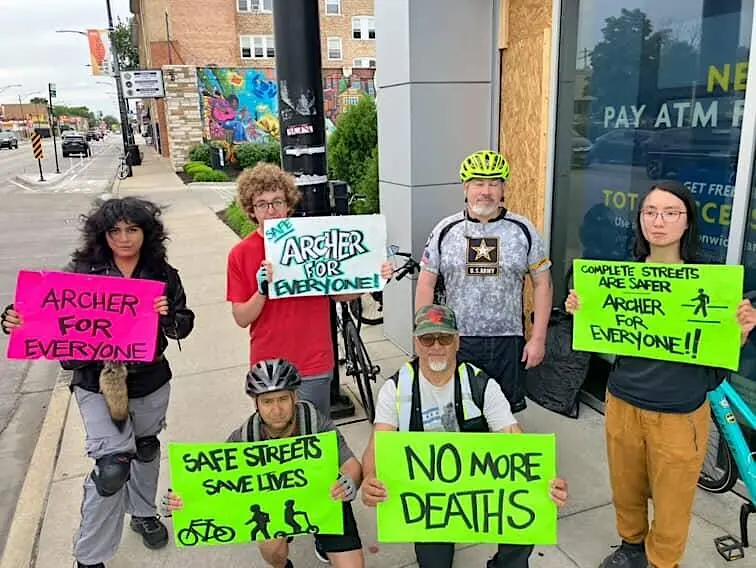
The protracted debate surrounding the Archer Avenue traffic safety project in Chicago’s Brighton Park neighbourhood is seeing new developments in its campaign dynamics. A figure prominent in the opposition, Maria “The Megaphone Lady” Martinez, is now reportedly on the payroll of Claudia Zuno, a candidate challenging the incumbent Alderwoman Julia Ramirez, who supports the project. This shift underscores the intensifying political and community engagement around urban infrastructure and safety initiatives.
The Archer Avenue traffic safety project aims to enhance safety and efficiency for various modes of transport, including walking, cycling, scooting, public transit, and driving, along this key diagonal thoroughfare on Chicago’s Southwest Side. The initiative has been met with consistent, organised opposition from a group known as the Archer Guardians, whose demonstrations have been ongoing for 23 weeks, supported by the Trump-friendly lobbying group Urban Center. Concurrently, a robust counter-protest movement has emerged, advocating for the project’s implementation.
Background to the Debate
The Archer Avenue project is a significant urban intervention designed to address traffic safety concerns in a busy urban corridor. Such projects often involve reconfiguring road layouts, introducing protected cycling infrastructure, improving pedestrian crossings, and optimising public transport access. These changes, while aimed at broader public safety and urban efficiency, can frequently spark local opposition, particularly concerning potential impacts on vehicle traffic flow, parking, or local business access.
Alderman Julia Ramirez has publicly endorsed the safety initiative, aligning with progressive urban planning principles that prioritise active travel and public transit. Conversely, her political opponent, Claudia Zuno, has been a visible presence at the protests against the project since their inception in December, two months prior to her official campaign announcement. This direct involvement highlights the project’s centrality to local political discourse and elections.
Shift in Opposition Tactics
Recent reports indicate a notable change in the composition and tactics of the anti-Archer project rallies. Last Monday, observers noted a significantly smaller turnout from opponents compared to supporters. Only Eva Villalobos and Maria “The Megaphone Lady” Martinez were present at a location over half a mile southwest of the usual protest site near the incumbent alder’s office. Eva Villalobos, who co-organises the protests, has received substantial funding from the Urban Center for her previous political campaigns, reinforcing the organised nature of the opposition.
The latest development concerning Maria Martinez, known for her vocal presence at nearly all the rallies, suggests a formalisation of her role within the opposition campaign. New business cards reportedly confirm her official employment by Zuno’s campaign organisation. This move implies a direct financial link, especially given the Urban Center CEO Juan Rangel’s public commitment of full support to Zuno’s campaign. This professionalisation of a protest figure on a candidate’s payroll marks a significant evolution in the local campaign landscape, raising questions about the funding and operational structure of such opposition movements.
Community and Political Implications
The formal integration of a key protest figure into a political campaign could alter public perception of the opposition, potentially shifting it from a grassroots movement to a more overtly political one. For urban planning projects, the nature of community engagement and opposition is crucial. When protest leaders move into formal campaign roles, it can clarify political allegiances but also potentially politicise community concerns further, making consensus-building more challenging.
Opponents of traffic safety projects often raise concerns about traffic congestion, economic impact on local businesses, and perceived overreach by city authorities. Supporters, on the other hand, emphasise pedestrian and cyclist safety, reduced pollution, improved public health outcomes, and enhanced urban liveability. The Archer Avenue project encapsulates these broader debates, with the formalisation of campaign roles indicating a hardening of positions ahead of future political contests.
Key facts
- Project: Archer Avenue traffic safety project
- Location: Brighton Park, Chicago, Southwest Side
- Key Figures: Ald. Julia Ramirez (supporter), Claudia Zuno (opponent), Maria “The Megaphone Lady” Martinez (opponent figure)
- Opposition Support Base: Archer Guardians, Urban Center (lobbying group)
Impact on Urban Planning and Governance
For cities like London, which frequently grapple with similar debates over traffic reduction and active travel schemes, the Chicago experience offers insights into the political dimensions of urban development. Local elections often become battlegrounds for these issues, with candidates either championing or opposing infrastructure changes based on their perceived impact on constituents. The reported financial backing from lobbying groups further highlights the external influences that can shape local urban policy debates.
The ongoing rallies and the formalisation of campaign roles illustrate the intense scrutiny and public participation that modern urban projects attract. Effective governance in such contexts requires transparent communication, robust public consultation, and a clear articulation of the benefits and trade-offs associated with proposed changes. The Archer Avenue case serves as a reminder that even projects aimed at universally accepted goals like safety can become deeply contested political issues.
Looking Ahead
The Archer Avenue traffic safety project continues to be a focal point for urban policy discussions in Chicago. The reported shift in campaign dynamics, with key protest figures taking on formal roles within political campaigns, suggests an escalation of the debate. As urban areas worldwide increasingly focus on sustainable and safe transportation solutions, understanding these evolving campaign strategies and community responses becomes critical for planners, policymakers, and residents alike. The outcome of this particular project and its associated political contests could offer valuable lessons for similar initiatives in other global cities.
Source: Streetsblog Chicago – https://chi.streetsblog.org/2026/05/20/a-quick-update-on-the-archer-rallies-opponents-move-protest-location-maria-the-megaphone-lady-martinez-now-appears-to-officially-be-on-zunos-payroll
Fuente
Streetsblog Chicago Publicacion original: 2026-05-20T22:36:03+00:00
Related updates

US mayors rank housing affordability as top crisis as costs squeeze cities
A new survey from the US Conference of Mayors finds affordable housing leading city leaders’ concerns as the rising cost of living…
Read update
Seattle School Board Member Challenges Washington State MAGA-Backed Initiatives
Seattle School Board member Joe Mizrahi has issued a detailed critique of three Washington State ballot initiatives funded by a hedge fund…
Read update
Lessons from Los Angeles: How housing policies can deter new development – a cautionary tale for London
Los Angeles developers are scaling back projects despite huge housing demand, blaming pandemic-era rent protections and a mansion tax that encourages small-scale…
Read update
Uber’s $10B robotaxi bet signals a shift in urban mobility, but London’s streets remain a different arena
Uber has announced a $10 billion investment in autonomous vehicles, intensifying the robotaxi race with Waymo, Zoox and Tesla. For London, the…
Read updateWiki relacionada

Urban Planning Terms: Density, Public Realm and Transit-Oriented Development
A living glossary for terms that appear again and again in planning and development stories.
Read update