
Tubman Center Breaks Ground on New Community Health Center in Seattle
A new 26,000-square-foot facility in Rainier Beach aims to provide culturally competent primary care, community research, and advocacy, focusing on addressing social determinants of health.
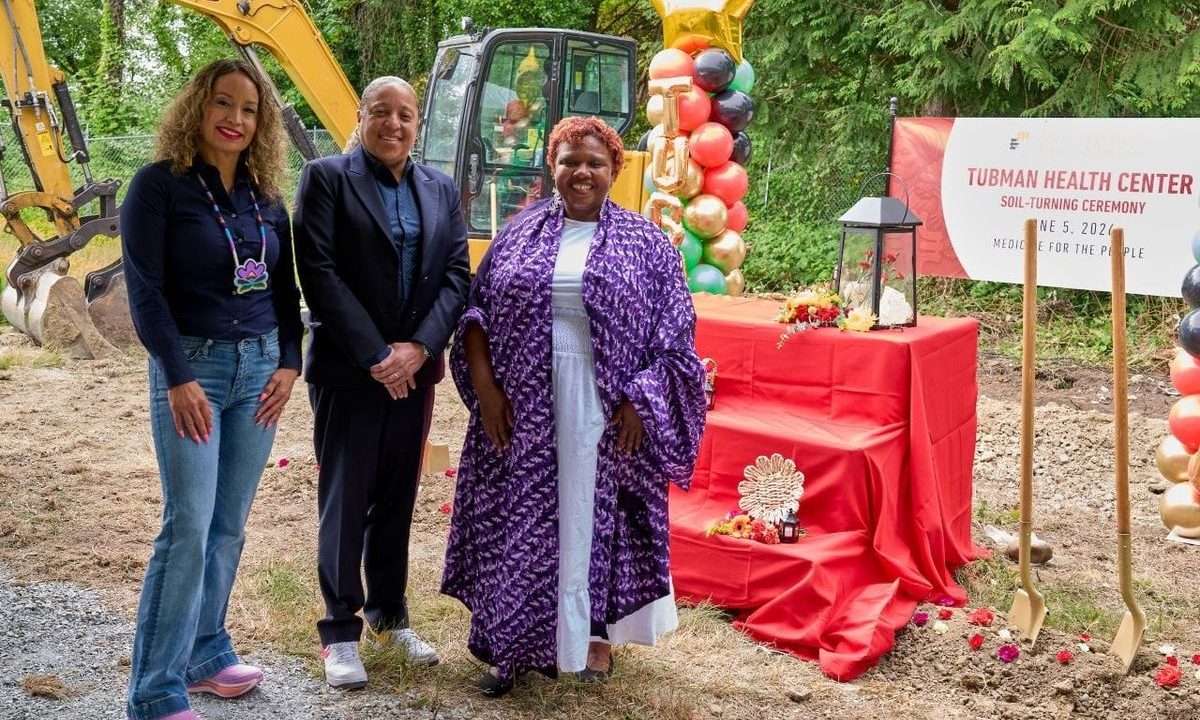
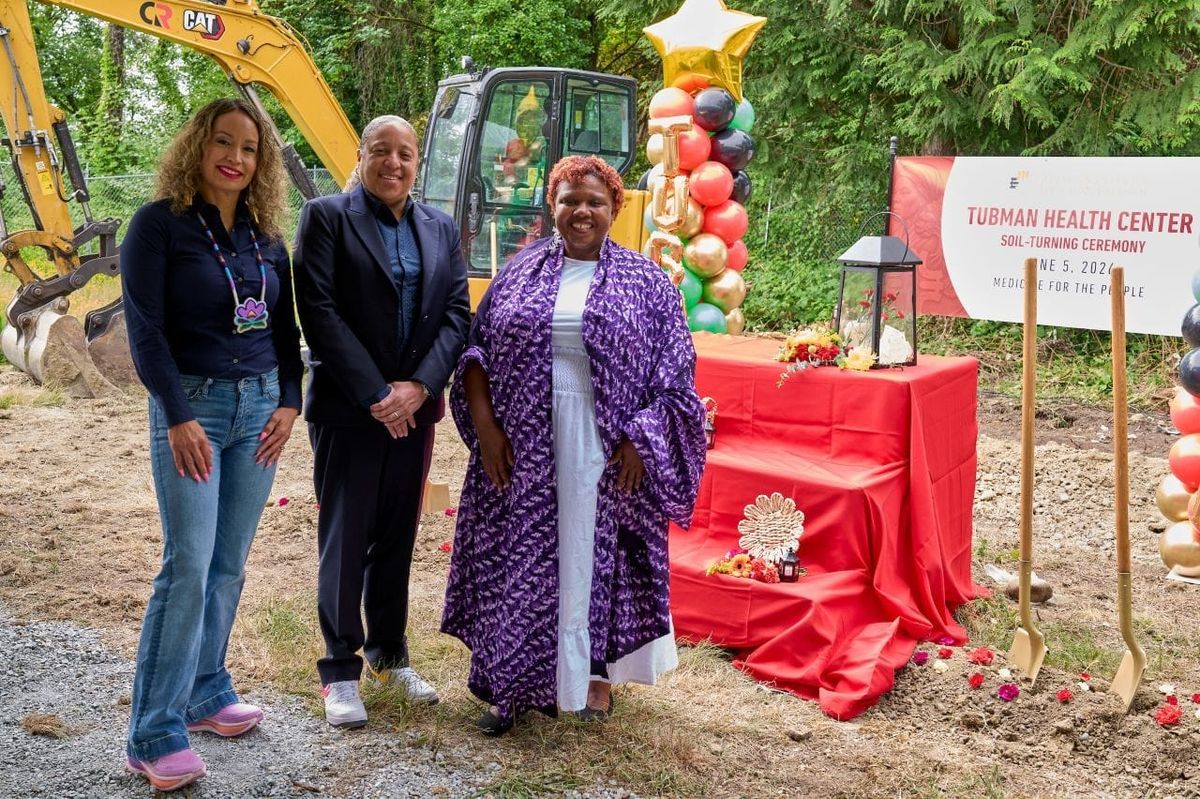
The Tubman Center for Health & Freedom has marked a significant milestone with a soil-turning ceremony to commence construction on its new health center in Seattle’s Rainier Beach neighbourhood. The 26,000-square-foot facility, projected for completion in 18 months, is designed to serve approximately 12,000 primary care patients annually and introduce a novel healthcare model focused on empowering individuals within their own health journeys.
Community Relationship with the Land
The ceremony’s emphasis on “soil-turning” rather than “groundbreaking” was a deliberate choice by Monisha Harrell, the event’s emcee and a community ambassador for Tubman Health. Harrell, who also served as Seattle’s deputy mayor, explained that the term signifies a commitment to building a new chapter in partnership with the land, the community, and the neighbourhood itself. This approach underscores the organization’s foundational ethos of deep connection and respect for the local environment and its inhabitants.
Origins and Vision
Founded in 2020 by a collective of Black, Native, and queer community members, the Tubman Center for Health & Freedom emerged from a recognized deficit in healthcare systems that were not designed with marginalized populations in mind. The founders envisioned a healthcare model that was co-created by and informed by the very communities it aimed to serve. Carmen Davis, the organization’s board president, highlighted that the center’s genesis was not merely a construction project but a direct response to community members asserting their inherent worthiness of health and freedom. She credited years of dedicated organizing, listening, advocacy, innovation, and relationship-building for making the project a reality.
A Holistic Approach to Healing
The center’s name, honouring Harriet Tubman, reflects its dual mission of liberation and healing. Dr. Peter Asante, Director of Health Services at Tubman Health, elaborated on this methodology, explaining that the organization addresses health and wellness through both systemic and clinical lenses. This integrated approach acknowledges that true community healing requires confronting the societal systems that contribute to poor health outcomes. Tubman Health’s work is rooted in the belief that physical wellbeing is intrinsically linked to the collective pursuit of liberation.
Research and Community Engagement
The development of the healthcare model was significantly influenced by extensive community-driven research, initiated during the COVID-19 pandemic. This process involved over 24,000 touchpoints with community members across the region and led to the establishment of the Community Health Research Institute. Key findings indicated a strong desire for healthcare that is less clinical and more interactive, with patients seeking providers who understand their cultural contexts and who approach care without pre-existing biases. The research also highlighted the importance of a safe, welcoming physical environment that incorporates natural elements.
A New Healthcare Model
The resulting integrative family medicine model combines modern Western medicine with wellness practices drawn from African, Indigenous, and other cultural traditions. Central to this model are patient dignity and trust, with a focus on affirming patients’ identities rather than dismissing their experiences. Tubman Health operates on abolitionist principles, actively working to dismantle oppressive systems and replace them with those that genuinely support community health. This includes a commitment to interrupting racism, homophobia, ableism, sexism, xenophobia, and all forms of oppression within healthcare settings and broader community life.
Practical Implementation
In practice, the center offers an integrated model encompassing primary and preventive care, behavioural health services, community resources, social services, political education, and advocacy. A core tenet is employing staff who reflect the diversity of the patient population, ensuring that individuals are met with affirmation. Treatment plans address the social, economic, and environmental conditions impacting patients, alongside their specific medical ailments.
Addressing Health Inequities
Dr. Asante noted that the Tubman Center was partly established due to the founders’ experiences with medical neglect and dismissal, which have led to a loss of loved ones. He pointed to medical racism and sexism as ongoing factors shaping patient care, eroding trust and causing delays in critical treatments. These systemic issues contribute to higher rates of chronic illness and poorer health outcomes, reflecting a legacy of historical trauma and persistent racism that permeates all aspects of life.
Piloting the Model
Tubman Health has already begun piloting its care model. The Freedom Clinic, a school-based health center at Rainier Valley Leadership Academy, and the Healing House, a small community clinic in Rainier Valley, are both operating near capacity. The organization is also launching a Black Elders Wellness program later this summer, which will augment existing services for Black elders with primary care, visiting nursing, mental health therapy, acupuncture, and massage therapy.
Key facts
| Aspect | Detail |
|---|---|
| Project | New Tubman Health Center |
| Location | Rainier Beach, Seattle |
| Size | 26,000 square feet |
| Construction | Started June 5, 2024; 18-month projected completion |
| Services | Integrative family medicine, community research, advocacy, wellness practices |
| Target Population | 12,000 primary care patients annually, with focus on marginalized communities |
| Founding Principles | Abolitionist, community-informed, culturally competent, dignity-centred |
The development of the Tubman Health Center signifies a crucial step in addressing systemic health inequities within Seattle. By prioritizing culturally competent care, community engagement, and a holistic understanding of wellbeing, the project aims to create a more equitable and accessible healthcare landscape. The center’s focus on social determinants of health, coupled with its integrative medical approach, holds the potential to significantly improve health outcomes for underserved populations in Rainier Beach and beyond.
Source: The Urbanist – Tubman Center ‘Turns Soil’ on New Rainier Beach Health Center – https://www.theurbanist.org/tubman-center-turns-soil-on-new-rainier-beach-health-center/
Fuente
The Urbanist Publicacion original: 2026-06-11T18:15:50+00:00
Related updates
New York Poll Shows Overwhelming Bipartisan Support for Apartments Near Transit, Highlighting Contrast with London’s Own Housing Debate
A new poll from Open New York finds 79% of voters support building multi-family homes near rail stations, as the governor’s race…
Read update
Seattle City Attorney Launches New Community Court and Repeat Offender Programme Amid Public Defender Concerns
Seattle City Attorney Erika Evans has launched Connection Court, a new community court programme, alongside a punitive High-Priority Repeat Offenses system. The…
Read update
Seattle’s Centers & Corridors Zoning Update Delayed by Environmental Review Ruling
A state hearings board ruling has forced Seattle to rework the environmental impact statement for its twenty-year growth plan, pushing the next…
Read update
FEMA disaster mitigation grants freeze threatens to stall UK resilience learning, planners warn
A US Government Accountability Office report says $2.2 billion in FEMA Building Resilient Infrastructure and Communities grants remain unresolved, delaying more than…
Read update