
SpaceX arrival inflates property taxes and home values in Texas border county – what London planners can learn
Home values in Cameron County, Texas, more than doubled in six years after SpaceX built a launch facility. Property tax bills rose 57%. As London faces its own debates about large employers, infrastructure investment and housing affordability, the Texas case offers a cautionary tale about unplanned value capture and di
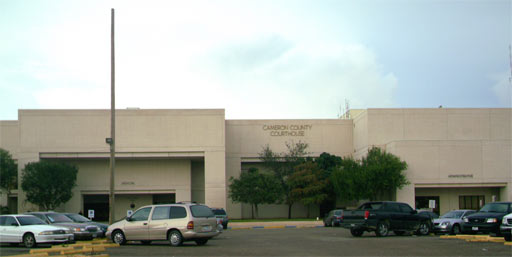
The arrival of a major employer can transform a local housing market – but not always in ways that benefit existing residents. New research from the Texas Real Estate Research Center at Texas A&M University shows that home values in Cameron County, a border county in southern Texas where SpaceX built a launch facility and development site in 2014, have more than doubled over a six-year period. Researchers attribute a significant share of that rise to the aerospace company’s presence, and with SpaceX expanding operations in Brownsville, the county’s largest city, the cost of housing may climb even further.
While the geography and policy context differ sharply from London, the underlying mechanism – a large, well-capitalised employer concentrating jobs in a previously lower-cost area, driving up land values and property taxes without a corresponding increase in housing supply or affordability protections – is directly relevant to debates about development-led displacement, value capture and the role of planning in managing growth.
Key facts
| Metric | Value | Period |
|---|---|---|
| Home value increase in Cameron County | More than doubled (100%+) | 2019–2025 (six-year period) |
| Median property tax bill increase in Cameron County | 57% (to $2,740) | 2019–2025 |
| SpaceX arrival in Brownsville area | 2014 (launch facility and development site) | |
| City of Brownsville current tax rate proposal | Maintain same rate | 2026–2027 fiscal year |
The numbers: what the research found
The Texas Real Estate Research Center, part of Texas A&M University, examined home value trends in Cameron County over a six-year window ending in 2025. The headline finding is stark: property values more than doubled. The researchers expect that SpaceX’s arrival contributed to the rise, though they do not claim it was the sole cause. Other factors likely include broader Texas population growth, low interest rates in parts of the period and the county’s location on the US-Mexico border.
The property tax consequences are equally significant. From 2019 to 2025, the median property tax bill in Cameron County increased by more than 57%, reaching $2,740. Because Texas has no state income tax, local governments rely heavily on property taxes to fund schools, infrastructure and public services. When home values rise sharply, tax bills follow – even if the tax rate stays the same.
Bob Torres, a real estate broker in Brownsville, told the Texas Tribune that clients have told him they want to sell their homes because they can no longer afford to pay their property taxes. That is a direct displacement signal: rising asset values are pushing out long-term homeowners who lack the income growth to match their tax bills.
Local budget decisions and the tax rate question
Like most cities in Texas, Brownsville is finalising its budget for the 2026–2027 fiscal year, which begins in October. The process includes setting the property tax rate – a decision that will determine whether homeowners face a further tax increase, a cut or a hold. The city’s current proposal is to maintain the same tax rate next year.
Holding the rate constant does not mean tax bills stay flat. Because the tax bill is the rate multiplied by the assessed value, a stable rate on a rising valuation still produces a higher bill. Local officials could choose to lower the rate to offset value gains, but that would reduce revenue for public services. The tension is familiar to any city facing rapid appreciation: protect existing residents from tax-driven displacement, or maintain service funding for a growing population.
The Texas Tribune, which first reported the story, notes that local officials will also influence the future of property taxes in Brownsville through their budget choices. The outcome will depend on political pressure from homeowners versus demand for schools, roads and emergency services.
What this means for housing affordability and displacement
The Cameron County case illustrates a pattern that housing researchers and planners recognise across many cities: when a large employer arrives or expands, it raises local land values and rents, often faster than wages or social housing provision can keep up.
The mechanism is straightforward. SpaceX brings high-skilled, well-paid jobs. Those workers need housing. They compete with existing residents for a limited stock of homes. Prices rise. Landlords and sellers capture the windfall. Long-term homeowners on fixed incomes face rising property tax bills. Renters face higher rents or eviction if landlords sell or redevelop.
In Brownsville, the effect is concentrated because the local housing market was relatively small and low-cost before SpaceX arrived. The percentage increases are therefore dramatic, even if absolute dollar amounts remain below national averages. The median property tax bill of $2,740 is still modest by US standards, but the 57% increase in six years is a severe shock for households with stable but low incomes.
London parallels: large employers, infrastructure and value capture
The direct comparison between Brownsville, Texas and London is limited by scale, governance and policy context. London is a global city of nearly nine million people with a highly regulated planning system, a mayoral strategic authority and a much larger and more diverse housing market. Texas has no state income tax, weak zoning in many areas and a political culture that resists land-value capture and rent control.
Nevertheless, the underlying dynamic – that large employment nodes drive up surrounding housing costs – is a central concern for London planners and housing campaigners. The arrival of major new offices, tech campuses, transport infrastructure or university expansions in parts of London has repeatedly triggered affordability pressures in previously lower-cost neighbourhoods.
Examples include the impact of the Elizabeth line on property values in areas such as Abbey Wood, Forest Gate and Woolwich; the effect of the Olympic Park and Stratford’s regeneration on east London housing costs; and the ongoing pressure around the City fringe, King’s Cross and Nine Elms. In each case, public investment or private-sector expansion generated value increases that were largely captured by landowners and existing homeowners rather than recycled into affordable housing or community benefits.
London does have tools that Texas lacks. The Community Infrastructure Levy (CIL) and Section 106 agreements allow councils to capture some value from development for infrastructure and affordable housing. The Mayor’s Affordable Housing Programme and strategic planning powers provide a framework for linking growth to social housing delivery. But critics argue that these mechanisms are too weak, too slow or too easily negotiated down by developers, and that they fail to capture windfall gains from land-value uplifts caused by public investment rather than planning permission.
The Cameron County experience reinforces the argument for stronger, more automatic value-capture mechanisms that apply not only to new development but also to property-value gains driven by large employers, infrastructure projects or zoning changes. It also highlights the importance of monitoring displacement pressure – not just through rent and price data but through direct signals such as homeowners seeking to sell because they can no longer afford their tax bills.
Unknowns and caveats
The Texas research does not isolate SpaceX’s impact from other factors. Cameron County’s location on the border, its growing logistics and trade sector, and broader demographic shifts in Texas all contributed to rising home values. The researchers’ conclusion is that SpaceX “contributed to” the rise, not that it caused it alone.
It is also unclear how much of the value increase is concentrated in neighbourhoods closest to the SpaceX facility near Boca Chica Beach, about 20 miles east of Brownsville, versus in the city itself. The county-level data may mask significant variation within the area.
The future trajectory depends on how quickly housing supply responds. If Brownsville and Cameron County permit enough new construction to absorb demand, price growth may moderate. If not, the displacement pressure will intensify.
Source: This article is based on reporting from the Texas Real Estate Research Center at Texas A&M University and the Texas Tribune, as summarised by Planetizen News. The original Texas Tribune article is titled “Brownsville faces rising home values after the arrival of large employers like …” and was published on 31 August 2026. The Planetizen summary is available at https://www.planetizen.com/news/2026/09/138368-home-values-property-tax-rises-texas-county-after-arrival-spacex.
Fuente
Planetizen News Publicacion original: 2026-09-07T14:00:00+00:00
Related updates
New York Poll Shows Overwhelming Bipartisan Support for Apartments Near Transit, Highlighting Contrast with London’s Own Housing Debate
A new poll from Open New York finds 79% of voters support building multi-family homes near rail stations, as the governor’s race…
Read update
Seattle City Attorney Launches New Community Court and Repeat Offender Programme Amid Public Defender Concerns
Seattle City Attorney Erika Evans has launched Connection Court, a new community court programme, alongside a punitive High-Priority Repeat Offenses system. The…
Read update
Seattle’s Centers & Corridors Zoning Update Delayed by Environmental Review Ruling
A state hearings board ruling has forced Seattle to rework the environmental impact statement for its twenty-year growth plan, pushing the next…
Read update
FEMA disaster mitigation grants freeze threatens to stall UK resilience learning, planners warn
A US Government Accountability Office report says $2.2 billion in FEMA Building Resilient Infrastructure and Communities grants remain unresolved, delaying more than…
Read update