Small Towns Lead US Bikeability Rankings, Highlighting Infrastructure Lessons for Larger Cities
Small Towns Lead US Bikeability Rankings, Highlighting Infrastructure Lessons for Larger Cities
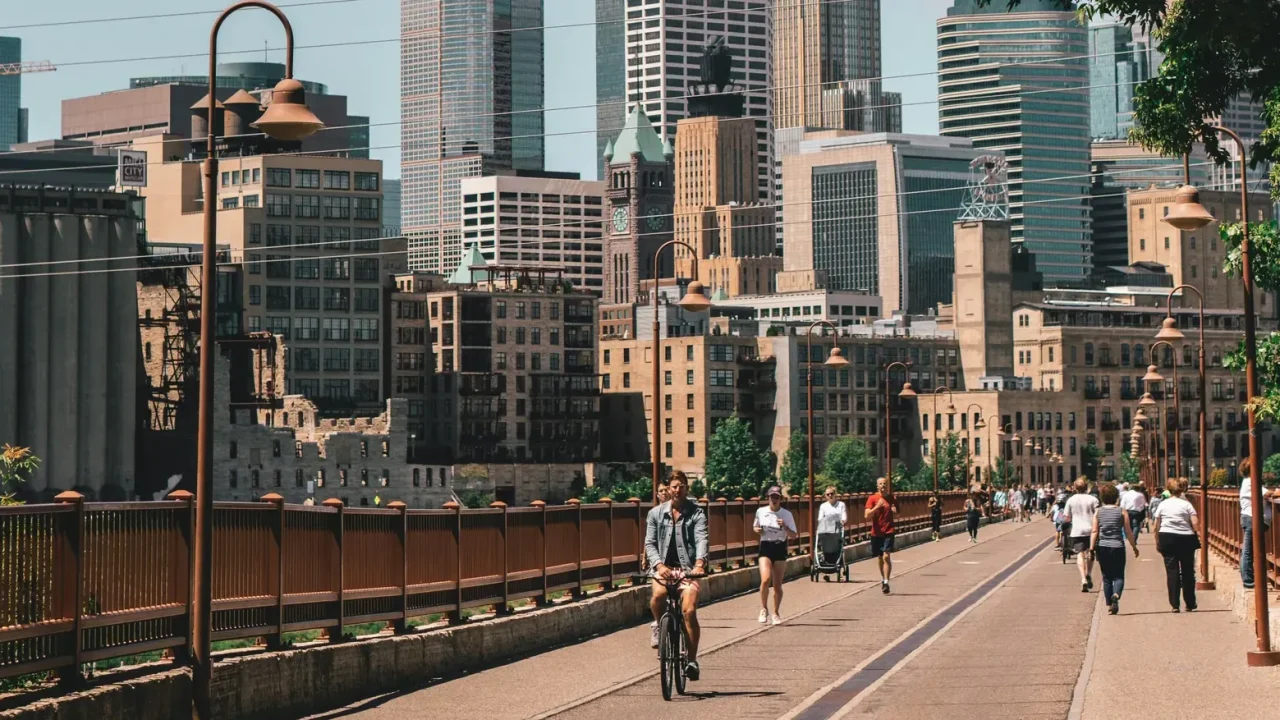

The latest annual city rankings from the nonprofit PeopleForBikes reveal a surprising trend: small towns are leading the nation in bikeability, with some achieving perfect scores while many larger cities continue to grapple with implementing effective cycling infrastructure. The report, which grades the bike networks of over 3,000 US cities, found that communities with fewer than 50,000 residents are setting the benchmark for creating safe and vibrant streets for cyclists.
Three jurisdictions, each with fewer than 2,500 residents, achieved a perfect score of 100. These include the car-free Mackinac Island, Michigan; Old Orchard, Pennsylvania; and Crested Butte, Colorado. Their success demonstrates that even without extensive, dedicated bike lanes, a focus on low-traffic, low-speed roads and off-road paths can create highly bikeable environments. In contrast, major municipalities often face greater challenges in integrating basic bike infrastructure due to higher volumes of car traffic.
Por que importa
Despite the dominance of smaller communities at the top, several larger cities have also made significant progress in reducing car dependency. Brooklyn, New York, topped the list of major cities with a score of 70, followed by Minneapolis at 68 and Seattle at 66. Other notable performers among larger cities included Queens, New York, and San Francisco, rounding out the top five.
Medium-sized cities also showed strong performance, with Hoboken, New Jersey, achieving a score of 83. Rochester Hills, Michigan, followed at 80, and Anchorage, Alaska, scored 72. The report indicates a substantial increase in the number of cities with bike networks suitable for everyday riders, defined as those scoring 50 or higher. This year, 555 jurisdictions met this criterion, more than double the 234 recorded last year.
Contexto
PeopleForBikes updated its scoring methodology for this year’s rankings to better reflect the priorities of safe cycling. The revised approach incorporates changes to the National Association of City Transportation Officials’ (NACTO) definition of low-stress streets, which was updated for the first time in a decade. It also integrates the latest census data and refines infrastructure classifications from previous years.
The analysis employs a two-step process that evaluates both the existence of bikeable streets and their utility. Initially, PeopleForBikes utilizes OpenStreetMap data to identify “low-stress” streets and intersections—those considered more likely to offer a comfortable and safe cycling experience. Subsequently, the assessment examines each street’s connectivity to common destinations, such as grocery stores, hospitals, and residential areas.
Achieving a “low-stress” designation, particularly in larger cities with high car volumes, often necessitates dedicated bicycle infrastructure. However, smaller cities, by virtue of their narrower roads and less controlled intersections, naturally experience reduced vehicle speeds. These jurisdictions often design their road networks with safety in mind from the outset, sometimes obviating the need for traditional bicycle infrastructure. For instance, the three perfect-scoring jurisdictions do not feature any conventional bike lanes, relying instead on low-traffic roads and a few off-road paths.
The report also recognized eight communities for significant improvements in their bikeability scores, earning them “most improved” titles. Mill Valley, California, saw the most substantial jump, increasing its score to 57, a 54 percent rise. Tampa, Florida, and West Hollywood, California, also demonstrated notable progress with 40 percent and 23 percent increases, respectively.
While acknowledging the progress, the report underscores that US cities still have considerable distance to cover in creating bike networks that are safe, pleasant, and useful for all residents. The widespread improvements across cities of varying sizes and regions offer a positive outlook and a valuable toolkit for other municipalities looking to enhance their cycling infrastructure.
Key facts
| Metric | Detail |
|—|—|
| Ranking Body | PeopleForBikes |
| Number of Cities Graded | Over 3,000 |
| Top Scoring Small Towns | Mackinac Island, MI; Old Orchard, PA; Crested Butte, CO (all perfect scores) |
| Top Scoring Large Cities | Brooklyn, NY (70); Minneapolis, MN (68); Seattle, WA (66) |
| Cities with Score >= 50 | 555 (up from 234 last year) |
The insights from this report offer a compelling case for London’s urban planners and policymakers. While London is a global metropolis with a vastly different scale and complexity than the small towns topping these rankings, the fundamental principles of prioritizing low-traffic streets, ensuring connectivity to essential destinations, and updating infrastructure standards based on current safety research remain highly relevant. The success of smaller municipalities in creating safe cycling environments, often through less intensive infrastructure interventions, provides a valuable blueprint. It suggests that a strategic focus on street design that naturally calms traffic, combined with targeted improvements to existing networks, could yield significant gains in bikeability across London’s diverse boroughs. For London, the challenge lies in adapting these lessons to its dense urban fabric, potentially by re-evaluating street hierarchies, implementing comprehensive traffic calming measures, and ensuring new developments integrate seamlessly with enhanced cycling networks. The report’s emphasis on updated methodologies, particularly NACTO’s definition of low-stress streets, also highlights the importance of adopting evidence-based standards for cycling infrastructure design in London’s planning processes.
Source: Streetsblog USA, https://usa.streetsblog.org/2026/06/26/annual-best-bike-city-rankings-yields-small-town-surprises
Datos clave
| Punto | Detalle |
|---|---|
| Fuente | Streetsblog USA |
| Fecha | 2026-06-26T04:04:00+00:00 |
| Tema | Annual ‘Best Bike City’ Rankings Yields Small Town Surprises |
Fuente
Streetsblog USA Publicacion original: 2026-06-26T04:04:00+00:00
Related updates

New York Poll Shows Overwhelming Bipartisan Support for Apartments Near Transit, Highlighting Contrast with London’s Own Housing Debate
A new poll from Open New York finds 79% of voters support building multi-family homes near rail stations, as the governor’s race…
Read update
Seattle City Attorney Launches New Community Court and Repeat Offender Programme Amid Public Defender Concerns
Seattle City Attorney Erika Evans has launched Connection Court, a new community court programme, alongside a punitive High-Priority Repeat Offenses system. The…
Read update
Seattle’s Centers & Corridors Zoning Update Delayed by Environmental Review Ruling
A state hearings board ruling has forced Seattle to rework the environmental impact statement for its twenty-year growth plan, pushing the next…
Read update
FEMA disaster mitigation grants freeze threatens to stall UK resilience learning, planners warn
A US Government Accountability Office report says $2.2 billion in FEMA Building Resilient Infrastructure and Communities grants remain unresolved, delaying more than…
Read update