New York Expands Half-Price Transit Program Amidst Calls for Automatic Enrollment
New York City's "Fair Fares" program, offering reduced transit fares to low-income residents, is set for its largest expansion yet. However, advocates are pushing for automatic enrollment to increase participation.
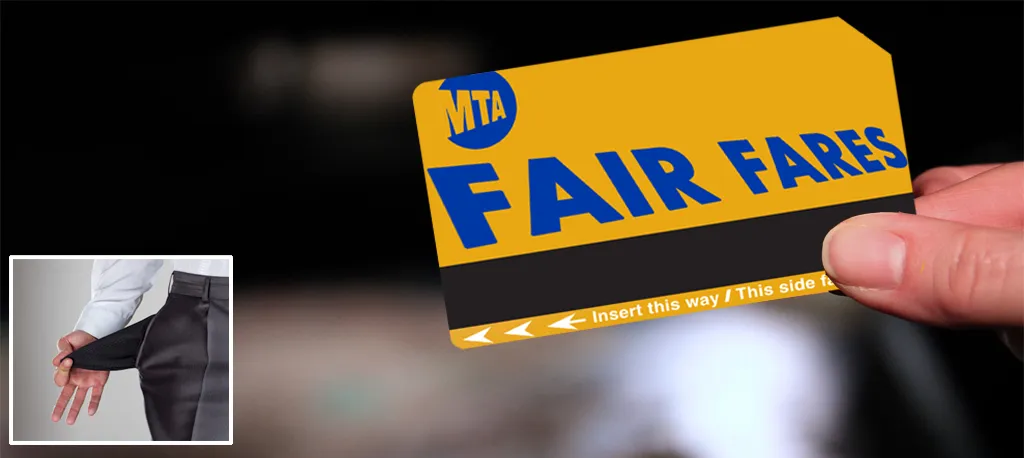
New York City is set to significantly expand its “Fair Fares” program, which provides half-priced transit fares to eligible low-income residents. The agreement between Mayor Mamdani and the City Council marks the program’s largest single-year expansion since its inception in 2019, aiming to make public transportation more accessible for hundreds of thousands of New Yorkers.
The expanded budget, totalling $174.6 million, represents a 54% increase from the mayor’s initial proposal. This funding will extend eligibility to approximately 1.3 million New Yorkers aged 18 to 64 who earn up to 200% of the federal poverty level. City Council Speaker Julie Menin highlighted the expansion as a key achievement, stating, “The Council secured the largest expansion of Fair Fares in the program’s history, making hundreds of thousands more New Yorkers eligible for half-price transit fares.” She emphasized the program’s role in helping residents reach work, school, and medical appointments, while providing financial relief to working families.
Por que importa
Despite the substantial increase in eligibility, a significant hurdle remains: the need for eligible individuals to actively apply for the subsidy. Critics, including Mayor Mamdani himself, have pointed to this application process as a major factor limiting the program’s reach. Currently, only about one-third of eligible participants are enrolled, a participation rate that advocates argue is insufficient.
Transit and anti-poverty organizations are advocating for automatic enrollment to address the low participation rates. They propose that eligible New Yorkers be automatically enrolled by simply being mailed a discounted OMNY card. This approach has seen success in other cities; Philadelphia, for instance, reported 60% participation in its pilot program for automatic enrollment in an income-based free transit initiative.
Contexto
A bill introduced by Council Member Crystal Hudson aims to facilitate automatic enrollment in various city benefit programs, including “Fair Fares.” While Speaker Menin has expressed support for automatic enrollment in “Fair Fares,” she is not currently a co-sponsor of Hudson’s bill.
Mayor Mamdani has previously used the low participation in “Fair Fares” as a rationale for his stalled proposal to eliminate bus fares entirely, arguing that a universal benefit would reach more low-income New Yorkers than the current means-tested, enrollment-based system. The federal poverty level, established by the U.S. Department of Health and Human Services, serves as a guideline for program eligibility but may not perfectly capture all measures of financial need.
Advocates have credited Mayor Mamdani for supporting the expansion, even as it falls short of some of his campaign promises. Betsy Plum, Executive Director of Riders Alliance, stated, “Consistent with what Mayor Mamdani promised during his campaign and with his commitment to economic justice.” The organization looks forward to continued collaboration to reduce public transit costs.
The final agreement, however, did not meet all the demands put forth by advocacy groups. One proposal from a coalition including Riders Alliance sought to offer free fares to adults earning 150% or less of the federal poverty level and half-price fares for those earning between 150% and 300%. Another suggestion from the Citizens Budget Commission recommended expanding the half-price discount to individuals earning up to 250% of the federal poverty level. The Citizens Budget Commission also argued that expanding “Fair Fares” could be more impactful than a universal free bus proposal, given that many low-income working New Yorkers rely on subways for their commutes. Andrew Rein, President of the Citizens Budget Commission, commented, “This common sense move will improve transportation access for more working New Yorkers, enabling riders to choose the mode that works for them at a fraction of the cost of free buses.”
Key facts
| Aspect | Detail |
|—|—|
| Program | Fair Fares (New York City) |
| Eligibility Expansion | To 200% of federal poverty level |
| Target Beneficiaries | 1.3 million New Yorkers aged 18-64 |
| Budget Increase | 54% to $174.6 million |
| Current Participation | Approx. one-third of eligible |
| Proposed Solution | Automatic enrollment via OMNY card |
The expansion of “Fair Fares” directly impacts transportation accessibility for low-income residents, potentially increasing ridership on the subway and bus systems. The ongoing debate around automatic enrollment highlights a broader discussion about efficient and equitable delivery of social benefits within urban systems. For London, this development could offer insights into strategies for improving access to public transport for vulnerable populations and the challenges associated with means-tested subsidy programs.
Source: Streetsblog NYC – Mamdani and City Council Agree to Expand ‘Fair Fares’ Half-Priced Transit Program – https://nyc.streetsblog.org/2026/06/30/mamdani-and-city-council-agree-to-expand-fair-fares-half-priced-transit-program
Datos clave
| Punto | Detalle |
|---|---|
| Fuente | Streetsblog NYC |
| Fecha | 2026-06-30T20:31:10+00:00 |
| Tema | Mamdani and City Council Agree to Expand ‘Fair Fares’ Half-Priced Transit Program |
Fuente
Streetsblog NYC Publicacion original: 2026-06-30T20:31:10+00:00
Related updates

Seattle-Area Race Highlights Diverging Approaches to Housing, Transit and Tech Taxation
A Washington State legislative race in the 32nd District pits incrementalism against urgency on housing supply, transit funding and tech regulation, with…
Read update
New York court ruling on sanctuary policies carries implications for city-level immigration enforcement across the US
A federal judge has dismissed the Trump administration’s attempt to override New York City’s restrictions on immigration enforcement cooperation, citing state sovereignty.…
Read update
Automated license plate readers raise privacy, contract and oversight questions for UK cities
A new US-focused analysis of automated license plate recognition cameras highlights contract, privacy and oversight issues that London boroughs and Transport for…
Read update
Oregon’s “fix it first” dilemma: what London’s transport planners can learn from a revolt against megaprojects
Surveys show Oregonians overwhelmingly want existing roads repaired before new megaprojects are funded, and trust in the state’s transport agency has collapsed.…
Read updateWiki relacionada

Urban Planning Terms: Density, Public Realm and Transit-Oriented Development
A living glossary for terms that appear again and again in planning and development stories.
Read update