
Land Use, Not Just Road Design, Fuels Arterial Dangers, Says Expert
A leading academic argues that the mix of retail and residential along major roads, rather than just their physical design, is the primary driver of pedestrian and cyclist fatalities in the US.
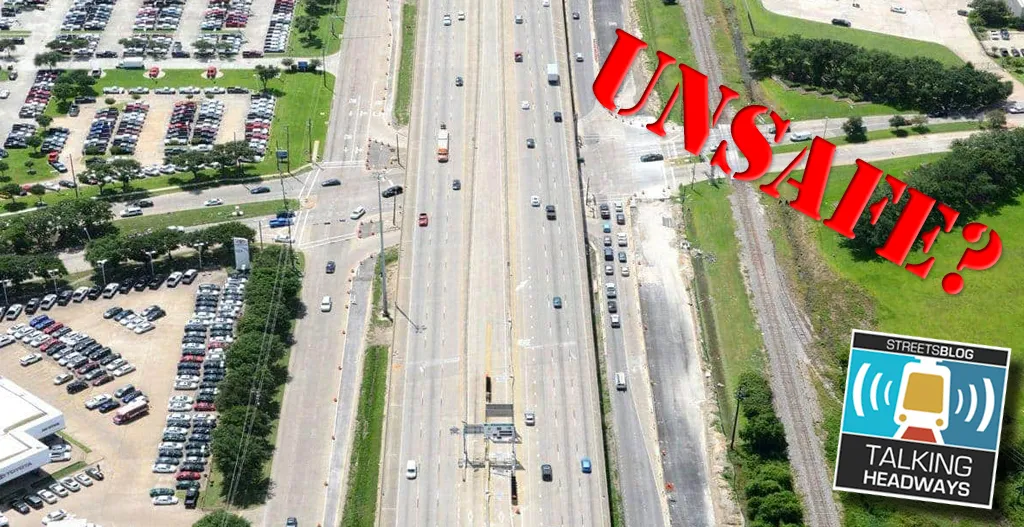
A prominent academic has challenged the prevailing view that road design alone is the primary determinant of safety on major arterial routes. Professor Eric Dumbaugh of Florida Atlantic University argues that the critical factor is not the physical characteristics of the roads themselves, but rather the incompatible land uses that are permitted to develop alongside them. This perspective suggests that a fundamental shift in planning priorities is needed to address the persistent dangers faced by pedestrians and cyclists.
Dumbaugh, a roads scholar with 25 years of experience, presented his findings in a recent episode of the Talking Headways podcast. He contends that while European cities often feature arterials with similar design features to those in the US, the crucial difference lies in the types of activities allowed along these thoroughfares. In many European contexts, pre-automobile street patterns have been maintained or rebuilt with a focus on preserving urban fabric. In contrast, the United States has largely experienced post-World War II growth based on a model that actively integrates automobiles, often exporting non-residential uses to arterial roads.
Por que importa
The core of Dumbaugh’s argument is that the “hazard” on these roads is not inherent in their design but is “activated” by the confluence of different users and activities. He points out that while a 40 mph crash is highly dangerous, the question is why people are walking or cycling in such an environment. His research indicates that after controlling for land use, factors like speed and geometric design become less significant in explaining vulnerable road user deaths and injuries.
Key facts
| Factor | Impact on Arterial Safety |
|---|---|
| Land Use | Primary driver of hazard by activating activities and attracting users. |
| Speed and Geometric Design | Less significant after controlling for land use. |
| Urban Planning Decisions | Channeling growth and permitting specific developments along arterials creates latent hazards. |
| Historical Development Patterns | US growth model since WWII integrated automobiles differently than European post-war rebuilding. |
Dumbaugh draws a distinction between the roles of traffic engineers and city planners. He notes that traffic engineers are tasked with moving traffic efficiently, and in undeveloped contexts, their road designs can be adequate. However, when local planners and economic development officials encourage growth and permit diverse land uses—such as big-box retail, restaurants, and housing—along these same roads, they inadvertently create hazardous conditions. This activation of the road’s “latent hazard” draws pedestrians, cyclists, and vehicles in and out of driveways, leading to increased conflict points.
He contrasts this with environments where such land uses are prohibited along arterials, thereby limiting the exposure of vulnerable road users. The US model, which often segregates residential areas into “cells” and concentrates other uses along major roads, is identified as a significant contributor to this problem. The debate often framed as “cars versus vulnerable users” overlooks the shared danger arising from the confluence of all activities at these points.
The implications for urban planning are substantial. Dumbaugh suggests that retrofitting existing arterials will require more than just minor design tweaks. It necessitates a critical examination of land-use policies that have historically dictated the development patterns along these vital urban corridors. The current approach, he implies, has placed the burden of safety on road design while neglecting the more fundamental issue of what activities are allowed to exist alongside high-speed traffic.
The podcast episode and Dumbaugh’s accompanying paper, “Land Use and Road Safety: Understanding the Persistence of Vulnerable Road User Deaths and Injuries in the United States,” offer a thought-provoking perspective on a persistent urban challenge. The findings call into question whether the focus on engineering solutions is sufficient without addressing the broader spatial and land-use decisions that shape our cities. As urban areas continue to grow and evolve, understanding and rectifying these land-use patterns may be crucial for creating genuinely safer streets for all users.
Source: Streetsblog USA, https://usa.streetsblog.org/2026/06/11/talking-headways-podcast
Fuente
Streetsblog USA Publicacion original: 2026-06-11T16:17:41+00:00
Related updates
New York Poll Shows Overwhelming Bipartisan Support for Apartments Near Transit, Highlighting Contrast with London’s Own Housing Debate
A new poll from Open New York finds 79% of voters support building multi-family homes near rail stations, as the governor’s race…
Read update
Seattle City Attorney Launches New Community Court and Repeat Offender Programme Amid Public Defender Concerns
Seattle City Attorney Erika Evans has launched Connection Court, a new community court programme, alongside a punitive High-Priority Repeat Offenses system. The…
Read update
Seattle’s Centers & Corridors Zoning Update Delayed by Environmental Review Ruling
A state hearings board ruling has forced Seattle to rework the environmental impact statement for its twenty-year growth plan, pushing the next…
Read update
FEMA disaster mitigation grants freeze threatens to stall UK resilience learning, planners warn
A US Government Accountability Office report says $2.2 billion in FEMA Building Resilient Infrastructure and Communities grants remain unresolved, delaying more than…
Read update