
New York Police Department Cracks Down on Public Watch Parties, Raising Questions About Urban Space
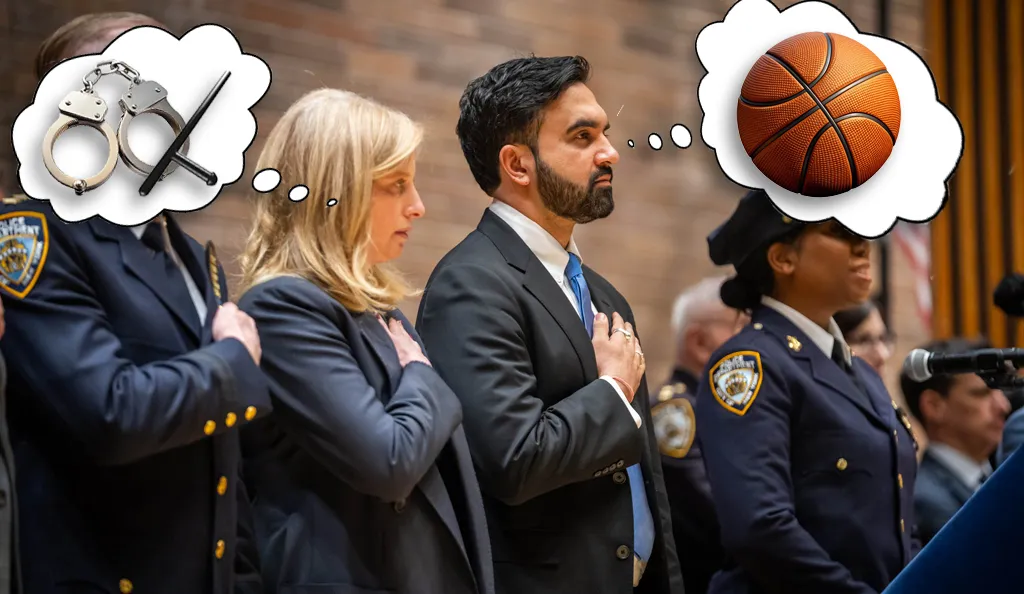
The New York Police Department's decision to shut down large public watch parties for the Knicks playoff games outside Madison Square Garden has sparked debate about the use of public space and policing priorities, with critics questioning the department's stance.
Public Gatherings Under Scrutiny
New York City Mayor Eric Mamdani has expressed support for Knicks fans celebrating the team’s playoff run in public spaces. However, his administration has not overruled the New York Police Department’s (NYPD) decision to shut down large, unofficial watch parties outside Madison Square Garden. This has led to a divergence between the Mayor’s stated intent and the actions of the police department, raising questions about the management of public gatherings and the balance between public enjoyment and public order.
The initial shutdown occurred last Thursday when the NYPD arrested six individuals from a crowd estimated to be around 6,000 people. The department cited a range of alleged offenses, including the throwing of items, jumping police barriers, climbing structures, blocking traffic, and public drinking. These claims contrast with observations that the gatherings appeared to be in line with typical street demonstrations.
Official vs. Unofficial Events
Mamdani’s administration has pointed to officially sanctioned watch parties at venues like Radio City Music Hall and Brooklyn Bowl as alternative locations for fans to gather. However, the NYPD has continued to defend its stance on events outside the arena, citing instances of disorderly conduct at an unofficial gathering on Monday night, including individuals climbing light poles and obstructing traffic.
This approach reflects a broader pattern of the NYPD reportedly quashing other public events. In April, two World Cup watch parties were cancelled following “feedback” from the NYPD to the Department of Transportation, citing a lack of manpower for open streets events. The department also reportedly halted applications for events managed by the Street Activities Permit Office, including a street fair, citing similar resource constraints.
Internal Dynamics and Policing Philosophy
The situation highlights a potentially uneasy relationship between Mayor Mamdani and NYPD Commissioner Jessica Tisch, a holdover from the previous administration. Reports suggest Commissioner Tisch is a “fierce advocate” for her officers, and her public statements indicate disagreements with the Mayor on certain issues. This was previously observed in February when the NYPD sought assault charges for snowball throwing at officers, an action the Mayor downplayed.
Critics, such as Bronx Council Member Oswald Feliz, have voiced concerns about the NYPD’s stringent stance, emphasizing that New Yorkers deserve to enjoy their city and that the police department’s role is to manage, not prohibit, such events. The NYPD’s claim of being cash-strapped for policing public events is also being questioned, especially in light of its participation in joint initiatives with federal agencies to proactively police public spaces, such as operations in Washington Square Park.
Expert Opinion on Crowd Management
Former NYPD commander Anthony Raganella has questioned the harsh stance, suggesting that large crowds will gather regardless of police directives. He advocates for proactive policing strategies rather than reactive measures, stating, “The crowds are going to come regardless of what the NYPD says. They can proactively police it or they can reactively police it.”
The implications of these decisions extend beyond sports events, potentially influencing the city’s approach to future public gatherings, street festivals, and open-street initiatives. The NYPD’s interpretation of public order and its allocation of resources for managing large crowds in urban settings are central to this ongoing discussion.
Key facts
| Aspect | Detail |
|---|---|
| Event Type | Public watch parties for New York Knicks playoff games |
| Location of Dispute | Outside Madison Square Garden, New York City |
| NYPD Stance | Shutdown of unofficial gatherings citing public safety concerns |
| Mayor’s Position | Supports public celebration, but not overriding NYPD on outdoor events |
| Alternative Venues | Official watch parties at Radio City Music Hall and Brooklyn Bowl |
The conflict over public watch parties underscores a larger debate in New York City about the accessibility and use of public space, the role of policing in managing crowds, and the city’s capacity to host vibrant, large-scale public events. The NYPD’s focus on enforcing strict order outside Madison Square Garden, while citing resource limitations, contrasts with its involvement in other public space enforcement initiatives. This raises questions about consistency in policy and the city’s commitment to fostering a dynamic urban environment for its residents and visitors. The decisions made in these instances could set precedents for how public space is managed during major public events in the future.
Fuente: Streetsblog NYC (https://nyc.streetsblog.org/2026/05/26/knicks-watch-parties-are-back-just-not-outside-madison-square-garden)
Fuente
Streetsblog NYC Publicacion original: 2026-05-27T00:08:50+00:00
Related updates
New York Poll Shows Overwhelming Bipartisan Support for Apartments Near Transit, Highlighting Contrast with London’s Own Housing Debate
A new poll from Open New York finds 79% of voters support building multi-family homes near rail stations, as the governor’s race…
Read update
Seattle City Attorney Launches New Community Court and Repeat Offender Programme Amid Public Defender Concerns
Seattle City Attorney Erika Evans has launched Connection Court, a new community court programme, alongside a punitive High-Priority Repeat Offenses system. The…
Read update
Seattle’s Centers & Corridors Zoning Update Delayed by Environmental Review Ruling
A state hearings board ruling has forced Seattle to rework the environmental impact statement for its twenty-year growth plan, pushing the next…
Read update
FEMA disaster mitigation grants freeze threatens to stall UK resilience learning, planners warn
A US Government Accountability Office report says $2.2 billion in FEMA Building Resilient Infrastructure and Communities grants remain unresolved, delaying more than…
Read update