
Cities Excel at Documenting Crashes, But Fail to Learn From Them
A shift in approach from processing individual incidents to building a systemic learning practice is crucial for improving urban safety, according to Strong Towns.
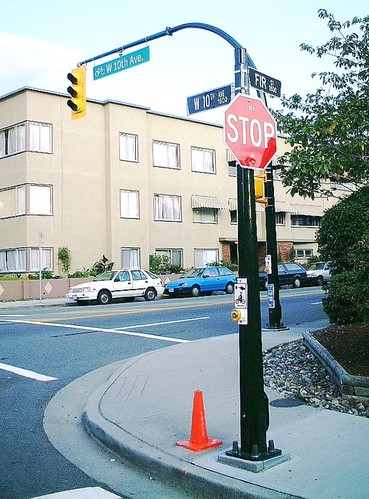
A recent analysis by Strong Towns argues that while most cities have robust systems in place for investigating traffic crashes, these systems are fundamentally designed for assigning blame rather than fostering genuine learning and improvement. This approach, the article contends, leads to repeated patterns of failure on city streets, hindering progress towards achieving ambitious safety goals like Vision Zero.
The traditional crash investigation model, rooted in legal and insurance requirements, focuses on identifying the responsible party by examining user behaviour – speeding, failure to yield, or distraction. While essential for individual case resolution, this narrow focus often relegates the built environment to mere background context. The inherent design of streets, the signals they send to drivers, and the cumulative impact of past urban planning decisions are rarely systematically examined as contributing factors.
Why it matters
This siloed approach means that valuable data collected by police departments often remains within that department, failing to inform broader multidisciplinary conversations about systemic issues. Simultaneously, other city departments, such as engineering or public works, may observe aggregate crash data, resident complaints about speeding, or near-miss incidents. However, these disparate pieces of information are seldom integrated to answer the critical question: what did this crash reveal about the system?
The consequence is a cycle of recurring problems. The same intersections and corridors appear repeatedly in crash reports, with each incident treated as an isolated event rather than a symptom of a larger systemic failure.
Contexto
A Different Discipline: Ann Arbor’s Approach
The article highlights the city of Ann Arbor, Michigan, as an example of a municipality taking a different tack. Ann Arbor, like many cities, adopted a Vision Zero plan with the objective of eliminating traffic fatalities and serious injuries. However, they extended this commitment beyond goal-setting to operational practice.
The city established a standing, multidisciplinary Crash Response Team tasked with reviewing every serious crash. This team’s mandate goes beyond mere documentation; it actively seeks to understand the contributing factors by bringing together staff from various disciplines. This multi-angle review begins with the assumption that multiple factors are at play, examining not only user behaviour but also street design, surrounding context, and the institutional decisions that shaped these elements.
The team’s primary objective is not to assign blame but to comprehend how the system functioned and where it failed. Ann Arbor’s initiative in inviting Strong Towns to facilitate a Crash Analysis Studio further underscores their dedication to strengthening their existing crash review process. This commitment to a structured, repeatable practice, rather than solely relying on specific tools or methodologies, is what sets them apart.
Ann Arbor’s model signifies a shift towards a different kind of discipline within city governance. Crash review is institutionalised as a consistent, intentional activity that incorporates multiple perspectives and acknowledges complexity. Crucially, it is explicitly oriented towards learning.
Moving Learning to the Forefront
In contrast, many cities treat learning as incidental. It might occur if a pattern is noticed over years, if a proposed project serendipitously aligns with a known issue, or if a particularly severe crash captures public attention. It is not, however, typically built into the routine operations of the system. Ann Arbor, by contrast, has placed this learning at the centre of its process. They are not waiting for patterns to emerge organically; instead, they are treating each serious crash as an opportunity to understand street functionality in the real world and to allow different forms of expertise to inform one another.
The article posits that the issue is not a lack of data, as most cities already possess the necessary information. The core challenge lies in creating the conditions for this data to become shared understanding, and for that understanding to drive meaningful change.
The Ann Arbor example suggests that while resources, staffing, and political alignment are beneficial, the fundamental difference is a commitment to practice. In many municipalities, crash investigation is a task to be completed. In Ann Arbor, crash review is an ongoing activity that the institution has deliberately chosen to prioritise, structuring it, repeating it, and continuously evaluating it for improvement. This transformation from reacting to individual events to cultivating a practice of learning is what imbues a safety plan with tangible impact beyond its written form.
Ann Arbor has also made this information accessible to the public through an interactive Traffic Crashes Dashboard, which tracks trends and maintains a focus on achieving zero fatalities.
For other cities, the specific structure of Ann Arbor’s approach may not be directly replicable, but the underlying principles are essential. If crash data remains confined to a single department, if reports are filed without broader review, and if the built environment is viewed as immutable rather than as a subject for inquiry, then the system will inevitably continue to yield similar outcomes.
The first step, according to Strong Towns, is not the adoption of a new tool or policy. It is a conscious decision by a city to treat crashes as opportunities for collective, regular learning. This requires establishing structure, convening the appropriate stakeholders, and cultivating the discipline to persist with the process, even when the findings are uncomfortable or incomplete. Ann Arbor’s experience demonstrates that this proactive and learning-oriented approach is achievable.
Key facts
| Aspect | Description |
|—|—|
| Problem | Cities document crashes but fail to learn from them due to a focus on fault assignment over systemic analysis. |
| Example of Solution | Ann Arbor, Michigan, has established a multidisciplinary Crash Response Team to systematically review serious crashes for contributing factors. |
| Core Principle | Shifting from reactive event processing to a proactive, institutionalised practice of learning from crashes. |
| Outcome | Improved understanding of systemic failures in street design and policy, leading to potential for real change and progress towards safety goals like Vision Zero. |
This shift in perspective has profound implications for urban planning, transport policy, and public safety. By moving beyond the mere processing of incidents to a dedicated practice of learning, cities can begin to address the root causes of traffic danger, redesigning streets and systems to be inherently safer and more resilient. This approach fosters a culture of continuous improvement, where data and lived experience are integrated to inform evidence-based decision-making, ultimately leading to better outcomes for all urban dwellers. The emphasis on multidisciplinary collaboration ensures that a holistic view of safety is maintained, considering not just individual actions but the complex interplay of urban design, policy, and human behaviour.
Source: Strong Towns (https://www.strongtowns.org/journal/2026-6-3-every-city-investigates-crashes-very-few-actually-learn-from-them)
Key facts
| Point | Detail |
|---|---|
| Source | Strong Towns |
| Date | 2026-06-03T00:00:00+00:00 |
| Topic | Every City Investigates Crashes. Very Few Actually Learn From Them. |
Fuente
Strong Towns Publicacion original: 2026-06-03T00:00:00+00:00
Related updates
Seattle social housing land deal offers lessons for London’s community-led delivery
Seattle’s social housing developer has acquired its first site for a mixed-income project, aiming for 1,000 homes by end of 2026. The…
Read update
When zoning reform meets private covenants: the HOA obstacle to backyard cottages
As more US cities rewrite zoning rules to allow accessory dwellings, private homeowners’ association covenants remain a barrier that reform alone cannot…
Read update
Seattle-Area Race Highlights Diverging Approaches to Housing, Transit and Tech Taxation
A Washington State legislative race in the 32nd District pits incrementalism against urgency on housing supply, transit funding and tech regulation, with…
Read update
New York court ruling on sanctuary policies carries implications for city-level immigration enforcement across the US
A federal judge has dismissed the Trump administration’s attempt to override New York City’s restrictions on immigration enforcement cooperation, citing state sovereignty.…
Read update