
Los Angeles ‘Open Streets’ Festival Celebrates Community and Culture in South Central
Thousands gathered for CicLAvia’s open streets event, transforming major boulevards into pedestrian and cyclist zones, highlighting community engagement and cultural festivities in the Historic South Los Angeles Black Cultural District.
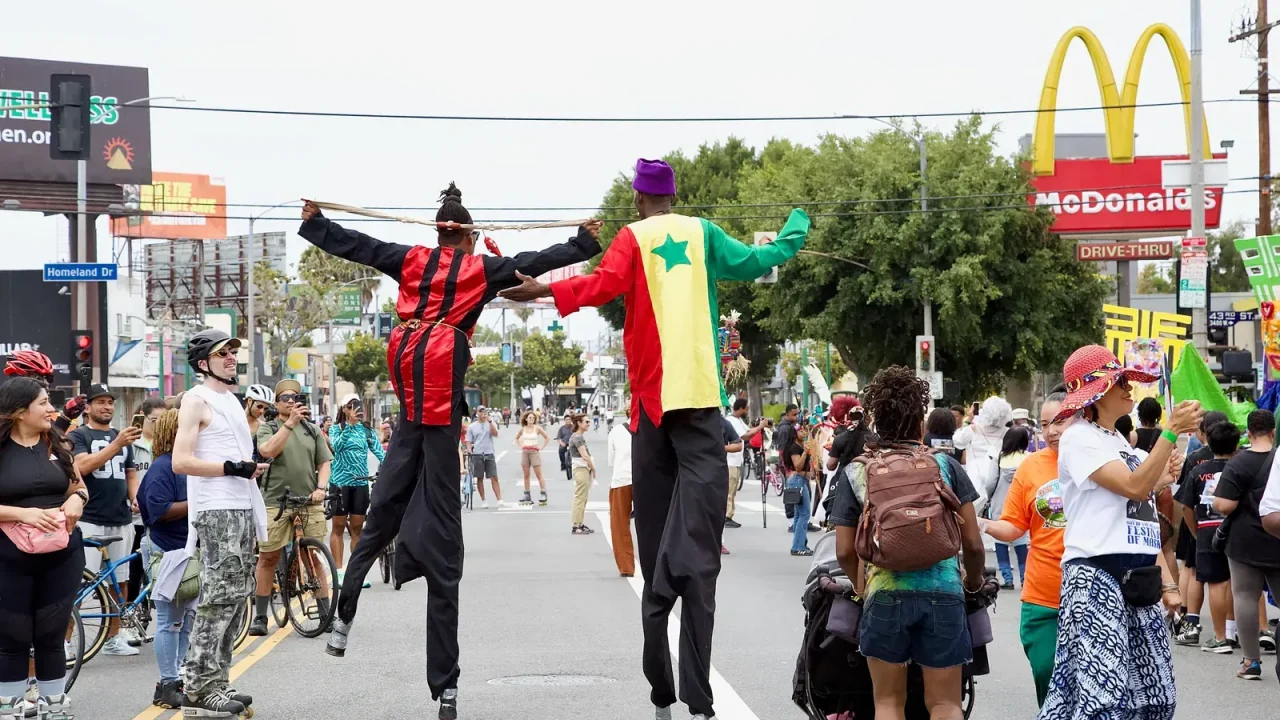
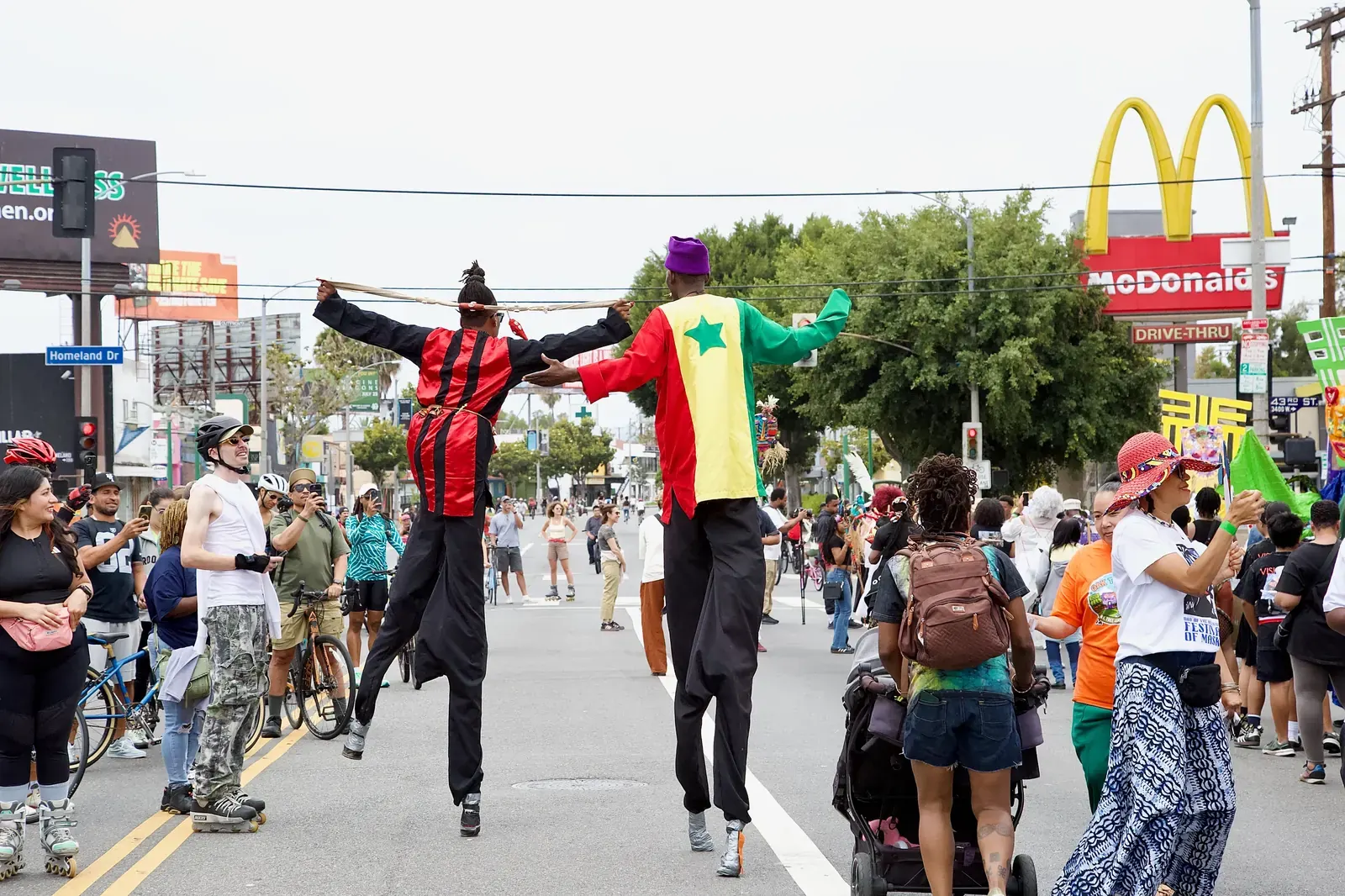
Thousands of Angelenos filled Martin Luther King, Jr. and Crenshaw Boulevards on Sunday for CicLAvia’s 66th open streets festival, an event that temporarily closed 3.6 miles of roadway to cars, allowing residents to reclaim the streets for recreation, socialising, and cultural celebration. The route connected Exposition Park, in front of the BMO Soccer Stadium, with the Leimert Park Plaza at 43rd and Crenshaw.
The festival mirrored the route of the King Day parade, a significant annual event for the area, making the open streets format familiar and accessible to many local residents. Participants engaged in a variety of activities, from leisurely strolls and roller skating to skateboarding and family bike rides. The event also served as a vibrant hub for neighbours to connect, share their passion for cycling, and interact with community leaders. Local bike shops offered on-site tune-ups and repairs, reinforcing the event’s focus on active transportation.
Community and Culture in Historic South Los Angeles
This year’s CicLAvia held particular significance as it coincided with the 16th annual Day of the Ancestors: Festival of Masks in Leimert Park. This alignment underscored the event’s role in celebrating and reinforcing the identity of the Historic South Los Angeles Black Cultural District. Leimert Park, widely recognised as a cultural epicentre for the Black community, provided a fitting backdrop for a multigenerational celebration of arts, culture, and heritage.
The festival offered a rich tapestry of experiences, including dance, music, poetry, and art. Attendees witnessed an “ancestors procession” that originated from the plaza at 43rd Place and Degnan, weaving its way north through the crowds on Crenshaw Boulevard before returning to the village. This procession honoured beloved community members, with this year’s tributes including the late S. Pearl Sharp, Horace Tapscott, Aiysha Sinclair, Meri Ka Ra (Reverend Richard Byrd), and Kimberly Bolanile Paggett.
Organisational Support and Community Participation
The event was a collaborative effort, organised by L.A. Commons and the KAOS Network. These organisations play a crucial role in fostering community engagement and cultural programming within South Los Angeles. The active participation of local bike clubs, such as the Crenshaw Bike Club, added to the vibrant atmosphere, with members riding through as organised groups. Other groups, like the East Side Riders, contributed by managing a hub, offering bike repairs, and selling refreshments with Beanie Cycle.
Following the official closure of the streets to vehicles, Leimert Park Plaza hosted the CicLAvía afterparty. RideOn Bike Co-op’s Adé Neff, performing under his Utopia Tribe persona, provided a dance party that further extended the day’s celebratory mood for both visitors and local residents.
Key facts
| Aspect | Details |
|---|---|
| Event | CicLAvia’s 66th open streets festival |
| Date | Sunday (precise date not specified in source) |
| Location | Martin Luther King, Jr. Boulevard and Crenshaw Boulevard, Los Angeles |
| Route Length | 6 miles, between Exposition Park and Leimert Park Plaza |
| Organisers | L.A. Commons and the KAOS Network |
| Cultural Context | Coincided with the 16th annual Day of the Ancestors: Festival of Masks in Leimert Park |
| Honourees | S. Pearl Sharp, Horace Tapscott, Aiysha Sinclair, Meri Ka Ra, Kimberly Bolanile Paggett |
This event exemplifies how open streets initiatives can transform urban environments into dynamic public spaces. By temporarily removing vehicular traffic, CicLAvia fosters a sense of community ownership and provides opportunities for diverse activities, from casual recreation to organised cultural events. The integration with local cultural festivals, such as the Day of the Ancestors, amplifies the impact, turning street closures into celebrations of local identity and heritage. For planners and residents, such events highlight the potential of streets as more than just conduits for cars, but as vital spaces for social interaction, cultural expression, and active living. The success of CicLAvia in South Los Angeles demonstrates a model for how urban areas can create inclusive, engaging public realms that reflect and serve their communities.
Source: Streetsblog LA – CicLAvia Leimert Park Meets Expo Park – https://la.streetsblog.org/2026/06/30/ciclavia-leimert-park-meets-expo-park
Fuente
Streetsblog LA Publicacion original: 2026-06-30T17:32:28+00:00
Related updates
New York Poll Shows Overwhelming Bipartisan Support for Apartments Near Transit, Highlighting Contrast with London’s Own Housing Debate
A new poll from Open New York finds 79% of voters support building multi-family homes near rail stations, as the governor’s race…
Read update
Seattle City Attorney Launches New Community Court and Repeat Offender Programme Amid Public Defender Concerns
Seattle City Attorney Erika Evans has launched Connection Court, a new community court programme, alongside a punitive High-Priority Repeat Offenses system. The…
Read update
Seattle’s Centers & Corridors Zoning Update Delayed by Environmental Review Ruling
A state hearings board ruling has forced Seattle to rework the environmental impact statement for its twenty-year growth plan, pushing the next…
Read update
FEMA disaster mitigation grants freeze threatens to stall UK resilience learning, planners warn
A US Government Accountability Office report says $2.2 billion in FEMA Building Resilient Infrastructure and Communities grants remain unresolved, delaying more than…
Read update