
Chicago’s Equitable Transit-Oriented Development Plan Shows Progress in Affordable Housing and Urban Vibrancy
A new report highlights significant progress in Chicago's Equitable Transit-Oriented Development (ETOD) plan, five years after its adoption. The initiative aims to increase affordable housing density near transit hubs, improve walkability, and foster vibrant communities, with a focus on underserved areas.
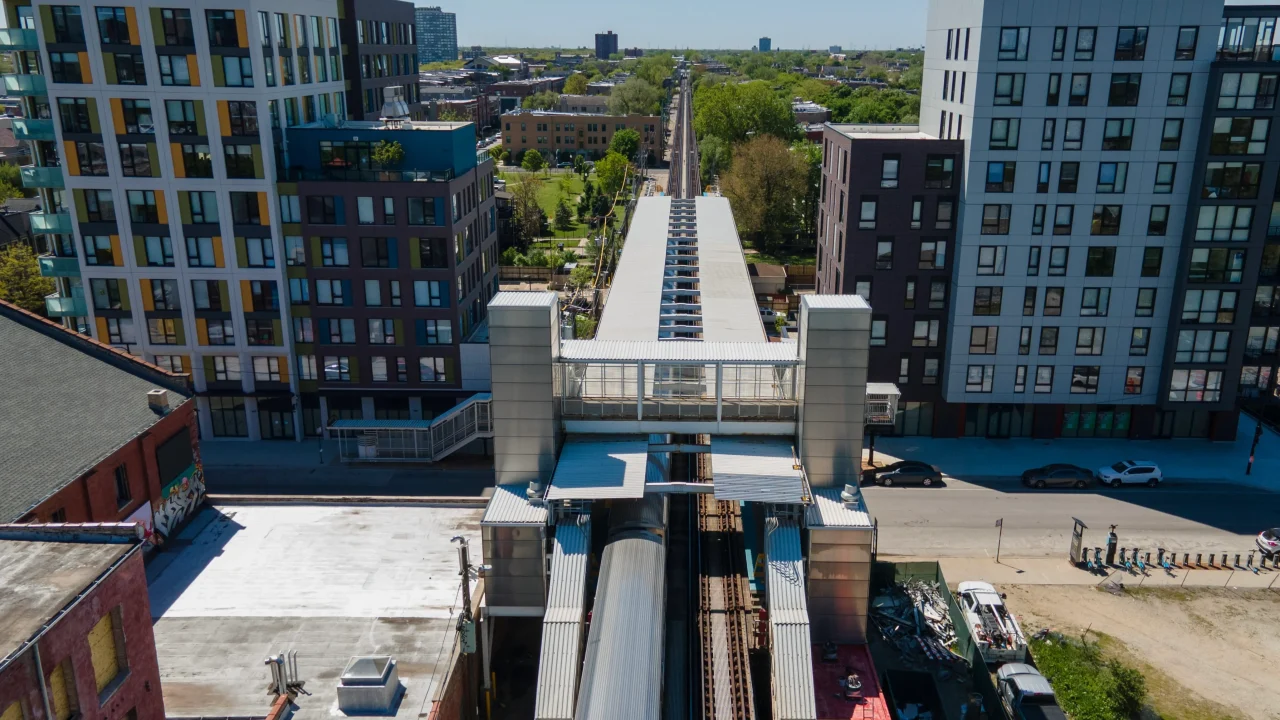

A recent report, “The State of ETOD in Chicago,” details the progress of the City of Chicago’s Equitable Transit-Oriented Development (ETOD) Policy Plan five years after its adoption. The plan, designed to boost affordable housing density near public transport and create more walkable, vibrant, and accessible urban areas, has made “significant progress” on 22 of its 42 recommendations and “progress” on the remaining 20, according to the report’s authors.
The ETOD Policy Plan, adopted by the City Council in 2021, emerged from concerns that earlier transit-oriented development (TOD) projects between 2013 and 2015 disproportionately benefited North Side neighborhoods, potentially accelerating displacement. The current plan prioritises investment in underserved communities across Chicago, aiming for a more equitable distribution of benefits from transit infrastructure.
Policy and Legislative Milestones
Key governmental and policy changes have underpinned much of the ETOD plan’s success. A significant development was the creation of an ETOD working group, co-chaired by Elevated Chicago—a leading organisation in advancing ETOD—and the Mayor’s Office. This collaborative body has been instrumental in steering the policy agenda and ensuring coordinated efforts across various city departments and community stakeholders.
A major legislative achievement was the passing of the 2022 Connected Communities Ordinance. This zoning reform measure was designed to accelerate approvals for affordable housing projects and reduce minimum parking requirements, particularly for developments situated near transit hubs. The ordinance expanded the traditional TOD zone to a half-mile radius around CTA and Metra stations and extended incentives to include corridors served by frequent bus routes. Critically, it eliminated one-size-fits-all parking mandates for high-density housing near transit and capped on-site parking in new residential developments, thereby freeing up land for housing and reducing development costs. The ordinance also included provisions to prevent the conversion of two- and three-flat buildings near transit into single-family homes in communities facing displacement pressures, aiming to preserve existing affordable housing stock.
Further strengthening the regional transit framework, the Northern Illinois Transit Authority (NITA) Act was passed last year. This legislation fully funds regional transit and streamlines the previous Regional Transportation Authority into the more empowered NITA. A crucial aspect of the NITA Act is its provision allowing transit agencies to partner with developers to build on land they own. This creates a multi-faceted benefit: transit agencies can spur community development, increase housing density close to transit, and generate revenue, aligning directly with ETOD principles.
Project Implementation and Community Engagement
Beyond legislative changes, direct city support has been provided to ETOD projects through grants and technical assistance. Since the adoption of the Policy Plan, Elevated Chicago and the City have collectively awarded grants and offered technical guidance to 29 ETOD projects. Of these, 24 have successfully acquired their sites, seven have broken ground, and seven have reached completion. This demonstrates tangible progress in moving projects from concept to reality, impacting communities across the city.
Arts and culture initiatives have also been integrated into the ETOD strategy to enhance the vibrancy and walkability of transit hubs. In 2025, the new Culture Near Transit Program, supported by Elevated Chicago and the MacArthur Foundation, awarded eight grants totalling $340,000 for art installations and place-keeping activities near transit stations. In 2026, three additional transit culture projects were announced, benefiting organisations such as Mandala South Asian Performing Arts, Endeleo Institute, and the McKinley Park Development Council. These projects aim to embed cultural amenities within transit-served areas, making them more attractive and functional public spaces.
Community engagement and outreach have been central to the ETOD efforts. These activities have included walking tours for elected officials and policymakers, direct outreach to alderpersons, engagement with local schools and universities, and the development of educational materials. These materials, including posters and short videos, explain the concept of ETOD and highlight the benefits of right-sizing parking, aiming to build broader public understanding and support for the initiative.
Data, Research, and Future Recommendations
The ETOD Policy Plan also emphasised the importance of data collection and research to inform future development. Significant progress has been made in this area. The Center for Neighborhood Technology and the Metropolitan Planning Council collaborated to create the ETOD Social Impact Calculator, a tool designed to help developers quantify the value and impact of transit-oriented developments. The Metropolitan Planning Council also released a scorecard to assist community organisations in evaluating development proposals through an ETOD lens, ensuring that projects align with equitable outcomes.
Furthermore, the DePaul Institute of Housing Studies, in partnership with institutional and community groups, conducted a study on vacant lots near transit and their impact on the quality of life in the South and West Sides of Chicago. This research provides critical insights into potential development opportunities and challenges in underserved areas. The report includes maps illustrating the distribution of ETOD projects and other developments that have benefited from the Connected Communities Ordinance, showing a more even distribution across the city’s north, west, and south regions.
Key facts:
- Plan Adoption: City of Chicago ETOD Policy Plan adopted by City Council in 2021.
- Progress on Recommendations: “Significant progress” on 22 of 42 recommendations; “progress” on remaining 20.
- Key Legislation: 2022 Connected Communities Ordinance (zoning reform) and Northern Illinois Transit Authority Act (2025).
- Project Support: 29 ETOD projects received grants/technical assistance; 24 acquired sites, 7 broken ground, 7 completed.
The report concludes with a series of recommendations for the next five years of ETOD policy and action, both within Chicago and its surrounding areas. These recommendations prioritise strengthening policies to prevent displacement, preserving existing affordable housing, and increasing the supply of multi-unit housing near transit. Enhancing accessibility and walkability, alongside continued investment in cultural activities and community infrastructure near transit, are also high on the agenda.
The authors stress the importance of ongoing collaboration between the city, advocates, and private partners, regardless of administrative changes. This continuity is deemed vital for the successful completion of long-term equitable development projects. They also recommend that equity serve as a guiding principle for bus service and infrastructure improvements and suggest extending ETOD strategies to transit hubs located outside city limits.
Coming on the eve of Chicagoland’s transition to the new Northern Illinois Transit Authority (NITA), the report makes a direct appeal for NITA to prioritise equitable TOD. Specific recommendations for NITA include hiring dedicated ETOD staff, fostering public and private sector partnerships, immediately investing in ETOD projects, and providing technical assistance to community developers. The report asserts that Chicago has successfully laid the groundwork for a more connected, vibrant, affordable, and equitable city over the past five years.
Source: Streetsblog Chicago “Five years after City of Chicago signed off on a policy plan, the “State of ETOD in Chicago” report notes progress creating transit-friendly affordable housing” https://chi.streetsblog.org/2026/05/19/five-years-after-city-of-chicago-signed-off-on-a-policy-plan-the-state-of-etod-in-chicago-report-notes-progress-creating-transit-friendly-affordable-housing
Fuente
Streetsblog Chicago Publicacion original: 2026-05-19T14:08:35+00:00
Related updates

New York Poll Shows Overwhelming Bipartisan Support for Apartments Near Transit, Highlighting Contrast with London’s Own Housing Debate
A new poll from Open New York finds 79% of voters support building multi-family homes near rail stations, as the governor’s race…
Read update
Seattle City Attorney Launches New Community Court and Repeat Offender Programme Amid Public Defender Concerns
Seattle City Attorney Erika Evans has launched Connection Court, a new community court programme, alongside a punitive High-Priority Repeat Offenses system. The…
Read update
Seattle’s Centers & Corridors Zoning Update Delayed by Environmental Review Ruling
A state hearings board ruling has forced Seattle to rework the environmental impact statement for its twenty-year growth plan, pushing the next…
Read update
FEMA disaster mitigation grants freeze threatens to stall UK resilience learning, planners warn
A US Government Accountability Office report says $2.2 billion in FEMA Building Resilient Infrastructure and Communities grants remain unresolved, delaying more than…
Read updateWiki relacionada

Urban Planning Terms: Density, Public Realm and Transit-Oriented Development
A living glossary for terms that appear again and again in planning and development stories.
Read update