
New York Poll Shows Overwhelming Bipartisan Support for Apartments Near Transit, Highlighting Contrast with London’s Own Housing Debate
A new poll from Open New York finds 79% of voters support building multi-family homes near rail stations, as the governor’s race highlights stark divisions on housing policy. The findings offer a transatlantic comparison for London, where transit-oriented development remains a central but contested strategy for address
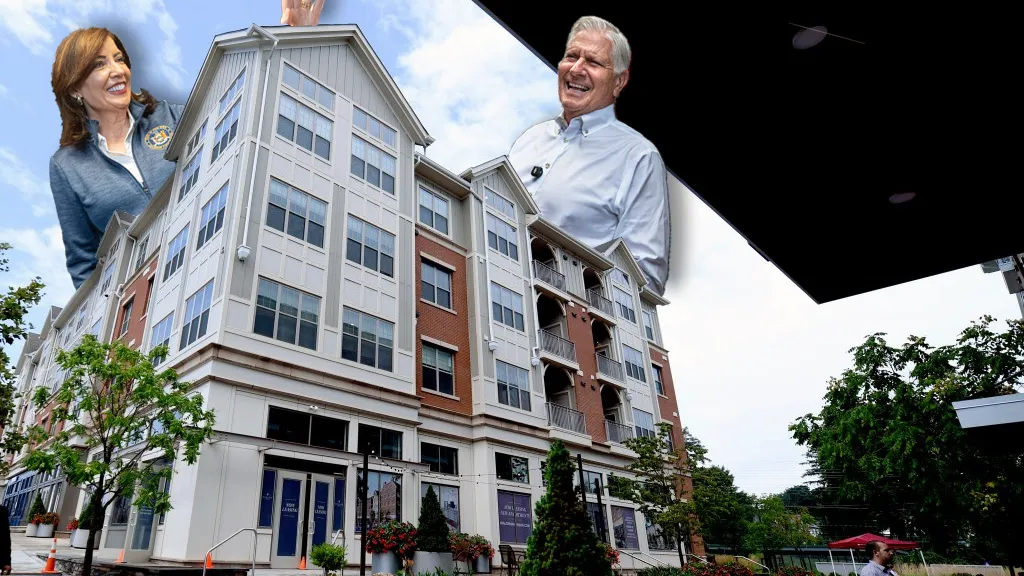
A new poll commissioned by the pro-housing group Open New York has found that nearly four in five New York voters support building more multi-family housing near rail stations, a result that cuts across party lines, regions, and tenure types. The survey, conducted by Global Strategy Group among 600 likely general-election voters from 31 August to 6 September, carries a margin of error of plus or minus four percentage points. It tested several proposed housing reforms, with support for transit-oriented development reaching 79 percent—the highest of any item measured.
The findings arrive as New York Governor Kathy Hochul and her Republican challenger, Nassau County Executive Bruce Blakeman, stake out sharply opposing positions on housing policy. During their only head-to-head debate on NY1/Spectrum News, Hochul expressed regret that she had not pushed harder for housing construction earlier in her term and criticised Nassau County’s resistance to new development. Blakeman responded by framing rising home values as a policy success, stating that a house bought four years ago for $600,000 in his county was now worth $850,000 “because of my policies.”
The poll’s timing and the debate’s content offer a useful transatlantic comparison for London, where the tension between housing delivery and local resistance to density is a familiar story. The capital’s own transit-oriented development ambitions—most notably around new stations on the Elizabeth line, the Northern Line Extension to Battersea, and the proposed Bakerloo line extension—have frequently run into opposition from boroughs and residents concerned about neighbourhood character, infrastructure capacity, and affordable housing provision.
Bipartisan and geographic breadth
The Open New York poll found that support for apartment construction near transit is not confined to any single demographic. Among Democrats, 87 percent backed the idea, compared with 76 percent of independents and 68 percent of Republicans. Homeowners and renters showed nearly identical support levels: 78 percent and 79 percent respectively. Voters living within walking distance of a station were as supportive as those who were not—78 percent compared with 80 percent.
On Long Island, where Blakeman’s county has been a focal point of resistance to state housing mandates, 70 percent of voters supported building near rail stations, and 53 percent backed giving the state the ability to override local zoning decisions to increase housing supply. These numbers challenge the narrative that suburban voters are uniformly opposed to density, a dynamic that resonates in London’s outer boroughs where similar debates play out over garden suburbs, green belt release, and mansion-block conversions.
The poll also tested support for reforms to the state’s environmental review process, which Hochul signed into law on 27 May. These changes exempt certain housing, parks, and trails from lengthy environmental reviews. Among voters who live near a train station, 84 percent supported lighter environmental review, compared with 70 percent of those who do not.
Key facts
| Item | Detail |
|---|---|
| Poll support for multi-family housing near transit | 79% overall; 87% Democrats, 68% Republicans |
| Long Island support for state override of local zoning | 53% |
| Long Island support for housing near rail stations | 70% |
| Voters whose commute is longer than desired due to housing costs | 19% overall; 33% in outer boroughs; 30% among renters |
Housing costs pushing commuters further out
The poll also revealed the practical consequences of constrained housing supply near jobs. Nineteen percent of voters said their commute is longer than they want because they cannot afford to live closer to their workplace. That figure rises to 33 percent in New York City’s outer boroughs and 30 percent among renters. The finding echoes a pattern familiar in London, where rising rents and house prices have pushed lower- and middle-income workers into longer commutes from outer boroughs, the Home Counties, and beyond.
Ben Furnas, executive director of Transportation Alternatives, noted the financial burden of car-dependent commutes. “If you have to own a car to get to work, you’re paying an average of $9,000 a year in vehicle expenses,” he said in a statement. The argument mirrors Transport for London’s own data showing that car ownership costs significantly more than public transport use, yet many Londoners feel compelled to drive because of poor public transport links or unaffordable housing near their jobs.
What this means for London
While the poll addresses New York state politics, its findings are directly relevant to London’s housing debate. The capital faces a long-term shortfall of roughly 50,000 homes per year against its target of 66,000, according to the London Plan. Transit-oriented development has been a cornerstone of the Mayor of London’s strategy, with policies encouraging higher densities around existing and planned stations. Yet delivery has been uneven.
The Bakerloo line extension, which would open up substantial development capacity in south-east London, remains unfunded and unconfirmed. The Northern Line Extension to Battersea Power Station, completed in 2021, has delivered thousands of new homes but also sparked criticism over the proportion of affordable housing. The Elizabeth line has catalysed development in areas such as Paddington, Farringdon, and Woolwich, but local opposition has delayed or reduced the scale of some schemes.
The New York poll suggests that voter support for transit-oriented housing may be broader than politicians assume. In London, polling by YouGov and others has shown consistent public support for building more homes, but support often drops when questions specify a location close to the respondent’s home. The Open New York data, which found that support remained high even among voters who do not live near a station, may offer a lesson: framing housing policy around transit access and affordability could build a wider coalition than one focused on density alone.
Blakeman’s debate performance, in which he explicitly claimed credit for rising house prices, has been seized upon by housing advocates as a clear articulation of the costs of restrictive zoning. Annemarie Gray, executive director of Open New York, said the poll showed that “New Yorkers are telling us something simple: they want to live near the train and near their jobs, and too many of them can’t afford to.”
The debate and the poll have revived discussion of Hochul’s 2023 proposal for transit-oriented zoning reform, which was shelved after opposition from suburban leaders. With transit-oriented zoning off the table, the Hochul administration has instead focused on developing housing on state-owned land near transit, including a 265-unit mixed-income project at the Beacon Metro-North station approved by the MTA board in July.
For London, the lesson is that political will and public opinion may be more aligned than the noise of opposition suggests. The challenge remains turning that alignment into delivered homes, particularly in places where local planning authorities remain resistant to density. The New York experience also underscores the importance of state-level intervention when local opposition blocks development—a dynamic that the London Plan, the Housing and Planning Act, and the proposed use of development corporations all attempt to address, with mixed results.
Source: Streetsblog NYC, “Poll Shows Huge Support for Apartments Near Transit As Hochul, Blakeman Debate Housing,” https://empire.streetsblog.org/poll-new-yorkers-back-apartments-near-transit-as-blakeman-touts-high-housing-costs
Fuente
Streetsblog NYC Publicacion original: 2026-10-14T15:30:53+00:00
Related updates
Seattle City Attorney Launches New Community Court and Repeat Offender Programme Amid Public Defender Concerns
Seattle City Attorney Erika Evans has launched Connection Court, a new community court programme, alongside a punitive High-Priority Repeat Offenses system. The…
Read update
Seattle’s Centers & Corridors Zoning Update Delayed by Environmental Review Ruling
A state hearings board ruling has forced Seattle to rework the environmental impact statement for its twenty-year growth plan, pushing the next…
Read update
FEMA disaster mitigation grants freeze threatens to stall UK resilience learning, planners warn
A US Government Accountability Office report says $2.2 billion in FEMA Building Resilient Infrastructure and Communities grants remain unresolved, delaying more than…
Read update
Quiz or Signal? The Rise of “Plansplaining” and What It Says About Public Participation in Planning
A quiz circulating in US planning circles asks whether certain comments are mansplaining or “plansplaining.” While lighthearted, the concept touches on a…
Read updateWiki relacionada

Urban Planning Terms: Density, Public Realm and Transit-Oriented Development
A living glossary for terms that appear again and again in planning and development stories.
Read update