
The Urbanist’s October Socials: A Model for Community-Led Urbanism?
The Seattle-based urbanism advocacy group is hosting two events this month, including a new Northshore Social in Bothell, as it seeks to expand its grassroots network. Could a similar model work for London’s neighbourhood planning and transport campaigns?
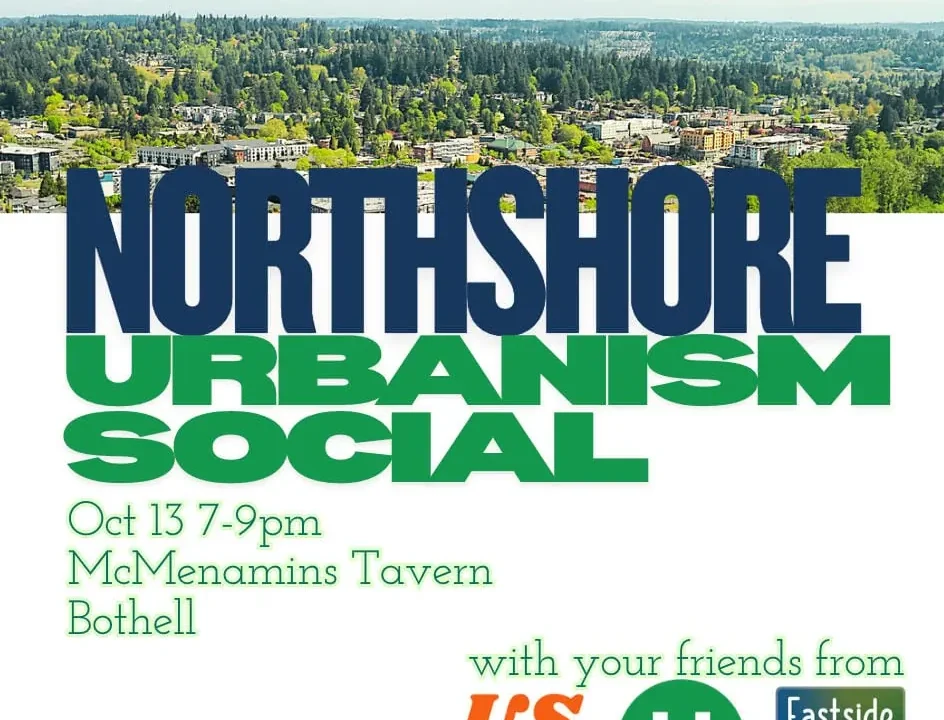
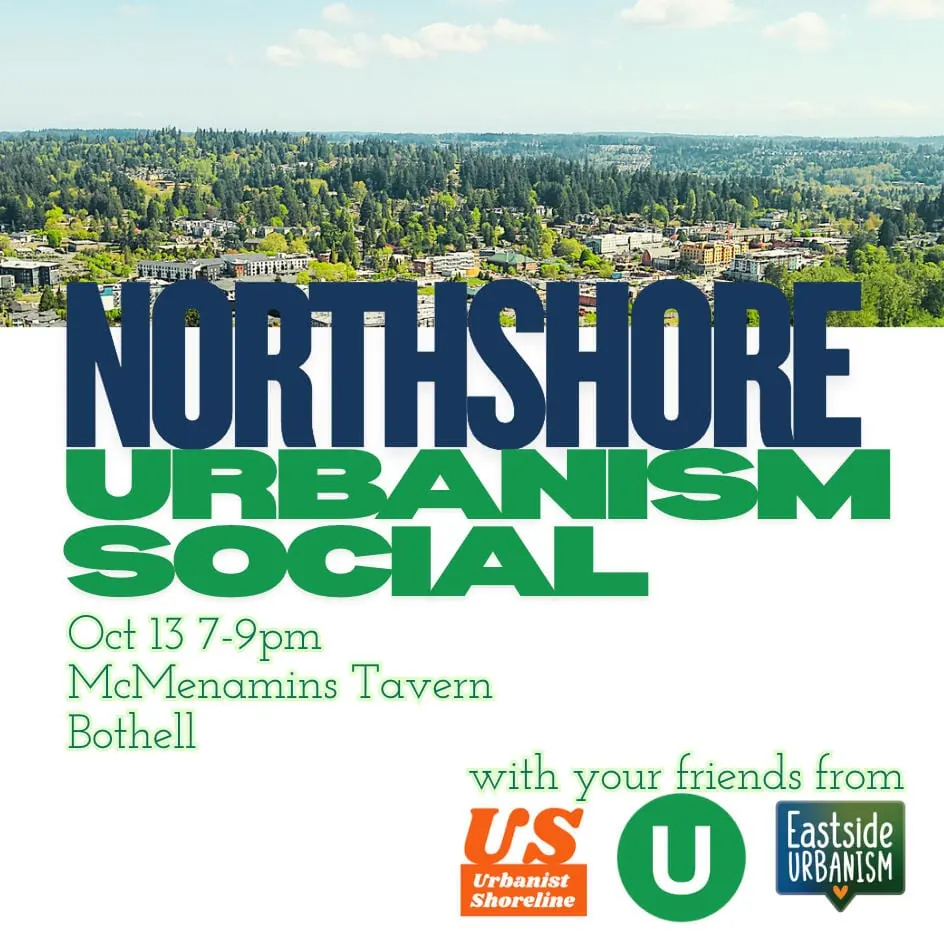
A Seattle-based urbanism advocacy group is testing a model of hyperlocal, community-driven engagement that holds lessons for London’s planning and transport campaigns. The Urbanist is hosting two events this month: a standard Seattle social on 22 October and a new Northshore Social in Bothell on 13 October. The group is also actively seeking volunteers to host their own neighbourhood socials across the Puget Sound region.
For Londoners involved in neighbourhood planning, transport user groups, or housing campaigns, the approach offers a contrast to the often formal, consultation-heavy mechanisms of the Greater London Authority (GLA) and borough councils. The question is whether a similar model of informal, regular meetups could strengthen grassroots urbanism in the capital.
What The Urbanist is doing
The Urbanist, a non-profit media and advocacy organisation, describes its socials as an opportunity to “chat about urbanism issues, celebrate local wins, and meet your neighbours.” The new Northshore Social, launched in partnership with Eastside Urbanism and Urbanist Shoreline, will rotate through locations in the Bothell, Kenmore, and Woodinville area. The first gathering is at McMenamins Tavern in downtown Bothell on Tuesday, 13 October, from 7pm to 9pm.
The group is also inviting anyone in the Puget Sound region to host their own social. “If you are someone who is unable to make it to our regular socials, want to meet urbanists in your area, or just want an excuse to grab some drinks, consider hosting your own Urbanist social in your neighbourhood or city,” the organisation’s Director of Development and Events, Diego, wrote in the announcement. The Urbanist offers support to potential hosts via email.
| Key facts | |
|---|---|
| Event 1 | Northshore Social, Bothell, 13 October, 7-9pm |
| Event 2 | Seattle Social, Teku Tavern, 22 October, 6-8pm |
| Organiser | The Urbanist, with Eastside Urbanism and Urbanist Shoreline |
| Key model | Informal, regular meetups; volunteer-hosted neighbourhood socials |
The London context: formal vs informal engagement
London’s planning system has a well-established, if often criticised, framework for public participation. Borough councils hold statutory consultations on planning applications and local plans. The GLA runs its own consultations on mayoral strategies, transport projects, and housing policies. Transport for London (TfL) engages with users through its consultations and borough liaison processes.
Yet many London activists and community groups argue that these formal mechanisms can feel distant, adversarial, and reactive. Residents often only get involved when a specific development or transport change threatens their area. The Urbanist model, by contrast, is proactive and social: it aims to build a sustained community of people interested in urbanism, who can then mobilise around issues as they arise.
Groups such as London Cycling Campaign (LCC), Living Streets, and the London Forum of Amenity and Civic Societies already run local groups and events. However, they are often issue-specific (cycling, walking, heritage) and can be structured around formal committee meetings rather than informal socials. The Urbanist’s approach of “come chat about all things urbanism” might appeal to a broader, younger demographic who are not yet engaged in formal civic structures.
Could it work in London boroughs?
The key ingredients of The Urbanist’s model are replicable: a venue (a pub or bar), a regular time, a low-barrier invitation (no membership, no agenda), and a focus on connection rather than formal decision-making. Several London neighbourhoods already have informal groups that meet in pubs to discuss local issues, such as the “Better Streets” groups in various boroughs or the “London YIMBY” socials.
However, London’s sheer scale and diversity present challenges. A single social in central London would not serve the needs of residents in outer boroughs like Havering, Bromley, or Hillingdon, where public transport is less frequent and local planning issues are distinct. The Urbanist’s solution is to encourage hyperlocal, volunteer-hosted socials, a model that could be adapted for London’s neighbourhoods, town centres, and housing estates.
The London Planning Data Hub and the GLA’s neighbourhood planning programme could provide a ready-made network of interested residents. There are already over 100 neighbourhood forums and parish councils in London, each with a formal remit to prepare neighbourhood plans. Some of these forums hold public meetings, but few have adopted the informal, pub-based social model that The Urbanist is testing.
What London urbanists can learn
For London’s urbanism community, the key takeaway is the emphasis on low-barrier, regular, and social engagement. The Urbanist’s events are not tied to a specific planning application or transport consultation; they are a space for people to “talk about urbanism issues” in a general sense. This builds a reservoir of community interest and trust that can be drawn upon when specific battles arise.
The model also explicitly welcomes people who are “unable to make it to our regular socials” by encouraging them to host their own. This decentralised approach could be particularly valuable in London, where travel across the city can be time-consuming and expensive. A network of hyperlocal socials, each with its own character and focus, could cover more ground than a single centralised event.
There are practical considerations. The Urbanist is a non-profit with staff who can coordinate events. A London equivalent would likely rely on volunteers, though existing groups such as LCC local groups, Living Streets groups, and neighbourhood forums already have volunteer organisers. The key is to shift the format from a formal committee meeting to an informal social, which requires a different skill set and mindset.
The bigger picture: planning reform and community power
The timing of this reflection is relevant. The UK government’s proposed planning reforms, including the introduction of mandatory housing targets and the potential for development on the green belt, are likely to intensify local planning conflicts. The GLA’s new London Plan review is also underway, with a focus on housing delivery, transport infrastructure, and climate resilience.
In this context, building a more engaged and informed public is not just a nice-to-have; it is a precondition for effective planning. If residents only engage when a development is proposed, the debate is often polarised and reactive. A community that has been meeting regularly, discussing urbanism, and building relationships is better placed to have a constructive conversation about what kind of development is needed and where.
The Urbanist’s October socials are a small experiment in one US city. But the model they are testing – informal, regular, hyperlocal, and volunteer-led – has clear potential for London. Whether it takes root here depends on whether existing groups are willing to try a new format, and whether new organisers emerge to host their own neighbourhood socials.
Source: The Urbanist, “Join an October Urbanist Event, or Host a Social in Your Neighborhood” (https://www.theurbanist.org/join-an-october-urbanist-event-or-host-a-social-in-your-neighborhood/)
Fuente
The Urbanist Publicacion original: 2026-10-06T18:00:30+00:00
Related updates
New York Poll Shows Overwhelming Bipartisan Support for Apartments Near Transit, Highlighting Contrast with London’s Own Housing Debate
A new poll from Open New York finds 79% of voters support building multi-family homes near rail stations, as the governor’s race…
Read update
Seattle City Attorney Launches New Community Court and Repeat Offender Programme Amid Public Defender Concerns
Seattle City Attorney Erika Evans has launched Connection Court, a new community court programme, alongside a punitive High-Priority Repeat Offenses system. The…
Read update
Seattle’s Centers & Corridors Zoning Update Delayed by Environmental Review Ruling
A state hearings board ruling has forced Seattle to rework the environmental impact statement for its twenty-year growth plan, pushing the next…
Read update
FEMA disaster mitigation grants freeze threatens to stall UK resilience learning, planners warn
A US Government Accountability Office report says $2.2 billion in FEMA Building Resilient Infrastructure and Communities grants remain unresolved, delaying more than…
Read updateWiki relacionada

Urban Planning Terms: Density, Public Realm and Transit-Oriented Development
A living glossary for terms that appear again and again in planning and development stories.
Read update