
Colorado River agreement signals new model for cross-border water sharing amid drought
The US and Mexico have signed a temporary amendment to the Colorado River treaty, reducing deliveries to Mexico by 250,000 acre-feet per year. The deal, known as Minute 334, mirrors cuts already imposed on lower basin states and secures continued funding for environmental restoration in the Colorado River delta.


The United States and Mexico have signed a temporary amendment to the 1944 Colorado River treaty, under which the US will reduce water deliveries to Mexico by 250,000 acre-feet per year, the International Boundary and Water Commission announced on 9 September 2026. The agreement, formally known as Minute 334, follows the Bureau of Reclamation’s two-year operating plan for the Colorado River, published on 21 August, which required lower basin states — Arizona, California and Nevada — to cut their use by 1.25 million acre-feet over the next two years.
Mexico’s normal annual allocation from the Colorado River is 1.5 million acre-feet. The new reduction brings its share in line with the cuts imposed on US states, reflecting the severity of the ongoing drought and record-low water levels at the river’s largest reservoirs, Lake Mead and Lake Powell.
Key facts
| Element | Detail |
|---|---|
| Agreement name | Minute 334, temporary amendment to 1944 US-Mexico Colorado River treaty |
| Reduction for Mexico | 250,000 acre-feet per year |
| Normal Mexican allocation | 5 million acre-feet per year |
| US lower basin cuts (2026-2028) | 25 million acre-feet over two years (Arizona, California, Nevada) |
| Environmental provisions | Continuation of restoration projects in the Colorado River delta |
| Source | International Boundary and Water Commission, 9 September 2026 |
How the cuts work
The August operating plan from the Bureau of Reclamation set mandatory reductions for the three lower basin states, triggering a call for Mexico to take an equivalent share. Minute 334 formalises that call into a binding temporary amendment. The 250,000 acre-foot figure matches the amount the US had requested from Mexico in the August plan.
The agreement is structured as a Minute — a formal but amendable instrument under the International Boundary and Water Commission — rather than a full treaty renegotiation. This allows both sides to adjust terms more quickly as hydrological conditions change. The temporary nature of Minute 334 means it will remain in effect for a defined period, though the exact duration was not specified in the announcement.
Environmental restoration in the delta
A notable element of Minute 334 is the continuation of environmental restoration projects in the Colorado River delta in Mexico, as reported by Brandon Loomis for the Arizona Republic. These projects, which have been running under previous Minutes, aim to restore habitat and water flow in the delta’s remnant wetlands and channels. The delta, once a vast freshwater estuary, has been severely degraded by upstream diversions and drought.
The agreement confirms that funding for these restoration efforts will continue alongside the delivery cuts, signalling that both governments view environmental flows as a priority even during acute shortage. The delta restoration work is managed by a binational group that includes US and Mexican agencies, NGOs and academic partners.
Drought context and reservoir levels
The Colorado River basin has been in a megadrought for more than two decades, with Lake Mead and Lake Powell — the two largest reservoirs in the United States — dropping to historically low levels. The Bureau of Reclamation’s August 2026 operating plan projected that without additional cuts, the risk of a system-wide shortage would increase sharply over the next two years.
Lower basin states had already been operating under Tier 1 and Tier 2 shortage declarations, which triggered mandatory cuts for Arizona and Nevada but exempted California until now. The new plan extends cuts to all three states and aligns Mexico’s contribution with the US reductions.
What this means for urban water supply
The Colorado River supplies water to nearly 40 million people in the US and Mexico, including the cities of Los Angeles, San Diego, Phoenix, Tucson, Las Vegas and Mexicali. For Mexican users, the reduction affects agricultural and municipal supplies in Baja California and Sonora, where the river is the primary water source.
The cuts are not expected to immediately affect household taps in major cities, as most urban utilities have diversified supplies and storage. However, the agricultural sector — which consumes the majority of the river’s water — will face tighter allocations. The agreement does not specify how Mexico will distribute the cuts among its users, leaving that to Mexican federal and state authorities.
Next steps and monitoring
The International Boundary and Water Commission will monitor compliance with Minute 334 and report on water deliveries and delta restoration progress. The Bureau of Reclamation is expected to issue updated reservoir projections later in 2026, which could trigger further adjustments if drought conditions worsen.
For readers following cross-border water governance, the Colorado River agreement offers a case study in how binational treaties can be adapted to acute climate stress. The temporary, Minute-based structure allows flexibility, but the underlying trend — declining river flows and shrinking reservoir storage — points toward the need for more permanent reallocations.
Source: Planetizen News, US to reduce Colorado River water deliveries to Mexico, 11 September 2026 (https://www.planetizen.com/news/2026/09/138398-us-reduce-colorado-river-water-deliveries-mexico)
Fuente
Planetizen News Publicacion original: 2026-09-11T14:00:00+00:00
Related updates
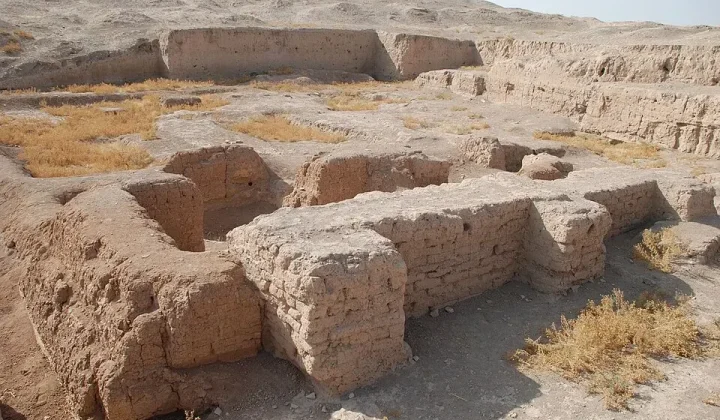
What Ancient Proto-Cities Reveal About Organic Urban Growth
New research into settlements such as Tell Brak suggests that some of the earliest cities formed without central rulers or master plans.…
Read update
Smart Cities Dive awards spotlight US city innovation, offering lessons for London’s data-driven planning
The Smart Cities Dive Public Service and Community Project Awards recognise notable people and projects in US city, county and regional government.…
Read update
San Francisco rewrites homeless service contracts with outcomes focus
San Francisco plans to reissue more than $500 million in annual homeless service grants and contracts, shifting to an outcomes-based model. The…
Read update
SpaceX arrival inflates property taxes and home values in Texas border county – what London planners can learn
Home values in Cameron County, Texas, more than doubled in six years after SpaceX built a launch facility. Property tax bills rose…
Read update