
Brazil’s National Mobility Study Puts R$430 Billion Transit Plan on the Table — Lessons for London’s Investment Strategy
Brazil’s new National Urban Mobility Study outlines a 120% expansion of public transport networks across 21 metro areas. As London faces its own funding challenges for Tube upgrades and bus services, the study’s financing model and indicator framework offer a comparative lens for UK policymakers.
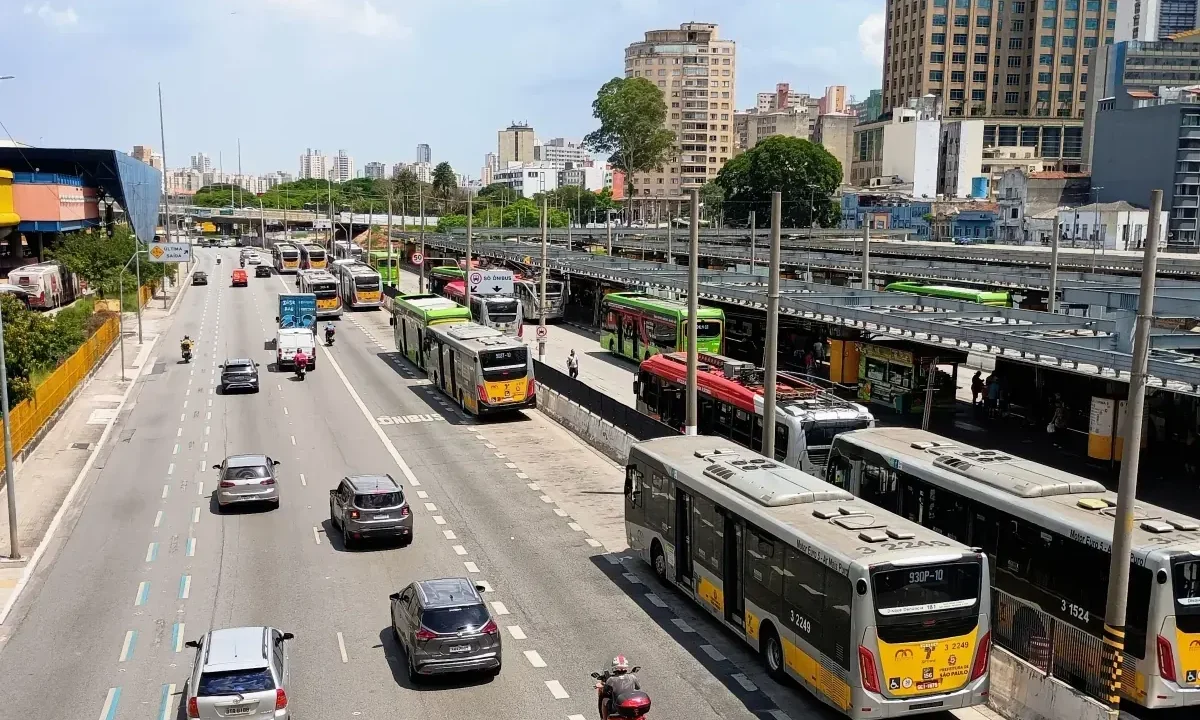
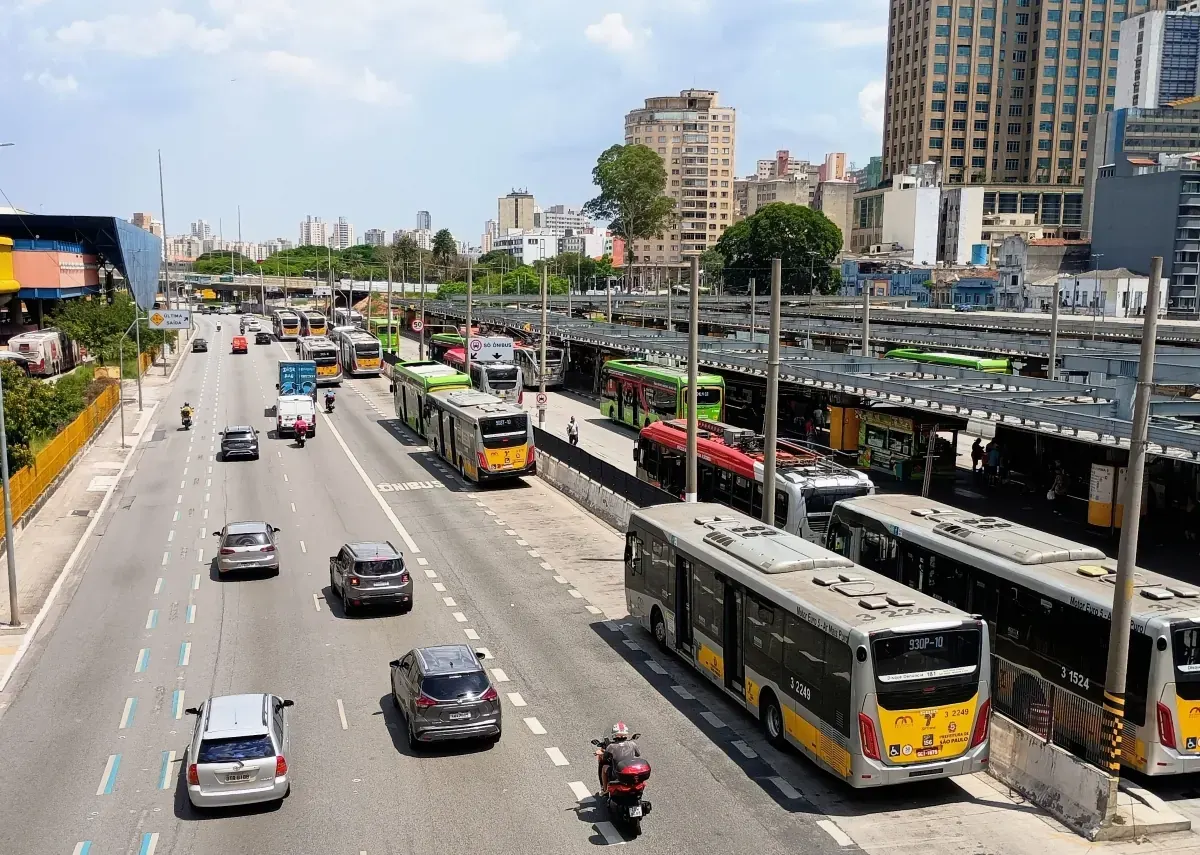
Brazil’s federal development bank BNDES and the Ministry of Cities have published the most comprehensive analysis ever conducted of the country’s public transport needs. The National Urban Mobility Study (ENMU), released in July 2026, presents a portfolio of nearly 190 medium- and high-capacity transit projects across 21 metropolitan areas — home to roughly 42% of Brazil’s population.
For London readers following the protracted debate over Transport for London’s capital funding settlement, the ENMU offers a rare example of a government producing a costed, long-term infrastructure pipeline with transparent indicators. The study estimates that completing the proposed network would require investments exceeding R$430 billion (approximately USD 82.6 billion) over two decades — equivalent to raising annual public spending on transit from around 0.10% to 0.25% of GDP.
The scale is striking: 3,000 km of network, of which 2,400 km would be entirely new sections, representing a 120% expansion of Brazil’s current fixed-guideway transit. The portfolio includes subway lines, light rail, bus rapid transit (BRT) corridors and dedicated bus lanes.
Key facts
| Metric | Value |
|——–|——-|
| Total proposed investment | R$430 billion (~USD 82.6 billion) |
| Network expansion | 2,400 km new sections (120% increase) |
| Annual investment needed | ~R$20 billion (~USD 3.8 billion) |
| Metropolitan areas covered | 21 largest, housing ~42% of Brazil’s population |
What the study proposes
The ENMU is not a single project plan but a portfolio of prioritised interventions. At the study’s July launch, Luciene Machado, Superintendent of Project Structuring at BNDES, stressed that the funding gap is not about the absolute amount but about the absence of predictable, stable financing. Currently, Brazilian transit systems rely on fragmented subsidies, with many metropolitan networks operating at capacity limits.
Nelson Barbosa, BNDES’s Director of Planning and Project Structuring, framed the shift succinctly: until recently, “there was funding, but no projects.” Now, he said, “there is funding, and there are projects.” The implication is that Brazil has moved from a cycle of under-preparation to one where project readiness and financing windows can be aligned.
ITDP Brazil served as a key technical partner in developing the study’s indicator framework, which aims to measure the effectiveness of mobility policies consistently across metropolitan regions. The organisation has long argued that good data and indicators are themselves part of the institutional infrastructure needed for sound investment decisions.
Expected returns and risks
The study projects significant social and economic returns. These include a reduction of up to 15% in average travel time, prevention of more than 27,000 traffic fatalities per year, an 11% drop in cost per trip, a 12% reduction in CO2 emissions, and an increase of up to 40% in access to jobs and services. The total estimated social value exceeds R$400 billion (~USD 76.9 billion).
On the industrial side, the study forecasts demand for up to 6,600 new electric buses and the creation of up to 1.3 million jobs per year during implementation. These numbers, however, depend on consistent funding and political continuity — both historically uncertain in Brazil.
The fuel subsidy question
On the same day the ENMU was released, the Brazilian government announced a gradual phase-out of fuel subsidies, beginning with the end of the diesel discount. The move followed a period of relative stability in international oil prices after the first ceasefire in the 2026 Iran conflict.
ITDP Brazil’s executive director Clarisse Cunha Linke, writing about the twin announcements, described the fuel subsidy phase-out as both a positive sign and a warning. Positive because it represents a step — albeit tentative and reactive to external circumstances — toward ending the artificial financing of car dependence. A warning because Brazil still lacks a unified government message about transport priorities. Fuel subsidies are being reduced partly due to fiscal constraints, but tax exemptions and easy credit for private vehicle purchases, deregulation of ride-hailing services, and continued road infrastructure investment still subsidise individual motorised transport.
The real test, Linke argues, is whether the Brazilian government as a whole — not just BNDES and the Ministry of Cities, but also the Ministries of Finance, Planning, Mines and Energy, and Industry — is willing to stop subsidising the problem in order to finance the solution.
What this means for London readers
For a London audience, the ENMU is relevant not as a direct comparison of city size or wealth, but as an institutional case study. Transport for London faces its own capital funding challenges, with the upcoming Spending Review likely to determine the fate of Tube line upgrades, bus service levels and the expansion of the Ultra Low Emission Zone. The Bakerloo line extension, the West London Orbital rail project and the renewal of the Piccadilly line fleet all depend on a stable, long-term financing framework that has been absent since the pandemic-era emergency funding deals.
Brazil’s approach — producing a costed, indicator-led portfolio and linking it to a clear financing target — is something UK transport bodies have attempted in part (the Department for Transport’s modelling, Transport for the North’s strategic outlines) but rarely with the same level of explicit project-by-project costing and social return calculation.
The study also underscores a point familiar to London planners: infrastructure without a coherent subsidy and pricing policy is incomplete. London’s fare structure, the ongoing debate about zonal pricing reform, and the tension between maintaining bus service levels and controlling the cost of the Tube all mirror the ENMU’s central question — where will public funds for mobility actually be directed?
A final caveat
The ENMU is a study, not a budget. Its portfolio of projects has not been approved, funded or scheduled. The required increase in annual investment from 0.10% to 0.25% of GDP, while modest in percentage terms, still requires political will across multiple administrations. Brazil’s history of large infrastructure plans that stall after a change of government is well documented. The study’s value lies in providing a transparent baseline against which future governments can be held to account.
For now, the ENMU gives Brazilian transit advocates — and anyone watching urban mobility investment globally — a clear set of numbers to track.
Source: Institute for Transportation and Development Policy (ITDP), “Brazil Has the Chance to Choose a Different Path for Urban Mobility,” August 17, 2026. https://itdp.org/2026/08/17/brazil-has-the-chance-to-chart-a-different-path-for-its-urban-mobility/
Datos clave
| Punto | Detalle |
|---|---|
| Fuente | ITDP |
| Fecha | 2026-08-17T19:40:24+00:00 |
| Tema | Brazil Has the Chance to Choose a Different Path for Urban Mobility |
Fuente
ITDP Publicacion original: 2026-08-17T19:40:24+00:00
Related updates

New York Poll Shows Overwhelming Bipartisan Support for Apartments Near Transit, Highlighting Contrast with London’s Own Housing Debate
A new poll from Open New York finds 79% of voters support building multi-family homes near rail stations, as the governor’s race…
Read update
Seattle City Attorney Launches New Community Court and Repeat Offender Programme Amid Public Defender Concerns
Seattle City Attorney Erika Evans has launched Connection Court, a new community court programme, alongside a punitive High-Priority Repeat Offenses system. The…
Read update
Seattle’s Centers & Corridors Zoning Update Delayed by Environmental Review Ruling
A state hearings board ruling has forced Seattle to rework the environmental impact statement for its twenty-year growth plan, pushing the next…
Read update
FEMA disaster mitigation grants freeze threatens to stall UK resilience learning, planners warn
A US Government Accountability Office report says $2.2 billion in FEMA Building Resilient Infrastructure and Communities grants remain unresolved, delaying more than…
Read updateWiki relacionada

Urban Planning Terms: Density, Public Realm and Transit-Oriented Development
A living glossary for terms that appear again and again in planning and development stories.
Read update