
Bay Area transit poll: what London can learn from a funding measure heading for victory
A new poll across five Bay Area counties shows majority support for a half-cent sales tax to fund public transport. The coalition behind it, and the opposition to it, offer useful comparisons for London as TfL’s funding debate continues.
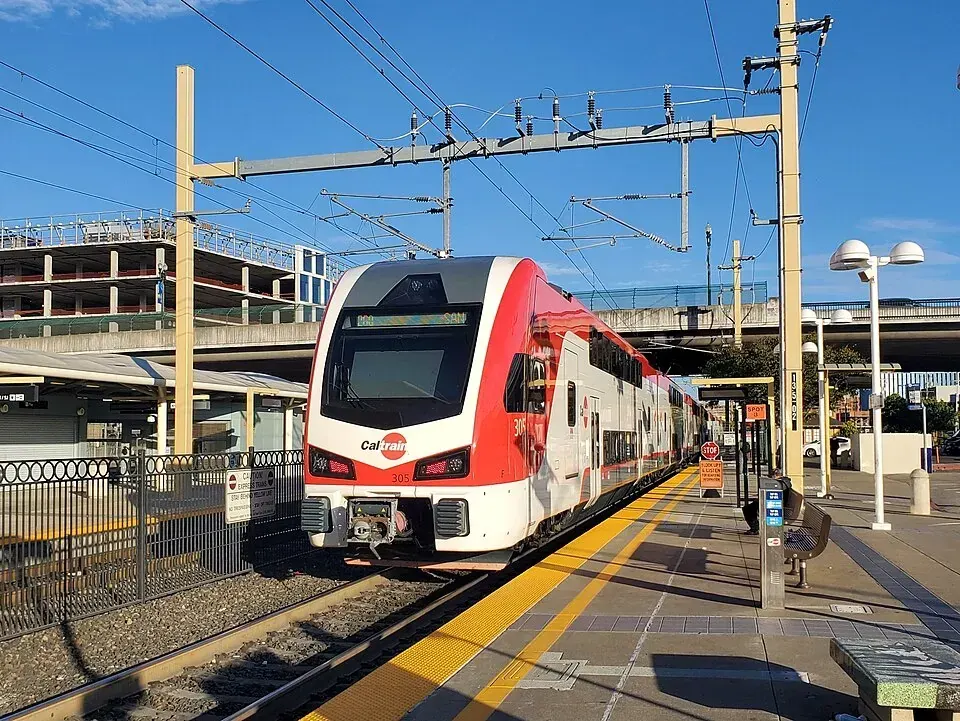
A new poll of 1,700 likely voters across five Bay Area counties suggests the Regional Transit Measure has a clear path to victory in November. Streetsblog SF reported the findings on 29 July 2026. They matter well beyond California because the measure is a test of how cities build public support for transit funding, a question London is still wrestling with after years of farebox uncertainty and central government bailouts.
The poll found 54 percent support for the half-cent sales tax, which would fund long-term operations for major Bay Area transit agencies. Support rose to 58 percent after voters learned about the severe consequences of failing to protect Bay Area transit service, according to the Streetsblog report. Because the measure was placed on the ballot by voter signatures, not by state legislators, it needs only a simple majority to pass.
Voters in Alameda, Contra Costa, San Francisco, San Mateo and Santa Clara Counties will make the decision. For London readers, the more interesting story is not the number itself but the mechanics around it: how a broad coalition formed, what the opposition argued, and what was still left unsaid.
Why a Bay Area ballot measure matters in London
London does not vote on transit funding in the way California does. There is no citizen-initiated half-cent sales tax for TfL on a London ballot. But the underlying problem is the same: operating a large metropolitan transport network requires a funding stream that does not collapse when ridership or fare revenue drops.
TfL has spent much of the past decade negotiating with central government over short-term funding deals. The Bay Area is now trying to solve a comparable problem through a direct vote. The arguments around affordability, essential workers, and the cost of letting the network decay will sound familiar to anyone who has followed TfL’s finances.
The poll also tests a wider political question: do voters support transit when they are forced to think about what its absence would mean? The jump from 54 to 58 percent after hearing about the consequences suggests that message matters.
What the poll found
The survey, conducted by EMC Research among 1,700 likely voters, was reported by Streetsblog SF on 29 July 2026. The source item does not say who commissioned the research, and no fieldwork dates are given. That is a caveat worth keeping in mind when reading the headline numbers.
The key figures are set out below.
| Item | Detail |
|---|---|
| Sample | 1,700 likely voters across Alameda, Contra Costa, San Francisco, San Mateo and Santa Clara Counties |
| Initial support | 54 percent support for the half-cent sales tax |
| Support after more information | 58 percent after voters learned about the consequences of failing to protect transit |
| Passing threshold | Simple majority, because it is a citizen-initiated measure |
| Campaign footprint | More than 100 elected officials and more than 115 labour, business and advocacy organisations |
Who is behind the campaign
The supporting coalition calls itself the Connect Bay Area campaign. According to Streetsblog SF, it has grown over the past several months and now includes more than 100 elected officials and more than 115 labour, business, and advocacy organisations.
The signature-gathering effort also appears to have been substantial. In May, campaign organisers submitted over 300,000 signatures to qualify the measure for the ballot, more than 100,000 above the number required, the Streetsblog article states. That level of organisatonal capacity is itself a signal: this is not a poll-driven campaign appearing from nowhere.
Jean Cohen, Executive Officer of the South Bay Labor Council, was quoted in a statement responding to the poll. She said: “This poll confirms what we’ve been hearing for months: people understand that public transit matters for people all across the Bay Area, and they don’t want to see it dismantled.” She added: “Voters deserve to understand exactly what’s at stake, and that’s the work our coalition is ready to take on. We cannot have an affordable Bay Area that supports working people, seniors, and our economy without public transit.”
The opposition and its limits
Streetsblog SF described the opposition as a last-ditch effort by oil shills to portray the half-cent sales tax as overly burdensome on working families and the poor. The article does not name the specific groups behind that advertising push, which is a gap in the reporting.
The central argument used against the measure appears to be affordability. A half-cent sales tax is not a trivial addition for households already stretched by housing and fuel costs. But the counter-argument from supporters is also straightforward: the people most affected by a regressive sales tax would also be the people most harmed by a degraded transit network. If buses and trains are cut, low-income workers lose access to jobs, seniors lose access to healthcare, and the wider economy suffers.
None of this is unique to California. London campaigns about transport funding often run into the same affordability critique, especially when fare increases or new charges are discussed. The Bay Area result suggests that the critique can be answered if the consequences of funding failure are made concrete rather than abstract.
What remains unclear
The source material leaves several important questions unanswered.
First, the client behind the EMC Research poll is not identified. Polls commissioned by campaign organisations are not automatically unreliable, but they need to be read with that context in mind. A neutral or opposition-commissioned survey might produce different numbers.
Second, no fieldwork dates are provided. Public opinion on ballot measures can shift quickly, particularly in the weeks after paid advertising begins. The November vote is still months away.
Third, the exact consequences of failure are described only as “catastrophic service reductions”. The source does not specify which agencies would be affected, how many routes would be cut, or over what period those cuts would take place. Supporters may have more detailed plans, but they are not included in the Streetsblog report.
Fourth, the measure’s official ballot number and full legal text are not given. Readers who want to assess the tax itself, rather than the poll around it, should look at official county election materials rather than relying on campaign summaries.
What London readers can watch
For Londoners, the most transferable lessons are about political mechanics, not California-specific policy.
First, a simple-majority threshold forces broad alliances. The Bay Area campaign brought together elected officials, labour unions, and business groups across five counties. That range suggests the case for transit funding was framed as a regional economic issue, not a narrow transport issue.
Second, awareness of consequences appears to move voters. The poll recorded a four-point increase in support after voters heard what failure would mean. London debates about TfL funding often stay at the level of budget line items; the Bay Area evidence supports the argument that visible user impacts matter more.
Third, affordability-based opposition should not be dismissed, but it should be tested against the cost of doing nothing. A half-cent sales tax is a real cost. So is a transit network that cannot run a reliable service. The poll suggests that when both are put side by side, a majority of voters choose the tax.
The exact outcome in November is still unknown. Polls can change, and the level and tone of advertising between now and election day could shift the numbers. But the reported survey offers a useful snapshot of a city region deciding that public transport is worth paying for.
Source: Streetsblog SF, “New Poll Shows Regional Measure in Good Shape”, 29 July 2026, https://sf.streetsblog.org/2026/07/29/new-poll-shows-regional-measure-in-good-shape
Fuente
Streetsblog SF Publicacion original: 2026-07-29T13:00:00+00:00
Related updates

California’s unused dam safety powers hold lessons for London’s ageing flood infrastructure
A California audit reveals the state has never used its enforcement powers against dam owners, despite 57 dams in poor condition. As…
Read update
New York Poll Shows Overwhelming Bipartisan Support for Apartments Near Transit, Highlighting Contrast with London’s Own Housing Debate
A new poll from Open New York finds 79% of voters support building multi-family homes near rail stations, as the governor’s race…
Read update
Seattle City Attorney Launches New Community Court and Repeat Offender Programme Amid Public Defender Concerns
Seattle City Attorney Erika Evans has launched Connection Court, a new community court programme, alongside a punitive High-Priority Repeat Offenses system. The…
Read update
Seattle’s Centers & Corridors Zoning Update Delayed by Environmental Review Ruling
A state hearings board ruling has forced Seattle to rework the environmental impact statement for its twenty-year growth plan, pushing the next…
Read updateWiki relacionada

Urban Planning Terms: Density, Public Realm and Transit-Oriented Development
A living glossary for terms that appear again and again in planning and development stories.
Read update