
London’s E-Moto Challenge: What a New York Fatal Crash Tells Us About Online Sales and Enforcement Gaps
A New York teenager died on an illegal e-moto sold online. The company altered its website after the crash. London's similar e-bike regulations face the same enforcement challenges.
A fatal crash in New York has thrown a spotlight on the ease with which illegal e-motos are sold online, raising uncomfortable questions for London’s regulatory framework. The incident, involving a 17-year-old rider on a Deepower “QS7 High-Performance Electric Bike,” reveals how manufacturers can alter product specifications after a tragedy and how online marketplaces evade enforcement. While the crash occurred in Manhattan, the same products are freely available to London consumers, and the UK’s legal limits for e-bikes face similar challenges.
The New York incident
On Wednesday 29 July 2026, Gabriel Nacato was riding a Deepower QS7 on Centre Street in Lower Manhattan when he collided with a Chevrolet Tahoe. He died at the scene. The bike, purchased online by his uncle, is classified as an e-moto – a cheap, overpowered two-wheeler marketed as an e-bike but failing to meet legal requirements. New York state law limits e-bike motors to 750 watts. The Deepower QS7 was originally listed with a 1,500-watt motor and a 30 mph top speed, nearly double the legal limit.
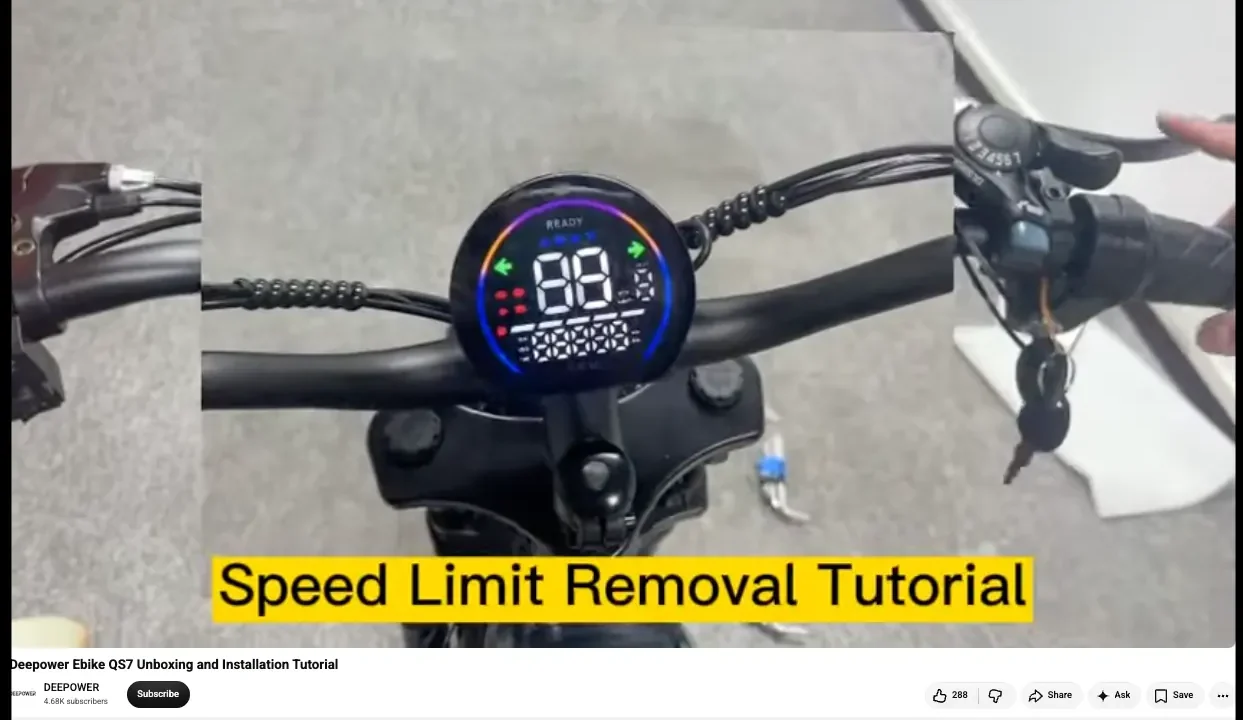
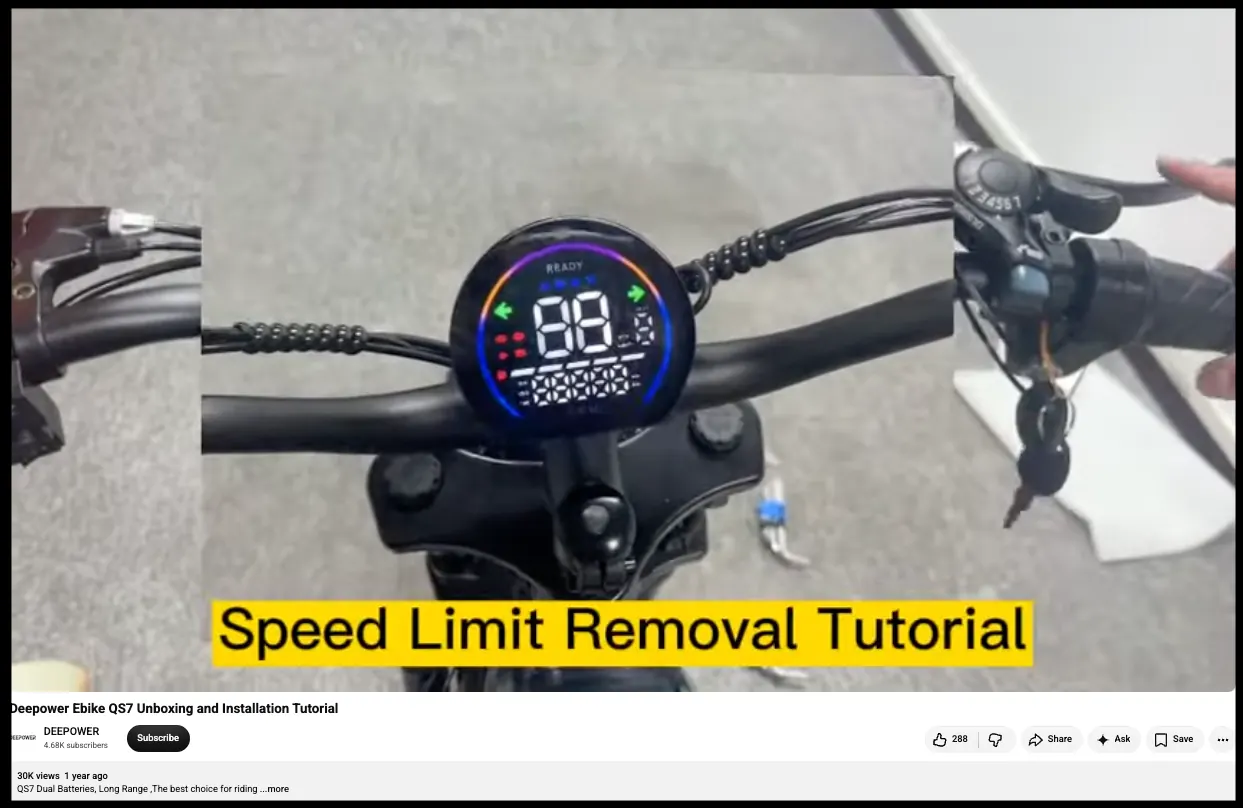
The day after the crash, Deepower changed its website to show a 250-watt motor and 20 mph top speed. Consumer advocates, including Cooper Lohr of Consumer Reports, described the move as “straight up lying about the capabilities.” The product remained listed on other platforms, such as Walmart, with the original or even more powerful specifications. Deepower also removed an FAQ page that taught users how to unlock the speed limiter to reach 50 mph, although a video tutorial remains on its official YouTube channel.
The company uses manual brakes rather than the hydraulic brakes standard for bikes over 40–50 pounds. The QS7 weighs more than 100 pounds, making stopping distances dangerous at high speeds. Jareth Sweazea of Upway, a refurbished legal e-bike seller, said: “This bike is more than 100 pounds. That’s irresponsible of the manufacturer. Even if it’s working properly, the stopping power of mechanical brakes when you’re going that fast will take a substantial amount of time to stop.”
Key facts
| Fact | Detail |
|---|---|
| Incident | 17-year-old Gabriel Nacato died on Centre Street, Manhattan, on 29 July 2026 after colliding with a car |
| Vehicle | Deepower QS7, originally advertised with 1,500W motor and 30 mph top speed |
| Company response | Website changed to 250W/20 mph after crash; FAQ on speed limiter removed |
| Legal limit (NY) | 750W motor; 20 mph for e-bikes |
| Legal limit (UK) | 250W motor; 15.5 mph (25 km/h) for electrically assisted pedal cycles (EAPCs) |
London’s parallel regulatory landscape
London’s e-bike regulations are if anything stricter than New York’s. Under UK law, an electrically assisted pedal cycle (EAPC) must have a maximum continuous rated power of 250 watts and must not assist beyond 15.5 mph (25 km/h). Any vehicle exceeding these limits is legally a motorcycle or moped, requiring registration, insurance, a licence and a helmet. However, the same class of cheap, overpowered e-motos sold in the US is also available in the UK through online marketplaces such as Amazon, eBay and direct-from-China sites.
Unlike New York, where the state attorney general is poised to issue a consumer alert, the UK has no equivalent proactive enforcement mechanism for online sales of illegal vehicles. The Office for Product Safety and Standards (OPSS) can issue recalls, but the process is reactive and slow. Transport for London (TfL) has no direct remit over online marketplaces, and the Driver and Vehicle Standards Agency (DVSA) rarely tests privately imported e-motos.
The regulatory gap
The New York case highlights three weaknesses that apply equally to London: online marketplace liability, product specification verifiability, and post-sale enforcement.
First, online marketplaces such as Amazon and Walmart have been criticised for not vetting listings for compliance with local laws. The same products listed on Walmart with the original specs in the US are likely sold on Amazon UK with similar misrepresentations. Consumer Reports’ Lohr noted: “A state like New York has certain laws and standards in place, but it just seems like online sellers are so easily able to get around those.” In the UK, the Online Safety Act (2023) does not cover product safety, and the Digital Markets, Competition and Consumers Act (2024) has yet to be fully implemented.
Second, verifying a product’s true capabilities is difficult. European cities have turned to dynamometers (“dynos”) to test maximum speed and power, but such testing is expensive and rarely done proactively. The UK’s home office and DVSA lack the capacity for routine testing of privately imported vehicles.
Third, even if a vehicle is identified as illegal, enforcement is weak. Police can seize illegal e-motos on the road, but they cannot easily trace online sellers based abroad. The UK has no equivalent of New York’s attorney general consumer alert system, and Trading Standards services are underfunded.
What this means for London
For London’s transport planners and safety advocates, the New York crash is a cautionary tale. The city has already seen a rise in e-scooter and e-bike collisions, particularly involving delivery riders using illegal vehicles. TfL’s 2023 e-scooter trial data showed that a significant number of rental e-scooters were being used outside the permitted areas, and private e-scooters remain illegal. E-motos, being unregistered and uninsured, pose a similar risk.
The case also highlights the need for better consumer information. Parents buying a “gift” for a teenager online may not know the legal limits. Sweazea’s point about the danger of overpowered motors on lightweight frames applies directly to London’s streets, where bike lanes are often narrow and shared with pedestrians.
The New York experience suggests that relying on companies to self-correct after a death is not enough. Deepower changed its website only after media exposure. The UK’s existing regulatory toolkit – Trading Standards, OPSS, DVSA – is not designed for the speed of online commerce. A coordinated approach, involving platform liability, routine product testing and public awareness campaigns, is overdue.
Source: Streetsblog NYC, “Quick Change: E-Moto Maker Altered Website After Fatal Crash,” 31 July 2026. https://nyc.streetsblog.org/2026/07/31/quick-change-e-moto-maker-altered-website-after-fatal-crash
Fuente
Streetsblog NYC Publicacion original: 2026-07-31T04:04:00+00:00
Related updates

California’s unused dam safety powers hold lessons for London’s ageing flood infrastructure
A California audit reveals the state has never used its enforcement powers against dam owners, despite 57 dams in poor condition. As…
Read update
New York Poll Shows Overwhelming Bipartisan Support for Apartments Near Transit, Highlighting Contrast with London’s Own Housing Debate
A new poll from Open New York finds 79% of voters support building multi-family homes near rail stations, as the governor’s race…
Read update
Seattle City Attorney Launches New Community Court and Repeat Offender Programme Amid Public Defender Concerns
Seattle City Attorney Erika Evans has launched Connection Court, a new community court programme, alongside a punitive High-Priority Repeat Offenses system. The…
Read update
Seattle’s Centers & Corridors Zoning Update Delayed by Environmental Review Ruling
A state hearings board ruling has forced Seattle to rework the environmental impact statement for its twenty-year growth plan, pushing the next…
Read updateWiki relacionada

Urban Planning Terms: Density, Public Realm and Transit-Oriented Development
A living glossary for terms that appear again and again in planning and development stories.
Read update