
US pedestrian safety culture war offers contrast to London’s approach
A Friday headlines roundup from Streetsblog USA highlights how not getting hit by a car is being framed as "woke" in parts of the United States. For London readers, the contrast with the capital’s cross-party support for Vision Zero and Liveable Neighbourhoods is instructive.
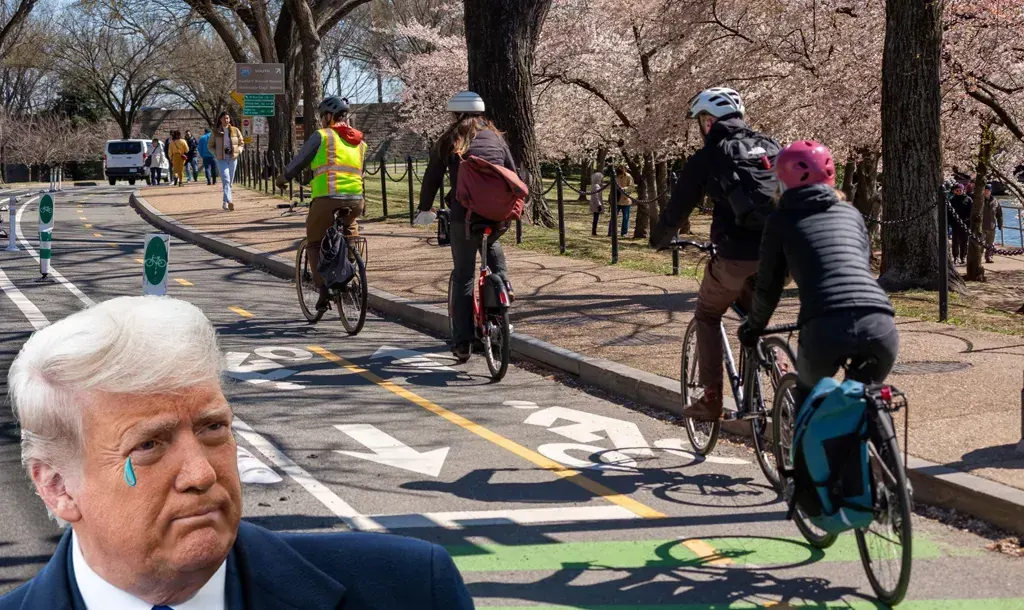
The US headline roundup
On 31 July 2026, Streetsblog USA published its regular Friday roundup of transportation headlines. The summary line read: “Apparently not getting hit by a car is ‘woke’.” The article itself is a curation of links from across the United States, none of which contain London-specific planning, transport, housing, or public realm news. The framing reflects a deepening political divide in the US over road safety measures, where measures such as protected bike lanes, lowered speed limits, and pedestrian priority crossings are increasingly labelled as partisan or “woke” by conservative commentators and elected officials. For London readers, the contrast is stark.
The “woke” framing of pedestrian safety
The term “woke” in the US context has been weaponised by opponents of street safety schemes. In several states, bills have been introduced to restrict the use of federal funds for cycle lanes or pedestrian improvements, arguing that they represent an ideological agenda rather than a public safety need. The Streetsblog roundup aggregated stories from cities including Austin, Texas; Portland, Oregon; and New York City, where local controversies over bike lanes and speed cameras have been recast as culture-war battles. The phrase “not getting hit by a car is ‘woke’” is a shorthand for this phenomenon: a belief that even the basic goal of reducing traffic fatalities can be politicised.
Por que importa
London’s pedestrian safety record
London operates under a different political and institutional framework. The Mayor of London’s Transport Strategy, first adopted in 2018 and updated in 2022, sets a Vision Zero target of eliminating all deaths and serious injuries on London’s streets by 2041. This target is supported by all major parties in the London Assembly, the GLA, and Transport for London (TfL). The approach is underpinned by data: TfL’s annual casualty reports show a long-term downward trend in pedestrian fatalities, though progress has plateaued in recent years. In 2025, there were 47 pedestrian deaths on London’s roads, compared to 72 in 2016. The safety interventions include 20 mph speed limits on most central London roads, cycle lane segregation, pedestrian countdown timers, and junction redesigns.
How London’s approach compares
The table below summarises key differences between the US culture-war framing and London’s institutional consensus.
Contexto
| Aspect | US context (per Streetsblog roundup) | London context |
|---|---|---|
| Political framing | Pedestrian safety measures labelled “woke” by some politicians | Cross-party support for Vision Zero; safety not a partisan issue |
| Speed limits | Vary by state; often 30 mph+ in urban areas | 20 mph on most TfL roads; 10 mph in some Liveable Neighbourhoods |
| Funding | Federal grants for safe streets sometimes contested | TfL and GLA funding allocated via Transport Strategy, with boroughs delivering schemes |
| Lead agency | Local city councils, often divided | TfL, GLA, and 32 boroughs working under a single strategy |
| Public opposition | Active anti-bike lane coalitions | Some local opposition to Low Traffic Neighbourhoods, but political leadership remains steady |
What remains unclear
The Streetsblog roundup does not provide details on the specific US headlines it links to, so it is impossible to verify the exact claims made in each story. The phrase “woke” may be used in different ways by different actors. Additionally, no direct comparison with London’s pedestrian safety data is included in the original source. The roundup is a US-focused aggregation; it does not contain any London-specific news. Readers should not assume that the US culture-war dynamic is present in the UK to the same degree. While there have been some UK-based attacks on Low Traffic Neighbourhoods as “anti-car”, the pedestrian safety consensus at the London government level has not been seriously challenged by any major party.
Further reading
For London readers interested in the data behind the city’s pedestrian safety record, the following sources are recommended:
– TfL’s annual Casualties in Greater London report (published each July)
– GLA Road Safety Action Plan 2023–2027
– The London Assembly Transport Committee’s inquiries into Vision Zero progress
– Borough-level Liveable Neighbourhood scheme evaluations (available via individual borough websites)
Que sigue
Source: Streetsblog USA, “Friday’s Headlines Stay in Their Lane” (https://usa.streetsblog.org/2026/07/31/fridays-headlines-stay-in-their-lane) — the original article is a US headline roundup with no London content. The analysis above uses publicly available TfL and GLA data.
Fuente
Streetsblog USA Publicacion original: 2026-07-31T04:01:00+00:00
Related updates

New York Poll Shows Overwhelming Bipartisan Support for Apartments Near Transit, Highlighting Contrast with London’s Own Housing Debate
A new poll from Open New York finds 79% of voters support building multi-family homes near rail stations, as the governor’s race…
Read update
Seattle City Attorney Launches New Community Court and Repeat Offender Programme Amid Public Defender Concerns
Seattle City Attorney Erika Evans has launched Connection Court, a new community court programme, alongside a punitive High-Priority Repeat Offenses system. The…
Read update
Seattle’s Centers & Corridors Zoning Update Delayed by Environmental Review Ruling
A state hearings board ruling has forced Seattle to rework the environmental impact statement for its twenty-year growth plan, pushing the next…
Read update
FEMA disaster mitigation grants freeze threatens to stall UK resilience learning, planners warn
A US Government Accountability Office report says $2.2 billion in FEMA Building Resilient Infrastructure and Communities grants remain unresolved, delaying more than…
Read update