
Issaquah ADU Self-Certification: A US Model With Limited London Parallel
The Washington city becomes the first to let architects self-certify backyard cottage plans under a 2025 state law. The programme has no direct equivalent in London, but raises questions about planning reform and ADU delivery.
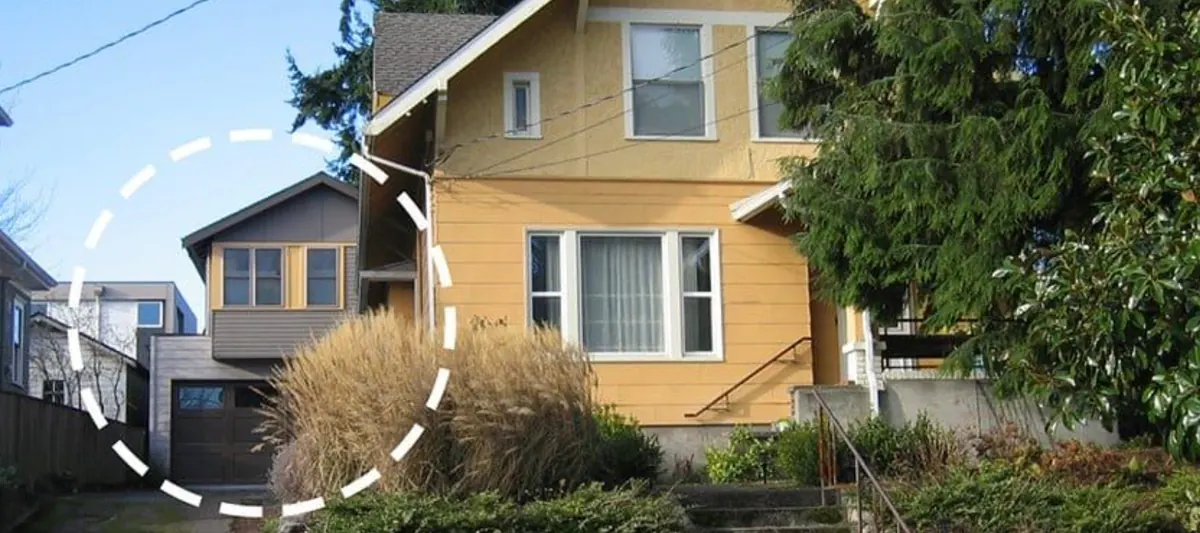
The City of Issaquah, Washington, has become the first municipality in the state to create a self-certification programme for architects designing detached accessory dwelling units (DADUs, commonly known as backyard cottages). The scheme, approved by a unanimous city council vote in late July 2026, allows licensed architects who sign a hold-harmless agreement to bypass city plan review, cutting permit timelines. While the policy is a significant step for housing delivery in the Puget Sound region, it has no direct parallel in London, where ADU approvals remain subject to full planning applications and building regulations.
The Issaquah programme is enabled by Washington’s House Bill 1353, passed in 2025, which permits cities to opt-in to self-certification for DADUs. The city will audit at least 20% of plans annually; architects who fail an audit are banned from the programme for one year, and a second failure results in a permanent ban. Issaquah’s planning department chose self-certification over pre-approved plans, which councillors said were underused in other cities and difficult to adapt to the city’s hilly terrain.
| Key facts | |
|---|---|
| City | Issaquah, Washington, USA |
| Programme | Self-certification for detached ADU building plans |
| Legal basis | Washington House Bill 1353 (2025) |
| Audit rate | 20% of plans annually; architects who fail face bans |
| Stage | Implemented July 2026; report to state due by summer 2028 |
| London equivalent | None – full planning permission required for new dwellings |
What the Programme Entails
Under the self-certification pathway, architects registered with the Washington State Board of Registration for Architects can submit DADU plans without prior city review. Site plan approvals and utility connection requirements still apply. The scheme is limited to detached accessory dwelling units – typically one- or two-bedroom cottages on existing residential lots. The city’s building department retains the right to audit a random sample of approved plans. Councillors emphasised that the programme is a narrow experiment, intended to test whether private-sector sign-off can speed up the construction of small, simple homes without compromising safety or code compliance.
Issaquah’s move follows a 2023 Washington state law (House Bill 1337) that already required cities to allow at least two ADUs on all residential lots and banned owner-occupancy requirements and frontage improvement mandates. The self-certification programme goes further by removing the city’s plan-review queue for DADUs, a bottleneck that can delay construction by weeks or months.
How It Differs from London ADU Policy
In London, the term “accessory dwelling unit” is not a standard planning category. The closest equivalent is a “self-contained annexe” or “granny flat,” which may be permitted development under certain conditions (Class Q of the General Permitted Development Order) or require a full planning application if it involves a new separate dwelling. The Greater London Authority (GLA) has encouraged boroughs to support “smaller, more diverse homes” through the London Plan, but there is no city-wide self-certification mechanism. Building regulations approval in England is separate from planning permission, and while some minor works can be self-certified by registered installers, the creation of a new dwelling unit always requires building control sign-off – either from the local authority or an approved inspector.
The Issaquah model would be difficult to transplant directly because UK planning law treats the creation of a separate dwelling as a material change of use, even if the physical building is small. London’s boroughs also operate with far larger populations and more complex planning committees than Issaquah, a city of about 40,000 residents.
Potential Lessons for UK Planners
Despite the jurisdictional gap, Issaquah’s approach highlights a recurring theme in housing delivery: speeding up approvals for small, low-impact homes. UK housing policy has long debated streamlining planning for “self-build” and “custom build” homes, and the government’s recent reforms to the National Planning Policy Framework (NPPF) include measures to support “small sites” and “brownfield-led development.” The idea of allowing qualified professionals to certify their own designs for simple dwellings could be explored for permitted development rights, though it would require legislative changes to the Building Act 1984 and the Town and Country Planning Act 1990.
The audit-and-ban mechanism in Issaquah is a direct response to concerns about accountability. London’s building safety regime, strengthened after the Grenfell Tower fire, places a premium on independent verification. Any self-certification scheme would need to meet the standards of the Building Safety Regulator, which oversees all new residential buildings over a certain height and complexity.
Caveats and Limitations
The Issaquah programme is new and untested. The city is required to submit a report to the Washington State Legislature by summer 2028, which will evaluate the programme’s impact on permit timelines, building quality, and housing output. Early adopters like Issaquah are effectively piloting the policy for the rest of the state. There is no evidence yet that self-certification leads to faster construction or lower costs, and the programme excludes attached ADUs and larger projects.
For London readers, the main takeaway is that the US is experimenting with a form of delegated building control that the UK has not yet attempted. The story serves as a reminder that planning reform can take many forms, but direct comparisons are limited by different legal frameworks, housing types, and regulatory cultures.
Source: The Urbanist, “Issaquah Leads State With Program to Self-Certify Backyard Cottage Plans,” 24 July 2026. https://www.theurbanist.org/issaquah-leads-state-with-program-to-self-certify-backyard-cottage-plans/
Fuente
The Urbanist Publicacion original: 2026-07-24T17:00:19+00:00
Related updates

Why the predicted Portland ‘Carmaggedon’ never arrived — and what London can learn about traffic evaporation
A month-long closure of a mile-long section of I-5 in Portland was forecast to triple commute times. Instead, morning peak journeys increased…
Read update
What the fall of Angkor reveals about the risks of low-density urban sprawl
A new analysis of the fall of Angkor, the ancient Khmer capital, draws parallels between its sprawling, low-density infrastructure and the vulnerabilities…
Read update
Why urban beauty matters for community wellbeing and civic pride
Research and everyday experience show that beautiful places foster stronger communities, better mental health, and greater civic engagement. What can London learn…
Read update
Colorado Data Center Dispute Highlights Gap in Planning Rules and Community Oversight
A proposal for Colorado’s largest data centre in Aurora has sparked debate over planning rules that allow major developments to bypass public…
Read update