
California rail fleet reuse offers a narrow climate-resilience lesson for London transport planners
Caltrain’s old diesel locomotives are being leased to another intercity service after electrification, highlighting how rolling-stock reuse can support reliability during decarbonisation without removing air-quality trade-offs.
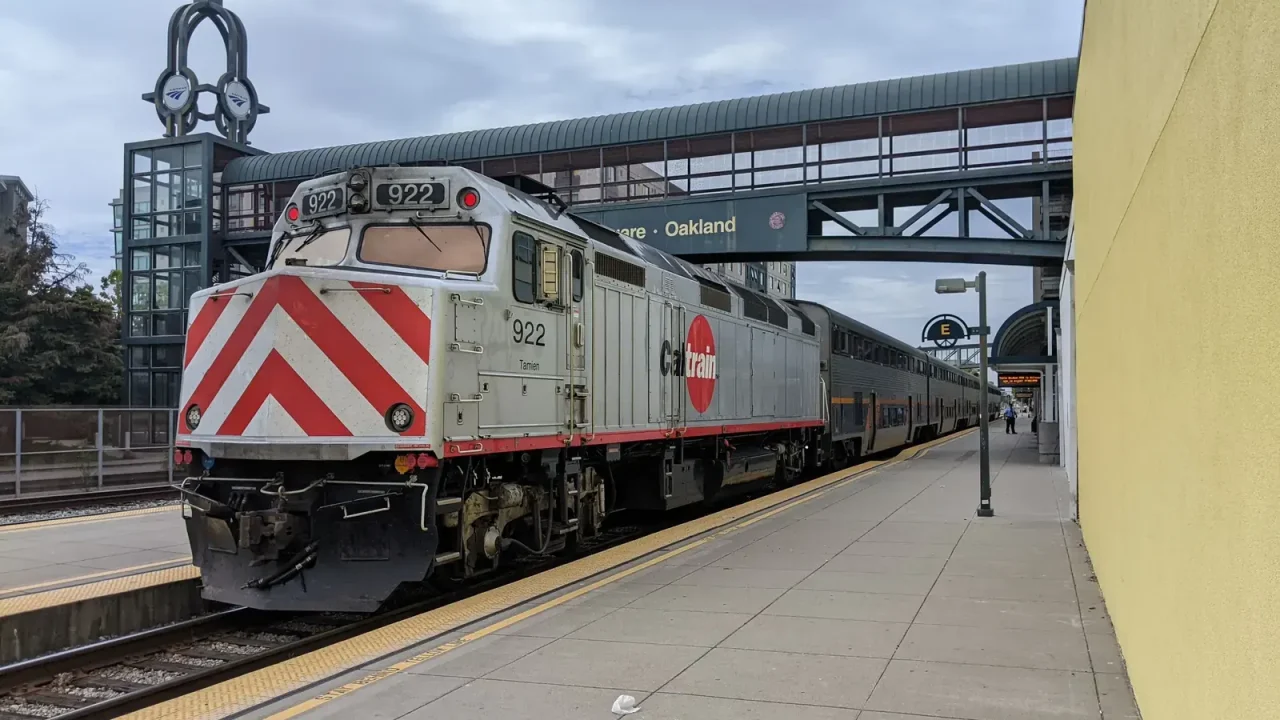
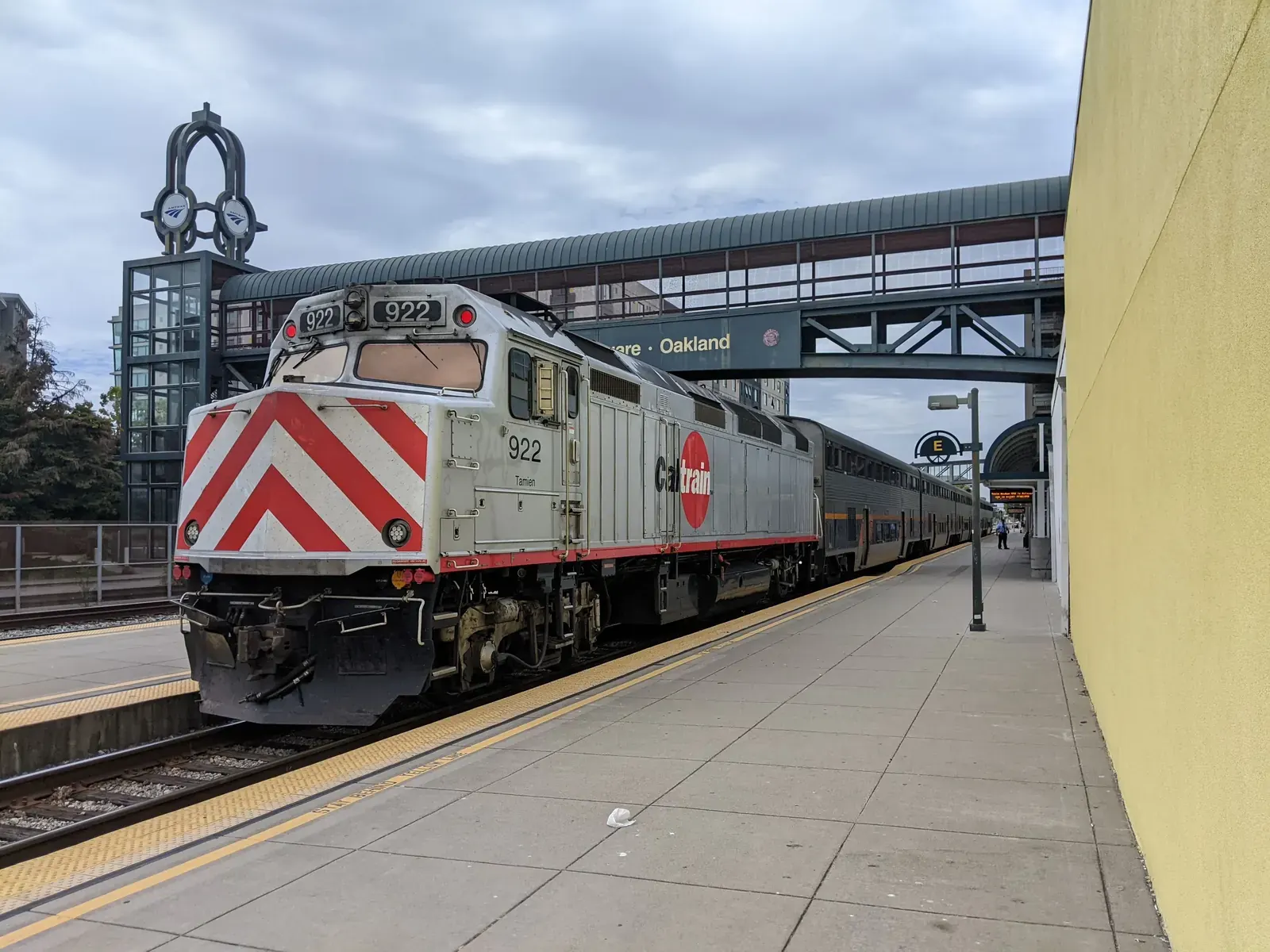
A California rail operator’s decision to lease redundant diesel trains after electrifying part of its network offers a useful, limited comparison for London transport planners thinking about climate resilience, fleet transition and air quality.
Streetsblog SF reports that some of Caltrain’s former diesel equipment began operating in May on Amtrak’s Capitol Corridor service between San Jose and Sacramento. The equipment is no longer needed for Caltrain’s daily service on the electrified section between Tamien and San Francisco, but is now being used to support another regional rail corridor while its own fleet is overhauled.
This is not a London scheme, and there is no direct equivalent policy decision in the material provided. The relevance for London is narrower: as rail and public transport operators decarbonise, old assets can either become stranded, scrapped, stored at cost or redeployed. That choice affects reliability, public spending, embodied carbon and, where diesel equipment remains in use, local air-quality impacts.
Why this matters for climate resilience
Transport decarbonisation is often reported as a simple switch from diesel to electric traction. The California example shows the transition can be messier. Electrification may remove diesel trains from one corridor, but the vehicles can continue operating elsewhere if another service needs capacity.
According to the Streetsblog SF report, Caltrain’s leased equipment includes three F40PH-2C locomotives, three Bombardier cab cars and 13 Bombardier coach cars. The lease was signed with the California Department of Transportation and is expected to generate about $2.14 million annually for Caltrain, while also removing the need for Caltrain to store the vehicles.
For a climate and resilience audience, the key point is not that reusing diesel trains is automatically “green”. The report does not provide an emissions comparison, air-quality assessment or lifecycle carbon calculation. The climate-relevant lesson is about transition management: a network that electrifies may still have assets with operational value, and redeploying them can support reliability while other fleets are repaired or replaced.
That can matter in a changing climate because resilient transport systems need spare capacity, redundancy and the ability to keep services running during maintenance, disruption or demand spikes. But if the backup capacity is diesel-powered, the resilience benefit comes with air-quality and carbon caveats.
Key facts
| Item | Detail |
|---|---|
| Reported arrangement | Former Caltrain diesel locomotives and passenger cars leased for use on Amtrak’s Capitol Corridor |
| Equipment listed | Three F40PH-2C locomotives, three Bombardier cab cars and 13 Bombardier coach cars |
| Financial term reported | About $2.14 million a year for Caltrain from the lease |
| Main caveat | The report does not provide lifecycle emissions or local air-quality data for the redeployed trains |
What changed in California
Caltrain operates between San Francisco and San Jose, while the Capitol Corridor links San Jose and Sacramento. The two services share a short alignment between San Jose and Santa Clara.
The Streetsblog SF report says the leased Caltrain trains are helping the Capitol Corridor maintain flexibility while its own F59 locomotives go through a midlife overhaul. Robert Padgette, managing director for the Capitol Corridor, is quoted as saying the arrangement gives Caltrain funding and gives the Capitol Corridor “additional reliability and flexibility”.
The report also says the Capitol Corridor has been experiencing strong ridership growth, with Padgette quoted saying ridership is up more than 20 per cent year on year. He also linked capacity pressure to major event travel, including World Cup-related demand because the corridor serves Levi’s Stadium.
That operational detail is important. The lease is not presented as a climate policy in the source article. It is primarily a rolling-stock and reliability story. The climate-resilience angle comes from the way electrification on one route has released assets that another route can use during a period of fleet pressure.
The air-quality trade-off
For London readers, the most important caution is that redeploying diesel equipment does not make the diesel emissions disappear. It can avoid immediate scrapping and reduce storage costs, but it may extend the use of combustion traction on another corridor.
The Streetsblog SF article notes that the Capitol Corridor may eventually move to zero-emission operation, either through full electrification or hybrid locomotive technology. Padgette is quoted expressing hope that, if that happens, newer diesel locomotives could eventually be shared with other services to reduce emissions elsewhere. That is an aspiration reported by the source, not a confirmed programme with dates, funding or a published emissions methodology in the material provided.
For London, where air quality, carbon budgets and public transport reliability are all live policy concerns, that distinction matters. A rolling-stock cascade can be useful during decarbonisation, but it should be judged against transparent evidence: emissions per kilometre, passenger capacity, maintenance impacts, local pollution exposure, and whether it delays or supports cleaner procurement.
Without those figures, the safest reading is practical rather than celebratory. Reuse can help a network cope with demand and maintenance. It does not, by itself, prove a climate benefit.
The London planning lesson
London’s transport debates often focus on new infrastructure, service frequency, fares, road space and development around stations. Fleet management can look more technical, but it has direct urban consequences.
If a public transport system lacks spare vehicles, disruption can quickly become a citywide resilience problem: missed work trips, crowding, reduced access to hospitals and schools, and greater pressure on roads. If spare capacity is provided by older diesel equipment, the city must also account for air quality and carbon impacts, especially in dense urban areas.
The California case therefore points to a planning question rather than a ready-made solution for London: when transport authorities retire older assets as part of decarbonisation, should they prioritise resale, lease, storage, conversion, component reuse or scrappage?
The answer will depend on vehicle condition, compatibility, emissions performance, safety rules, maintenance costs and the existence of other operators that can use the equipment without undermining clean-air goals. The Streetsblog SF report highlights one factor in particular: standard-gauge, relatively conventional rolling stock can be easier to redeploy than bespoke equipment.
That is relevant to any city considering long-term transport resilience. Highly specialised systems may solve a local design problem, but they can make fleet sharing, second-life use and emergency substitution harder.
What the source does not settle
The available report does not answer several questions that would be needed before drawing a stronger London policy conclusion.
It does not include a quantified comparison between scrapping, storing and leasing the equipment. It does not calculate lifecycle carbon from extending the life of the trains. It does not assess local air-quality impacts on communities along the Capitol Corridor. It also does not say whether the lease changes long-term zero-emission procurement plans.
The report does include one passenger-facing caveat: the Bombardier equipment does not include a cafe, so food and drink services would not be available when those cars are used. Padgette is reported as saying the trains would probably be used between Oakland and Sacramento, and that options for offering food and drinks are being examined.
For London Urbanism Desk readers, the useful takeaway is therefore bounded. This is a case study in how electrification can create second-life rolling-stock choices, not evidence that diesel reuse is climate-positive in all circumstances.
What to watch next
The strongest follow-up evidence would come from official fleet plans, emissions assessments, procurement documents and service reliability data. For a London comparison, the relevant questions would be whether any similar asset cascade is proposed by a UK transport authority, what emissions assumptions support it, and how it affects passengers during heat, disruption, maintenance or major events.
Until those documents exist for a London case, the California story should be treated as a practical prompt for planners rather than a transferable policy model.
Source: Streetsblog SF, “Old Caltrain Locomotives Find New Life on Amtrak”, https://sf.streetsblog.org/2026/07/22/old-caltrain-locomotives-find-new-life-on-amtrak
Fuente
Streetsblog SF Publicacion original: 2026-07-22T15:29:46+00:00
Related updates

US mayors rank housing affordability as top crisis as costs squeeze cities
A new survey from the US Conference of Mayors finds affordable housing leading city leaders’ concerns as the rising cost of living…
Read update
A transect for sprawl: can classifying suburban streets help London rethink its edges?
A planner’s thought experiment proposes a tiered system for rating commercial and residential streets by walkability. Could a similar taxonomy help London…
Read update
Seattle School Board Member Challenges Washington State MAGA-Backed Initiatives
Seattle School Board member Joe Mizrahi has issued a detailed critique of three Washington State ballot initiatives funded by a hedge fund…
Read update
Lessons from Los Angeles: How housing policies can deter new development – a cautionary tale for London
Los Angeles developers are scaling back projects despite huge housing demand, blaming pandemic-era rent protections and a mansion tax that encourages small-scale…
Read updateWiki relacionada

Urban Planning Terms: Density, Public Realm and Transit-Oriented Development
A living glossary for terms that appear again and again in planning and development stories.
Read update