The Case for London’s Congestion Charge Expansion: A Necessary Step or an Overreach?
This column examines the ongoing debate surrounding the potential expansion of London's Congestion Charge, analysing the arguments for and against its extension to outer London boroughs and its implications for urban mobility and environmental goals.


The debate over expanding London’s Congestion Charge to encompass outer boroughs has intensified, reflecting a fundamental tension between the city’s ambitious environmental targets and the daily realities of its residents. While proponents argue it’s a crucial tool to combat air pollution, reduce traffic, and fund public transport improvements, critics raise concerns about the financial burden on lower-income residents, increased travel times for those reliant on cars, and potential negative impacts on businesses in the newly included areas. This column will delve into the multifaceted arguments surrounding this proposed expansion, aiming to provide a balanced perspective for Londoners and urban planning enthusiasts alike.
Why It Matters
London’s commitment to becoming a net-zero city by 2030, coupled with the persistent challenges of traffic congestion and air quality, makes decisions about road user charging particularly significant. The Congestion Charge, introduced in 2003, has demonstrated some success in reducing traffic within the central zone. However, traffic and pollution have demonstrably shifted to the periphery. Expanding the charge is presented as a logical next step to address these outward-spreading issues, encouraging a modal shift towards public transport, cycling, and walking, and incentivising the adoption of cleaner vehicles. The revenue generated is also earmarked for vital upgrades to London’s public transport network, which is essential for supporting a growing population and a sustainable urban future.
What Sources Show
Official data from Transport for London (TfL) often highlights the reduction in traffic volumes within the original Congestion Charge zone since its inception. For example, TfL’s own reports have indicated a significant decrease in vehicle numbers within the zone. However, these same reports sometimes acknowledge the displacement of traffic to surrounding areas. The proposed expansion is framed by the Greater London Authority (GLA) and TfL as a measure directly linked to meeting air quality targets, referencing studies that link vehicle emissions to respiratory illnesses and premature deaths. Consultations conducted by TfL have gathered a wide range of public opinion, with a notable split between those who see the charge as a necessary environmental and public health measure, and those who fear its economic and social consequences. Research from bodies like the London School of Economics and Political Science (LSE) has also analysed the economic impacts of such schemes, often pointing to a complex interplay of reduced business costs due to less congestion, offset by potential loss of customers who drive.
Competing Readings
One reading of the situation is that the expansion is an inevitable and necessary evolution of London’s transport policy, aligned with global trends in sustainable urbanism. From this perspective, the charge acts as a powerful market signal, correcting for the external costs of driving – pollution, noise, and congestion – that are not borne by individual drivers. Proponents argue that the long-term benefits of cleaner air, improved public health, and a more efficient transport system far outweigh the short-term inconveniences. They might point to cities like Stockholm or Milan, which have implemented similar schemes with reported positive outcomes.
Conversely, a different reading views the expansion as an unfair regressive tax, disproportionately affecting those living in outer London who may have fewer public transport options and longer commutes. Critics might argue that the primary beneficiaries of the original charge were central London businesses and residents, while the expansion places an additional burden on those further out. Concerns are also raised about the potential for businesses in the newly charged areas to suffer a decline in custom from drivers. This perspective often calls for alternative solutions, such as greater investment in public transport infrastructure *before* implementing charges, or more targeted measures to address pollution hot spots.
What Remains Unclear
The precise economic impact on businesses in the newly expanded zone remains a significant unknown. While studies offer general insights, the specific impact on diverse sectors and businesses within these particular outer London boroughs is difficult to predict with certainty. Furthermore, the extent to which the generated revenue will demonstrably improve public transport in a way that fully compensates for the inconvenience and cost of the charge for all affected residents is a point of ongoing scrutiny. The long-term behavioural changes among Londoners – how many will truly switch modes of transport, and how many will simply pay the charge or seek alternative routes – are also subjects of a degree of uncertainty.
Practical Checks
For residents and businesses in the potential expansion zones, several practical checks are advisable:
- Evaluate Current Commute: Map out your current travel patterns and assess the cost and time implications of driving into the expanded zone.
- Explore Public Transport Alternatives: Investigate the feasibility and cost of using TfL’s bus, train, and Tube services as alternatives. Are there any planned improvements to these services that would make them more viable?
- Check Business Impact: If you own or work for a business, consider how a Congestion Charge might affect customer access and delivery logistics. Are there local business groups or councils that have analysed these impacts?
- Monitor Official Consultations: Stay informed about any official consultations or announcements from TfL and the GLA regarding the proposed expansion, including details on the charge’s scope, operating hours, and any potential discounts or exemptions.
- Environmental Goal: Essential for meeting net-zero targets and improving air quality. | May not be the most effective or equitable way to achieve environmental goals.
- Economic Impact: Reduces congestion, improving business efficiency; revenue funds transport upgrades. | Imposes financial burden on residents and businesses; risk of reduced economic activity.
- Social Equity: Encourages sustainable travel, benefiting all through cleaner air and better transport. | Disproportionately affects lower-income residents and those with limited transport options.
- Public Transport: Revenue directly funds much-needed improvements. | Investment in public transport should precede charging, not be a consequence of it.
Related updates
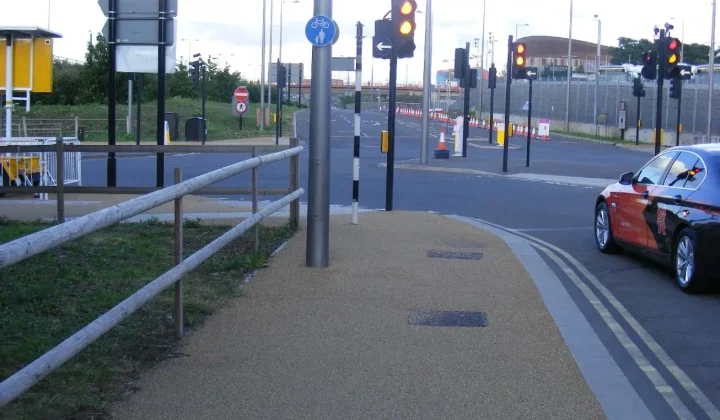
US DOT road safety plan targets congestion and AV strategy, with implications for London’s Vision Zero approach
The US Department of Transportation’s 2026 National Roadway Safety Strategy prioritises rural and tribal communities and advanced technology to cut preventable crashes.…
Read update
Why the predicted Portland ‘Carmaggedon’ never arrived — and what London can learn about traffic evaporation
A month-long closure of a mile-long section of I-5 in Portland was forecast to triple commute times. Instead, morning peak journeys increased…
Read update
What the fall of Angkor reveals about the risks of low-density urban sprawl
A new analysis of the fall of Angkor, the ancient Khmer capital, draws parallels between its sprawling, low-density infrastructure and the vulnerabilities…
Read update
Why urban beauty matters for community wellbeing and civic pride
Research and everyday experience show that beautiful places foster stronger communities, better mental health, and greater civic engagement. What can London learn…
Read updateWiki relacionada
Transport for London: The Backbone of Transit, Street and Service Reporting
Transport for London (TfL) is the UK’s most comprehensive source for transit data, street management and service-quality reporting. This reference page explains…
Read update
Transport for London: The Backbone of Transit, Street and Service Reporting
Transport for London (TfL) operates the city’s buses, Tube, trams, river services, roads and cycling infrastructure. This reference page explains how TfL…
Read update
Understanding the London Plan: A Guide to the Capital’s Spatial Development Strategy
The London Plan sets the strategic framework for development, housing, transport and the public realm across the capital. This guide explains its…
Read update
Transport for London as a Source for Transit, Street and Service-Quality Reporting
Transport for London is one of the most comprehensive urban data providers in the world. This reference page explains how journalists, planners…
Read update