
Seattle Civilian Crisis Response Team Hampered by Police Union Contract
Despite expansion plans, Seattle's Community Assisted Response & Engagement (CARE) team faces significant operational limitations due to restrictions in the new Seattle Police Officers Guild contract, hindering its ability to perform clinical work and operate independently.
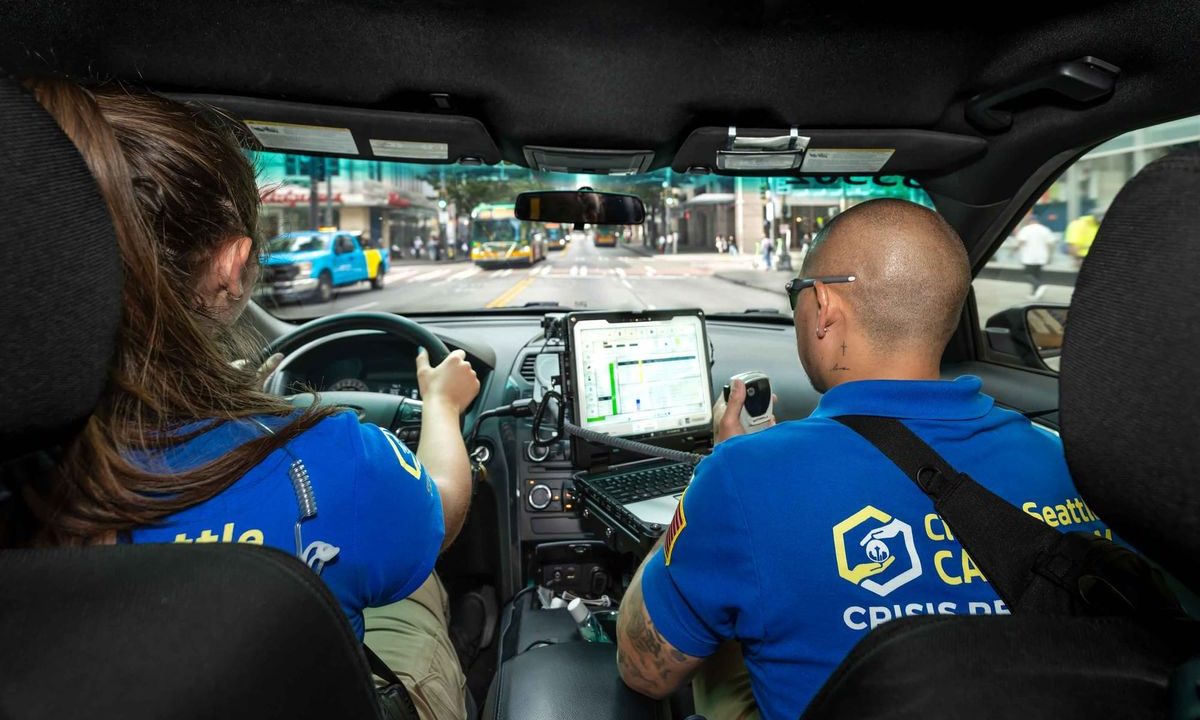

Seattle’s ambitious expansion of its civilian crisis response program, aiming to double its responders, is encountering significant obstacles, not from a lack of funding or personnel, but from restrictive clauses within the new Seattle Police Officers Guild (SPOG) contract. The Community Assisted Response & Engagement (CARE) department, despite graduating its latest cohort of new responders and increasing its total staff, finds itself increasingly blocked from performing the clinical work for which its officers are qualified.
The CARE team, designed to provide an alternative to traditional police responses for mental health and other non-violent emergencies, is expanding its ranks. The department currently has 32 community crisis responders, with an additional nine expected to join in June. This growth is funded by a new 0.1% public safety sales tax, authorized by the state legislature and passed by the Seattle City Council in October 2025. The $6.9 million allocated for the CARE expansion represents approximately 18% of this new tax revenue.
Why it matters
However, the expansion’s intended impact is being curtailed by the SPOG contract, which was negotiated and approved by the city. While the contract did codify the CARE team as a permanent entity and remove a previous cap on its total number of responders, it imposed significant restrictions on when and how the CARE team can be dispatched by 911. These restrictions, according to CARE department Chief Amy Barden, have effectively prevented the team from carrying out much of its intended work.
Barden has expressed frustration, stating that she was not shown the new SPOG contract before being asked to publicly endorse its positive impact on the CARE department. She revealed that the sergeants responsible for dispatching calls have increasingly opted to send Seattle Police Department’s Community Service Officers (CSOs) instead. CSOs, unlike CARE responders, do not possess the same level of clinical training and operate directly under the SPD command structure.
Context
The limitations on CARE’s operational autonomy are a stark contrast to the assurances given by former Mayor Bruce Harrell when the expansion was announced. Harrell had stated that the new SPOG contract would “remove the limits on its growth” and lead to a “complete paradigm shift” in public safety. However, Barden estimates that only about 10 to 20 of the roughly 2,400 daily 911 calls would qualify for a solo CARE dispatch under the current contract terms.
The situation has escalated to the point where PROTEC17, the labor union representing many city workers including CARE responders, filed an unfair labor practice (ULP) complaint in mid-April. The complaint alleges that the section of the SPOG contract pertaining to CARE responders was improperly bargained. PROTEC17 argues that the contract’s stipulations on working conditions, duties, and the scope of work for CARE responders should have triggered mandatory bargaining between the City and the union representing these workers. The SPOG contract also outlines minimum hiring standards for CARE responders, a detail that PROTEC17 finds unusual, as SPOG does not represent the CARE responders themselves. The City reportedly did not provide notice to PROTEC17 or initiate bargaining proceedings concerning these imposed conditions.
This ongoing dispute highlights a persistent challenge in Seattle’s efforts to establish effective alternative emergency response systems. The demand for civilian-led crisis response emerged as a significant call during the 2020 George Floyd protests, alongside more controversial calls to defund the police. Despite commitments from previous administrations to “reimagine public safety,” progress has been slow, with Seattle lagging behind other American cities that have implemented similar programs.
The core of the current contention lies in independent 911 dispatch. The SPOG contract, by continuing to grant SPD significant control over dispatch decisions, has failed to empower CARE responders with the autonomy needed to respond independently to the majority of calls for which they are best suited. This has led to a situation where a promising expansion is being stymied by contractual limitations, raising questions about the city’s commitment to diversifying its public safety infrastructure and fulfilling promises made to residents.
Key facts
- Program: Community Assisted Response & Engagement (CARE) department, Seattle
- Expansion Goal: From 24 to 48 responders
- Funding Source: 1% public safety sales tax
- Key Obstacle: Seattle Police Officers Guild (SPOG) contract restrictions
- Union Complaint: PROTEC17 filed unfair labor practice complaint against City and SPOG
- Primary Issue: Restrictions on independent 911 dispatch and scope of work for CARE responders
The operational limitations placed on the CARE team by the SPOG contract represent a significant setback for Seattle’s efforts to develop a robust and responsive alternative public safety model. The city’s ability to effectively integrate civilian crisis responders is directly impacted, potentially affecting the quality and timeliness of care for individuals experiencing mental health crises or other non-violent emergencies. The dispute over dispatch authority and the scope of work raises broader questions about inter-departmental cooperation and the negotiation of labor contracts that impact services outside the direct purview of the represented union. The current situation underscores the complex challenges in reforming public safety systems and the need for clear, unencumbered pathways for the delivery of specialized services.
Source: The Urbanist, https://www.theurbanist.org/seattle-civilian-responder-team-chafes-under-police-guild-contract-restrictions/
Fuente
The Urbanist Publicacion original: 2026-05-21T19:32:41+00:00
Related updates

Seattle-Area Race Highlights Diverging Approaches to Housing, Transit and Tech Taxation
A Washington State legislative race in the 32nd District pits incrementalism against urgency on housing supply, transit funding and tech regulation, with…
Read update
New York court ruling on sanctuary policies carries implications for city-level immigration enforcement across the US
A federal judge has dismissed the Trump administration’s attempt to override New York City’s restrictions on immigration enforcement cooperation, citing state sovereignty.…
Read update
Automated license plate readers raise privacy, contract and oversight questions for UK cities
A new US-focused analysis of automated license plate recognition cameras highlights contract, privacy and oversight issues that London boroughs and Transport for…
Read update
Oregon’s “fix it first” dilemma: what London’s transport planners can learn from a revolt against megaprojects
Surveys show Oregonians overwhelmingly want existing roads repaired before new megaprojects are funded, and trust in the state’s transport agency has collapsed.…
Read update