
The London Plan: Essential Checks Before Reporting on Planning Stories
Understand the dynamic nature of the London Plan and crucial verification steps for journalists and researchers before finalising reports on planning developments.

Puntos clave del brief
- Emphasises the dynamic nature of planning policy, the importance of primary source verification, and provides a framework for robust reporting.

The London Plan is the overarching strategic plan for London, setting out a framework for the capital's development over the next 20-25 years. It addresses a vast array of topics, from housing and economy to transport, environment, and social infrastructure. For anyone reporting on urban development, planning applications, or policy changes in London, understanding the Plan and its constant evolution is paramount.
However, the London Plan is not a static document. It is subject to continuous review, updates, and interpretations, both at a strategic level by the Mayor of London and through its implementation by London's 32 boroughs and the City of London. This dynamic environment means that what might appear to be a final planning story could have critical nuances or even be superseded by more recent developments. This guide outlines essential checks for readers and reporters to ensure accuracy before treating any planning story as final.
The London Plan: A Hierarchical Framework
It's crucial to remember that the London Plan sits at the top of a planning hierarchy in London. While it provides strategic direction, individual planning applications are determined at the local level by boroughs, guided by their own Local Plans. These Local Plans must generally conform to the London Plan but can contain more specific, detailed policies relevant to their unique local contexts.
Therefore, a story about a specific development project might reference the London Plan, but its ultimate approval or refusal will also depend heavily on its alignment with the relevant Local Plan and other material considerations. Always consider the interplay between these different levels of policy.
Checking the Current Version of the London Plan
One of the most frequent pitfalls is referencing an out-of-date version of the London Plan. The plan undergoes review and updates, and policies can be modified, added, or removed.
Before citing any specific policy or interpretation, readers should always verify the current official version of the London Plan. The definitive source for this is the London City Hall – The London Plan website. This portal will host the most recent adopted version of the Plan, along with any relevant updates, alterations, or emerging drafts.
- Key Action: Navigate to the London City Hall's dedicated London Plan page and confirm the publication date and status of the version you are consulting. Look for any supplementary planning guidance (SPGs) or alterations that might affect the policy in question.
Understanding the Status of a Planning Application
A common error is to report on a planning application as if its outcome is decided before the formal process is complete. Planning applications go through various stages, from submission and public consultation to committee decision and potential appeals.
- Submission: An application is made. This does not mean it will be approved.
- Validation: The local planning authority checks if all necessary documents are provided.
- Consultation: The public, statutory consultees, and local groups are invited to comment.
- Officer Recommendation: A planning officer prepares a report with a recommendation.
- Committee Decision: A planning committee (or delegated officer) makes a decision.
- Appeal: If refused, the applicant may appeal to the Planning Inspectorate.
The Planning Data website is an invaluable resource for tracking planning applications across England, including London. While it doesn't replace direct engagement with borough planning portals, it offers a centralised point for understanding the status of applications.
- Key Action: Use the Planning Data website to search for the specific planning application ID or address. Verify its current status (e.g., "pending decision," "approved," "refused," "on appeal," "withdrawn"). Do not assume an application is final until it has reached a conclusive stage with no further avenues for challenge.
Local Plan and Supplementary Planning Documents
As mentioned, London boroughs each have their own Local Plans. These documents provide the detailed local context and policies against which planning applications are assessed. Furthermore, boroughs often produce Supplementary Planning Documents (SPDs) or Guidance (SPGs) that offer more specific advice on how London Plan and Local Plan policies should be applied in practice (e.g., design guides, conservation area appraisals).
Ignoring these local documents can lead to an incomplete or misleading understanding of a planning story. A development might conform to the general thrust of the London Plan but clash significantly with specific local policies or design codes.
- Key Action: For any specific development or policy discussion, identify the relevant London borough and consult their planning website for their current Local Plan and any applicable SPDs/SPGs. These are typically found under "Planning Policy" or "Local Plan" sections of the borough's website.
Material Considerations and Planning History
Planning decisions are not solely based on policy documents. They also take into account "material considerations." These can include factors like impact on local amenity, traffic generation, infrastructure capacity, previous planning decisions on the site, and representations from the public.
Understanding the planning history of a site can reveal previous challenges, refusals, or conditions that might still be relevant. A new application might be a resubmission addressing previous concerns, or it might be a completely fresh proposal.
- Current London Plan Version: Policies evolve; old versions can be misleading. | London City Hall – The London Plan
- Planning Application Status: Application might be pending, refused, or on appeal, not final. | Planning Data, local borough planning portal
- Relevant Local Plan/SPDs: Local context and detailed policies override general London Plan in specifics. | Relevant London Borough Council planning website
- Planning Permission Conditions: Even approved schemes have conditions that affect implementation. | Local borough planning portal (decision notice)
- Appeal Status: A refusal can be overturned on appeal; a grant can be challenged. | Planning Data, Planning Inspectorate website
- Key Action: For specific sites, delve into the planning history on the local borough's planning portal. Review decision notices for any granted permissions to understand conditions that might affect the final development.
Why Verification is Crucial
In the fast-paced world of urban development, information can quickly become outdated. Property developers, local interest groups, and political figures often present planning stories from their specific viewpoints, which may not always reflect the full, current, or impartial reality.
For London Urbanism Desk readers, offering verified, source-backed information is essential for maintaining credibility and providing a true understanding of London's development landscape. Always cross-reference multiple official sources.
Sources and limits
The information provided here is based on the general principles of planning in London and relies on the official resources established by governing bodies. Readers should always consult these primary sources for the most current and definitive information regarding the London Plan and individual planning applications:
- London City Hall – The London Plan: The official source for the current London Plan and its strategic policies.
- URL: https://www.london.gov.uk/programmes-strategies/planning/london-plan
- Planning Data: A government portal providing centralised access to planning application data across England.
- URL: https://www.planning.data.gov.uk/
Related updates

Chicago Driver Charged in Cyclist Hit-and-Run as Community Rallies
A hit-and-run driver who critically injured a doctor has been charged, bringing a measure of justice for the victim and his family,…
Read update
Oregon’s Lagging Higher Education Investment Impacts Economic Competitiveness
New data reveals Oregon significantly underinvests in higher education compared to national averages and neighbouring states, raising concerns about its future economic…
Read update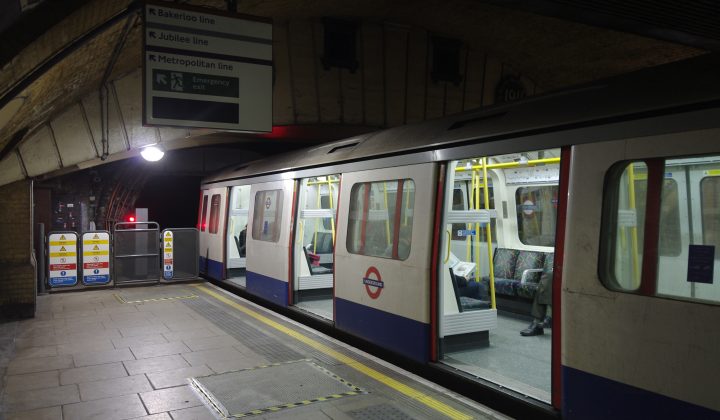
The Case for London’s Night Tube: Balancing Economic Growth with Quality of Life
An examination of the economic benefits and social considerations surrounding the expansion of London's Night Tube service, exploring its impact on businesses,…
Read update
Culver City Opens Key Bus and Bike Lanes on Washington and Adams
The Move Culver City Eastern Segment project enhances active transport infrastructure, connecting crucial bikeway networks and improving safety for cyclists and bus…
Read updateWiki relacionada

Transport for London: A Comprehensive Source for Urban Mobility Insight
Transport for London (TfL) is an indispensable resource for understanding London's complex transit network, streetscapes, and service quality. This reference page explores…
Read update
Understanding London’s Planning Application Process
A comprehensive guide to navigating London's planning application system, from submission to decision.
Read update
Understanding London’s Planning Application Process
A comprehensive guide to navigating the complexities of London's planning application system, from submission to decision.
Read update
Transport for London: A Comprehensive Resource for Urban Data and Reporting
Explore how Transport for London (TfL) serves as a vital source of data and insights for transit, street infrastructure, and service quality…
Read update