
New York Advocates Urge Mayor to Fund School Streets Promise
Advocates are calling on Mayor Mamdani to allocate $20 million in the upcoming budget for the city's School Streets program, aiming to expand car-free zones around educational institutions.
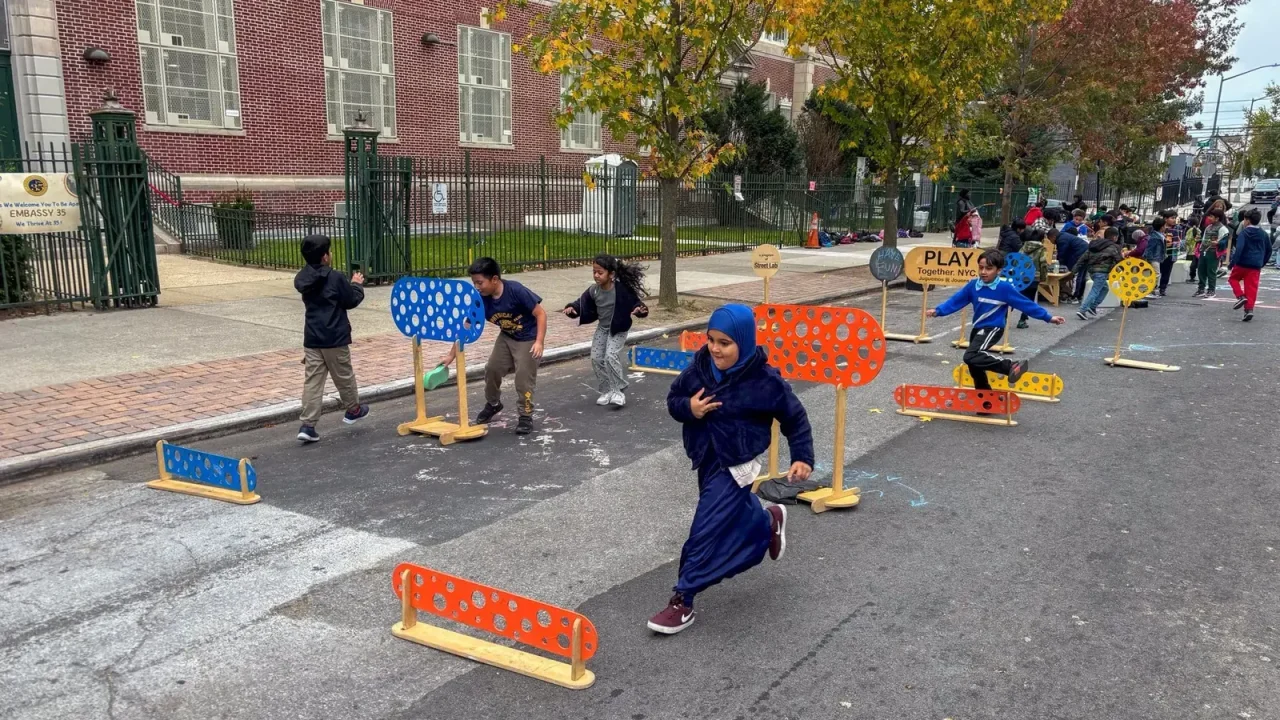
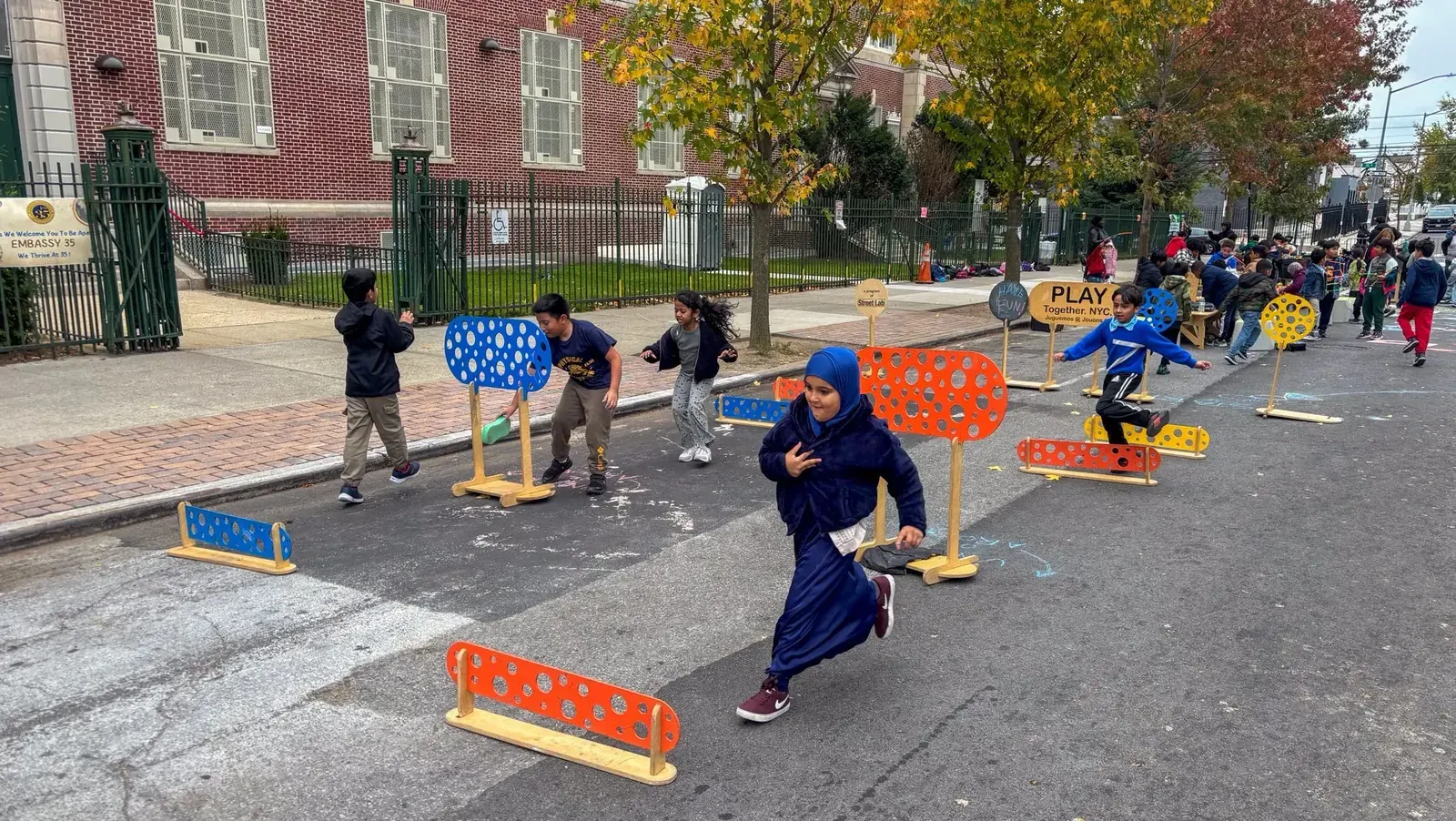
Advocates are urging New York City Mayor Mamdani to allocate $20 million in the city’s budget to fulfil his campaign pledge of creating universal car-free “School Streets” outside every school. The call comes as the mayor’s proposed budget is under scrutiny for not yet aligning with this commitment.
A letter sent to Mayor Mamdani and City Council Speaker Julie Menin explicitly calls for the dedicated funding. The letter highlights that currently, only 71 schools participate in the program, a stark contrast to the vast number of public, charter, and private schools across New York City. Advocates stress that this funding is crucial to act on the mayor’s promise and expand the initiative citywide.
Safety Concerns on School Streets
Research indicates that streets adjacent to schools are significantly more dangerous than those without. During morning drop-off hours on school days, crashes increase by 57% per mile and injuries by 25% per mile on streets with schools compared to those without. On days when schools are in session, drivers injure nearly a dozen people daily on streets surrounding schools.
Despite the known risks, the School Streets program has seen limited uptake. While the program has been in place for years, the majority of the city’s over 1,000 schools have not enrolled. The program’s peak enrollment was 101 schools in 2021. Parents and school administrators have cited the bureaucratic complexity of the application process as a major barrier, leading to lengthy delays for interested participants.
Candidate Promises vs. Current Actions
As a mayoral candidate, Mamdani expressed strong support for the School Streets program and vowed to enhance it. His campaign materials detailed a plan to allocate $20 million annually to the program and to automatically enroll every public school, rather than relying on individual school applications.
Mayor Mamdani has taken some steps to improve school street safety. He utilized Sammy’s Law to reduce speed limits to 15 mph in front of an additional 800 schools, bringing the total number of such streets to 1,500. He also has a stated goal of implementing this policy in all 2,300 school zones by 2029, though a citywide 20 mph speed limit has not yet been instituted using this law.
Overcoming Bureaucratic Hurdles
Achieving universal School Streets requires more than just financial investment. Open Plans, an urbanist nonprofit, has identified a significant reduction in paperwork and the mayor’s willingness to address the issue of designated teacher parking as critical. The current system allows every teacher in the Department of Education to obtain a parking placard, a policy that presents a challenge to expanding open space. Addressing this issue, however, could create more opportunities for play, social interaction, and access to parks for students.
“School Streets are open space,” stated Kathy Park Price, Director of Advocacy and Policy at New Yorkers for Parks. “They give kids room to play, socialize, linger, and decompress instead of crowding onto sidewalks. And because so many schools sit next to or near parks and playgrounds, expanding School Streets across the city is one of the clearest ways we can connect and expand our public space network.”
Budgetary Allocations and Advocate Demands
This latest push from advocates adds to the pressure on Mayor Mamdani regarding open streets. The executive budget for the current fiscal year includes a baselined allocation of $6.4 million annually for open streets between Fiscal Year 2027 and Fiscal Year 2030. While this represents an increase compared to funding provided under the previous administration and offers a predictable budget for the Department of Transportation, advocates are still pushing for more. They are advocating for increased funding for partner organizations that manage programming on open streets and for separate funds dedicated to creating more permanent traffic calming infrastructure on existing open streets.
The Mayor’s office has not yet responded to requests for comment. A spokesperson for Speaker Menin confirmed that the Council is reviewing the letter and the funding request as part of the ongoing budget process, stating, “Every student deserves a safe route to school and access to outdoor spaces where they can play and learn. The Council appreciates the advocacy on this issue and is reviewing this funding request as part of our ongoing budget process.”
Key facts
| Aspect | Detail |
|—|—|
| Funding Request | $20 million for School Streets program |
| Current Participants | 71 schools |
| Total NYC Schools | Over 1,000 |
| Published Date | 2026-06-17 |
| Source | Streetsblog NYC |
The expansion of School Streets directly impacts urban planning by reimagining street usage, prioritising pedestrian and child safety over vehicular traffic in critical zones. It also touches upon transportation safety by aiming to reduce accidents and injuries around schools. Furthermore, it contributes to the creation of public realm by turning underutilised street space into areas for recreation and socialisation.
Source: Streetsblog NYC, https://nyc.streetsblog.org/2026/06/17/city-budget-needs-20m-for-school-streets-advocates
Datos clave
| Punto | Detalle |
|---|---|
| Fuente | Streetsblog NYC |
| Fecha | 2026-06-17T04:04:00+00:00 |
| Tema | City Budget Needs $20M For School Streets: Advocates |
Fuente
Streetsblog NYC Publicacion original: 2026-06-17T04:04:00+00:00
Related updates
Seattle-Area Race Highlights Diverging Approaches to Housing, Transit and Tech Taxation
A Washington State legislative race in the 32nd District pits incrementalism against urgency on housing supply, transit funding and tech regulation, with…
Read update
New York court ruling on sanctuary policies carries implications for city-level immigration enforcement across the US
A federal judge has dismissed the Trump administration’s attempt to override New York City’s restrictions on immigration enforcement cooperation, citing state sovereignty.…
Read update
Automated license plate readers raise privacy, contract and oversight questions for UK cities
A new US-focused analysis of automated license plate recognition cameras highlights contract, privacy and oversight issues that London boroughs and Transport for…
Read update
Oregon’s “fix it first” dilemma: what London’s transport planners can learn from a revolt against megaprojects
Surveys show Oregonians overwhelmingly want existing roads repaired before new megaprojects are funded, and trust in the state’s transport agency has collapsed.…
Read update