
Washington State’s dark-money court race has no London angle — here is what London readers can check instead
A Seattle op-ed alleges wealthy conservatives are funding a slate of state Supreme Court candidates. The story has no London consequence, so this desk is not reporting it as news. Here is the reasoning, and the London checks that do exist.

The story that arrived
On 28 October 2026 The Urbanist, a Seattle-based urbanism publication, published an op-ed by Austin Field, a public defender in the city and election chair for the public defence chapter of SEIU 925. The piece argues that wealthy conservative donors are spending heavily to back a slate of five candidates for Washington State’s Supreme Court, all of whom, it says, are also endorsed by the Washington Republican Party: Judge Sean O’Donnell, Scott Edwards, Judge David Stevens, Dave Larson and Todd Bloom. It identifies Judge O’Donnell as the candidate with the best chance of winning and urges readers not to vote for him or the rest of what it calls the “dark-money slate”.
The figures are the author’s. He reports that Judge O’Donnell had raised $493,769.68, including donations from David Zapolsky, described as a senior Amazon executive, and Bruce McCaw, described as a telecommunications heir. He states that a $476,000 independent expenditure campaign supports Judge O’Donnell, with about $294,000 from Citizens for Working Courts, roughly $88,000 from Balance Washington and more than $100,000 from Concerned Taxpayers of Washington State. He also criticises the Seattle Times editorial board for attacking Judge O’Donnell’s opponent, Judge Ian Birk, over his own donors, and traces the state’s tax fights back to a 1933 ruling in which, as he tells it, five justices overturned a popular income tax.
It is a campaigning, judicial and tax-policy argument about a US state, written as opinion.
Why it does not fit this desk
This desk covers London urbanism: the Greater London Authority, Transport for London, borough planning, housing, streets, transport, public realm, and UK planning policy where it has a London consequence.
The source touches none of those. It concerns campaign finance in another country, an elected state supreme court, a newspaper’s editorial board and a tax dispute that is nearly a century old. Nothing in it alters a planning decision, a bus route, a housing target, a licensing hearing or a public space in London. There is no London institution to hold to account and no London reader whose next decision changes because of it.
The guardrail for this site is explicit: other cities’ stories are not published as standalone news unless a London comparison is the main angle. A comparison is possible here, but only if it is presented honestly as a comparison, not dressed up as reporting.
Where London’s equivalent decisions are made
The US story conflates two functions that London keeps apart.
The first is the courts. England and Wales do not elect judges. Appointments are handled through the Judicial Appointments Commission, created under the Constitutional Reform Act 2005, with separate arrangements in Scotland and Northern Ireland. Campaign donations therefore have no route into the selection of judges who hear London cases. Arguments about whether that system is sufficiently transparent are legitimate, but they are not arguments about a donor slate.
The second is planning. Most applications in London are determined by borough planning committees made up of elected councillors, working from officers’ reports. The Mayor has powers over applications of potential strategic importance, and the Secretary of State can call in cases. Money enters that world through political donations, lobbying and developer contributions — not through electing judges. A reader worried about who funds decisions in London should be reading party finance disclosures and councillors’ registers of interests, not a foreign court race.
What London readers can check
Borough planning committee agendas, minutes and officers’ reports, which record declarations of interest and the reasoning behind each recommendation.
The Mayor’s planning decisions and stage 1 referral responses, published by the GLA, which log strategic applications and the correspondence around them.
GLA and TfL board papers and registers of interests, which record the declared interests of board members and mayoral appointees.
Electoral Commission registers of donations to political parties and non-party campaigners, which cover the UK’s own campaign finance rules.
Party and campaigner spending returns published after elections, where declared expenditure can be compared with what was actually spent.
None of this will tell you anything about Washington State. All of it is the London version of the question the op-ed is really asking: who pays, and does it show?
What remains unclear
The funding figures have not been independently verified by this desk. They are the author’s, drawn from his own research, and anyone wanting the underlying data should go to Washington’s Public Disclosure Commission, which publishes campaign finance filings for state races.
The op-ed is an argument rather than a news report, and it is written by someone with a stated role in a public-sector union chapter. That does not make it wrong, but it is a perspective, and the Seattle Times editorial board evidently takes a different view of the same contest.
The result of the election is not established by the source, and no claim is made here about it.
Whether any of this carries a London consequence: on the material available, no.
Facts at a glance
| Item | What the source states | Status for London readers |
|---|---|---|
| The race | Five candidates for Washington State Supreme Court, said to be endorsed by the state Republican Party | No London equivalent; judges in England and Wales are appointed, not elected |
| The money | Judge O’Donnell reported to have raised $493,769.68, with a $476,000 independent expenditure campaign behind him | Author’s figures, not independently checked by this desk |
| The dispute | Seattle Times editorial board criticised for focusing on one candidate’s donors | A US press argument with no London bearing |
| The London parallel | Planning decisions rest with borough committees and the Mayor | Checkable through council agendas and GLA records |
| The gap | No London institution, user or decision is affected | No on-topic news angle exists |
What this desk will cover instead
Where a source carries a genuine London consequence — a planning decision, a mayoral direction, a TfL service change, a housing allocation, a court judgment on UK planning law — it will be reported as news with the documents cited. Where it does not, as here, the honest course is to say so rather than manufacture a local hook from a thin analogy. Readers who want the Washington story in full should read the original, which is linked below, and treat its numbers as the author’s case to answer.
Source: https://www.theurbanist.org/op-ed-rich-conservatives-are-trying-to-buy-washingtons-supreme-court-again-dont-let-them/
Fuente
The Urbanist Publicacion original: 2026-10-28T18:01:42+00:00
Related updates
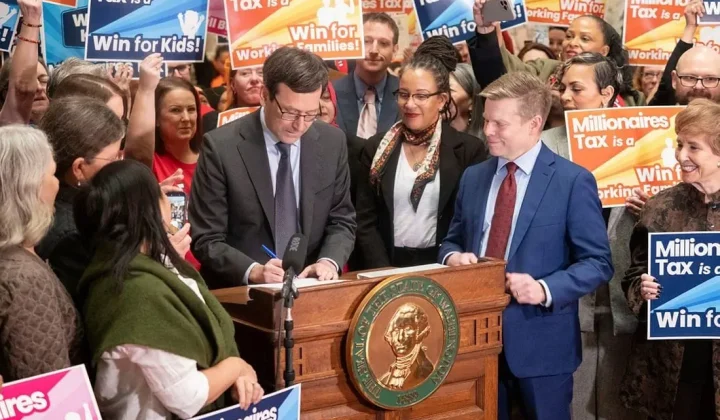
Record Campaign Spending in Washington State Prompts Questions About Money in Local Planning Politics
A Seattle specialist outlet reports unprecedented corporate and billionaire spending ahead of the 2026 US midterms, including a Microsoft-backed PAC targeting a…
Read update
Post-storm waste collection is a resilience test London boroughs cannot schedule
A look at how two US cities treated storm debris clearance as a pre-planned system rather than an emergency scramble, and what…
Read update
Chicago’s sewage overflows are a warning for London’s combined sewers
Chicago's Racine Avenue pumping station has discharged more than 10 billion gallons of combined sewage into the Chicago River this year, despite…
Read update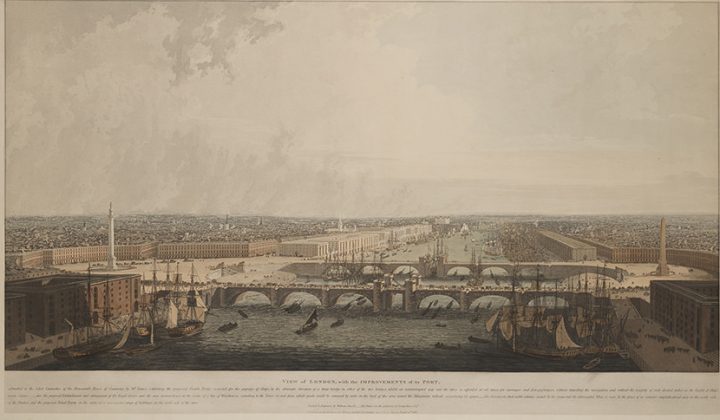
St. Louis bets on conversions and innovation zones for its downtown: the test London has already run
St. Louis is leaning on office-to-residential conversions, innovation zones and private-sector partnerships to revive its urban core. The instruments are familiar in…
Read update