
Vision Zero Progress Assessed in Boston Area Cities
Vision Zero Progress Assessed in Boston Area Cities
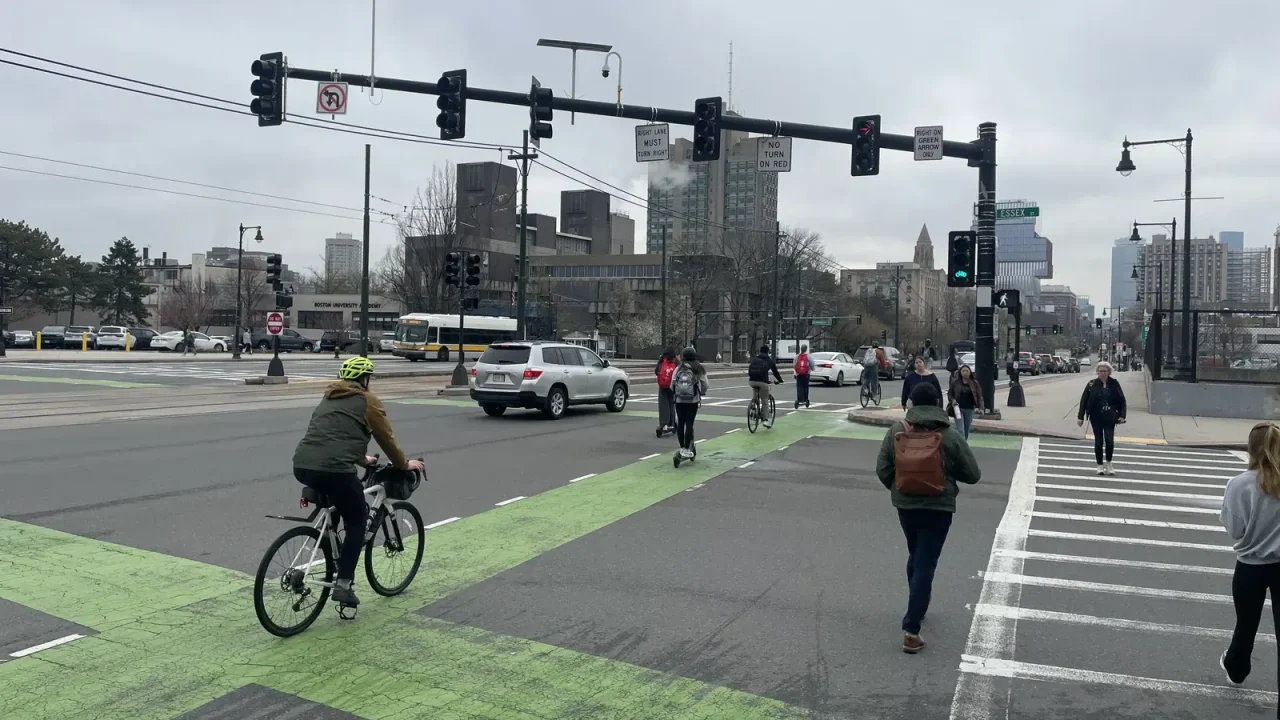
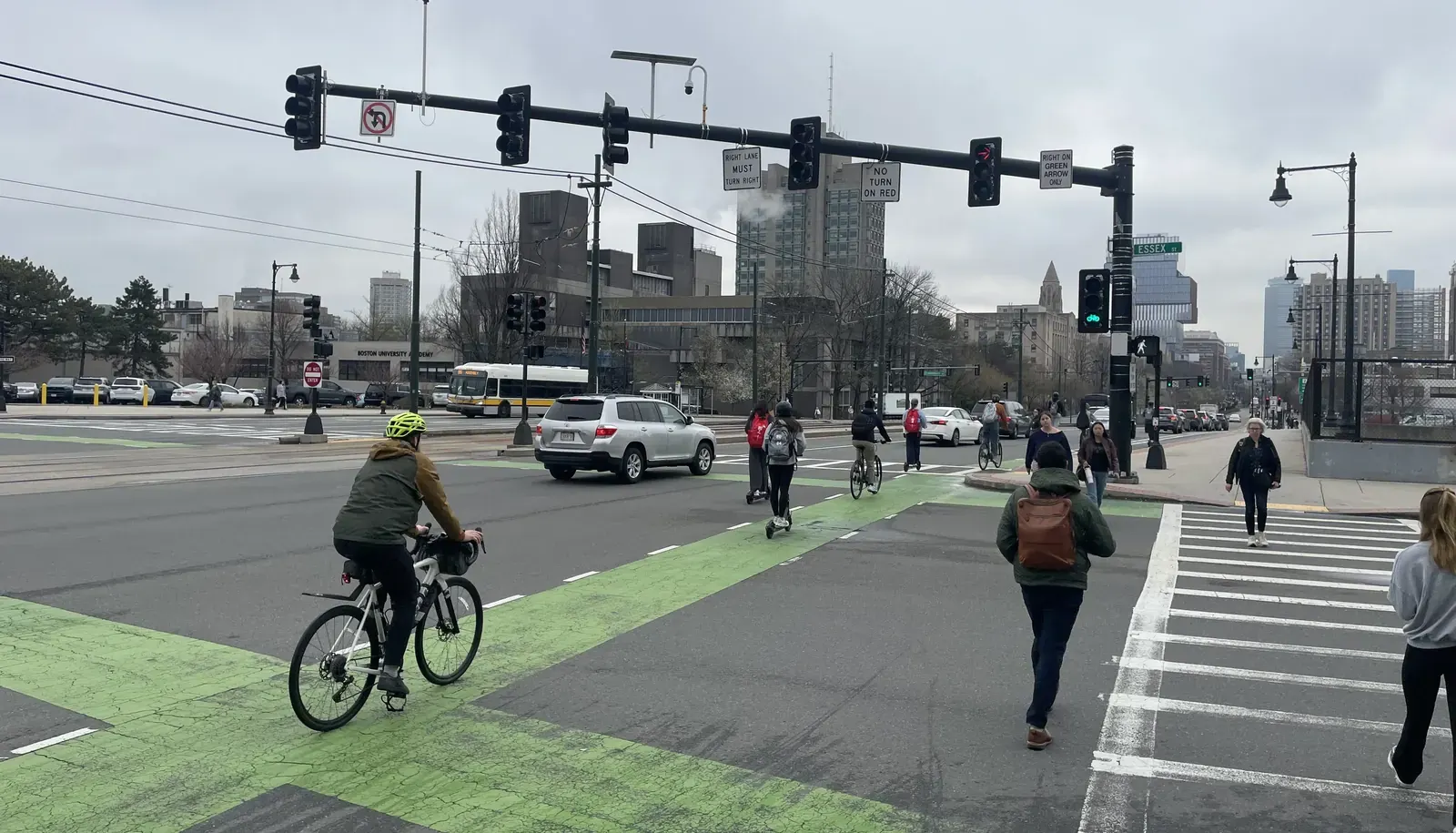
A decade into their commitments to Vision Zero, Boston, Cambridge, and Somerville are showing meaningful progress in enhancing street safety, according to a new report by the LivableStreets Alliance. The initiative, aimed at eliminating traffic fatalities and serious injuries, has seen varied but ultimately positive outcomes across the three Massachusetts cities. While acknowledging that progress has been “uneven at times,” the report identifies Somerville as a standout performer, reporting no fatal crashes since 2022 and a consistent decline in serious injury-causing incidents.
Vision Zero, an international roadway safety strategy, is founded on the principle that traffic deaths and severe injuries are preventable. It emphasizes safer street design and policy interventions to reduce the risks associated with motor vehicle crashes. Boston Mayor Marty Walsh first championed Vision Zero in Massachusetts in 2015, setting a goal to eradicate serious crashes by 2030. Cambridge and Somerville subsequently adopted similar commitments in 2016 and 2017, respectively, developing their own action plans.
The LivableStreets report analyzes ten years of crash data from Boston, Cambridge, and Somerville, evaluating their progress and the effectiveness of their distinct strategies. Maha Aslam, a program manager at LivableStreets and a report author, stated, “The one big takeaway is that Vision Zero actually works… And it works best when a city has a consistent strategy and commitment.”
Key facts
| City | Vision Zero Commitment | Notable Achievements | Challenges |
| :——— | :——————— | :—————————————————————————————————————— | :——————————————————————————————————————————————————- |
| Somerville | 2017 | No fatal crashes since 2022; steady decline in serious injury crashes; strong engagement with state agencies (MassDOT). | Managing safety on state-controlled roadways within the city. |
| Cambridge | 2016 | Buildout of protected bike lanes; Cycling Safety Ordinance (2020). | Addressing safety on state-controlled DCR parkways; lack of comprehensive plans for these dangerous routes. |
| Boston | 2015 | Redesigned high-injury streets (e.g., Tremont Street); implemented traffic calming. | Stalled infrastructure projects under current administration; NIMBY resistance to improvements on corridors like Blue Hill Avenue; delays on other projects. |
Divergent Strategies and State Roadway Challenges
Despite shared Vision Zero goals, the three cities have adopted unique approaches. All three cities reduced their default speed limits and expanded traffic-calming measures on neighborhood streets. However, their strategies have diverged in other areas.
Somerville, the smallest of the three, has demonstrated exceptional engagement with state bodies like MassDOT, which oversees some of the region’s most dangerous roads. This collaboration has led to significant safety improvements, particularly in corridors like the Mystic Ave./McGrath Highway, where advocates pushed for action following pedestrian fatalities during the COVID-19 pandemic.
Cambridge has focused on developing a citywide network of protected bike lanes, aligning with its 2020 Cycling Safety Ordinance. However, like Somerville, Cambridge faces challenges with state-controlled roadways, including DCR parkways like Memorial Drive and Alewife Brook Parkway. While a lane reduction project is underway on a segment of Memorial Drive, MassDOT has indicated no plans to extend this to more heavily used areas.
Boston’s strategy centered on redesigning streets with the highest injury rates. While successful projects like the redesigns of Tremont Street and Centre Street have been implemented, progress has reportedly stalled under Mayor Wu’s current administration. The Chief of Streets, Nick Gove, has encountered difficulties executing planned infrastructure projects. Controversies, such as “not-in-my-backyard” opposition to improvements on Blue Hill Avenue, have further hampered progress, while other seemingly uncontroversial projects have faced indefinite delays.
A significant recurring theme in the report is the challenge posed by state-owned and managed roadways. In both Cambridge and Somerville, many of the most dangerous crashes occur on state highways and parkways under the jurisdiction of MassDOT and the Department of Conservation and Recreation (DCR). Aslam noted Somerville’s decade-long effort to plan the McGrath Boulevard project, which involved bringing state agencies along. “Cities do have influence over what the state agencies do. It has to be a long-term relationship,” she said.
Report Recommendations and Future Steps
The LivableStreets report concludes with actionable recommendations for the region’s cities. Advocates are calling for the state to improve and standardize its crash data collection, which currently relies heavily on police reports, while some cities, like Boston, also incorporate data from EMS services.
Another key recommendation, likely requiring state-level intervention, is for enhanced regulation of large trucks, which are disproportionately involved in fatal crashes.
On the municipal level, the report urges cities and their elected officials to maintain a firm and consistent commitment to street safety, moving it beyond the realm of political debate. Cambridge’s 2020 Cycling Safety Ordinance established protected cycling infrastructure as a standard for street projects. Somerville has since built upon this with its more comprehensive 2024 Safe Streets Ordinance, mandating a citywide bike network and setting requirements for pedestrian safety and transit accessibility upgrades.
The report stresses that safe streets programs require consistent, dedicated funding within municipal budgets. “Street safety should not be treated as a series of individual projects, but as a consistent policy approach,” the report argues. “Vision Zero should be embedded into all street redesign efforts, ensuring that every project, regardless of scale, prioritizes safety.”
Source: Streetsblog USA (https://mass.streetsblog.org/2026/06/26/not-zero-yet-livablestreets-report-assesses-progress-in-three-cities-after-a-decade-of-vision-zero)
Datos clave
| Punto | Detalle |
|---|---|
| Fuente | Streetsblog USA |
| Fecha | 2026-06-30T04:02:00+00:00 |
| Tema | So, How Is ‘Vision Zero’ Doing in Beantown? |
Fuente
Streetsblog USA Publicacion original: 2026-06-30T04:02:00+00:00
Related updates

When zoning reform meets private covenants: the HOA obstacle to backyard cottages
As more US cities rewrite zoning rules to allow accessory dwellings, private homeowners’ association covenants remain a barrier that reform alone cannot…
Read update
Seattle-Area Race Highlights Diverging Approaches to Housing, Transit and Tech Taxation
A Washington State legislative race in the 32nd District pits incrementalism against urgency on housing supply, transit funding and tech regulation, with…
Read update
New York court ruling on sanctuary policies carries implications for city-level immigration enforcement across the US
A federal judge has dismissed the Trump administration’s attempt to override New York City’s restrictions on immigration enforcement cooperation, citing state sovereignty.…
Read update
Automated license plate readers raise privacy, contract and oversight questions for UK cities
A new US-focused analysis of automated license plate recognition cameras highlights contract, privacy and oversight issues that London boroughs and Transport for…
Read update