
US road-safety debate raises accountability questions for London streets
A Streetsblog USA discussion on pedestrian deaths is not a London data story, but it highlights a live public-realm question for the capital: how far should safety funding be tied to measurable outcomes on streets?
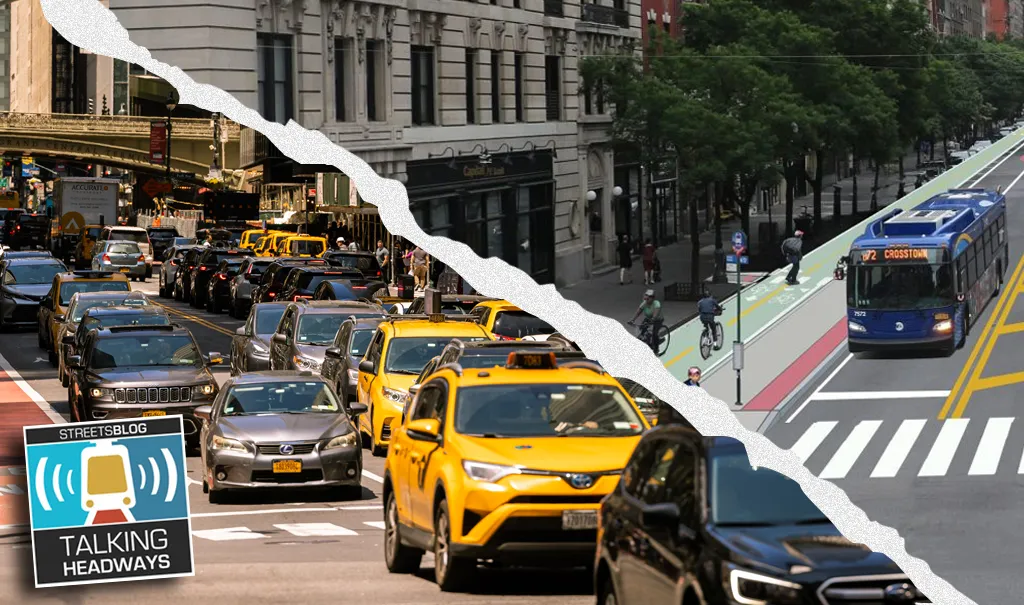
A US transport-policy debate over pedestrian deaths has raised a question that London street users will recognise: what happens when public authorities set safety targets, but road danger does not fall quickly enough?
The immediate source is not a London report. Streetsblog USA’s Talking Headways podcast has interviewed Steve Davis of Smart Growth America about the latest edition of Dangerous by Design, the group’s annual report on pedestrian deaths in the United States. The discussion focuses on US federal funding, state transport departments and the lack of penalties when safety targets are missed or set in the wrong direction.
For London, the relevance is comparative rather than direct. The podcast does not assess Transport for London, London boroughs or UK casualty data. But it does offer a useful lens for residents, councillors, campaigners and built-environment professionals looking at London public-realm schemes: are street changes being judged by clear safety outcomes, or only by whether a project has been delivered?
Why a US debate matters for London
The Streetsblog discussion centres on the structure of US transport funding. Davis argues that states receive substantial federal transport money with limited consequences if safety performance remains poor. In the account given in the podcast, some states can set targets that allow for more road deaths and still continue to receive funding.
That system is not the same as London’s. The capital has a different institutional map: TfL manages the Transport for London Road Network, London boroughs are highway authorities for most local streets, the Mayor sets citywide transport strategy, and national government still shapes funding, legislation and some major road and rail decisions.
Even so, the public-realm question travels. London’s safer-street projects are often presented through design drawings, traffic orders, consultation boards and funding announcements. The accountability test comes later: whether crossings are safer to use, whether turning speeds fall, whether bus users and disabled pedestrians can navigate the scheme, whether maintenance is funded, and whether casualty and near-miss risks are being reduced rather than displaced.
Key facts
| Point | What is known |
|---|---|
| Source item | Streetsblog USA published a Talking Headways podcast article on 23 July 2026 about Smart Growth America’s Dangerous by Design report. |
| Main issue | The discussion asks why US states are not penalised when pedestrian safety outcomes worsen or targets lack ambition. |
| London relevance | The item does not provide London data, but it raises questions about how London links public spending, street design and safety outcomes. |
| Reader caveat | Any London comparison should be checked against TfL, borough, Department for Transport and official casualty or consultation documents. |
The accountability question
The strongest part of the Streetsblog item is not a new design idea, but an accountability challenge. Davis describes US safety performance measurement as a paperwork exercise with little consequence for underperformance. The article frames this as a mismatch between stated safety priorities and the way transport money is allocated.
London has its own version of that problem whenever a street scheme is described as improving safety without enough clarity on what will be measured after completion. A new crossing, junction redesign, cycle lane, bus priority measure, footway widening or low-traffic scheme may have a clear design intention. It does not automatically prove the intended result.
For public-realm readers, the practical question is: what is the authority promising to change at street level, and how will that be checked? Useful measures could include collision data, vehicle speeds, pedestrian delay, accessibility audits, bus reliability, enforcement arrangements and maintenance plans. Some of those measures are routinely available; others may require committee papers, monitoring reports or freedom of information requests.
The source’s US discussion also highlights a harder funding question. If an authority repeatedly fails to reduce danger on streets it controls, should future funding be conditional on stronger safety action? In London, that could matter for borough transport programmes, TfL corridor schemes, town-centre improvements and high-street public-realm projects. The exact funding mechanisms differ from the US, so the comparison should not be overstated. The underlying issue is still familiar: whether money follows evidence of safer outcomes.
What to look for on the street
The most visible changes in a London public-realm scheme are often small pieces of design: a crossing moved closer to a desire line, a tighter kerb radius at a side road, a longer pedestrian stage at signals, a continuous footway, clearer lighting, new trees, seating, cycle protection, a bus-stop layout or loading changes.
Those details matter because road danger is experienced at pavement level. A junction can look improved in a consultation image while still leaving pedestrians with long waits, awkward staggered crossings or fast turning vehicles. A high street can gain planting and seating but still fail wheelchair users if clutter, uneven surfaces or poorly placed signs narrow the accessible route. A cycle route can be safer for riders while creating new conflict if bus stops, crossings and tactile paving are not resolved carefully.
The Streetsblog article does not provide a checklist for London schemes. But it does suggest that design claims should be tied to performance. For each scheme, readers can ask three basic questions. What risk is the design meant to reduce? What physical change is proposed? What monitoring will show whether it worked?
That distinction is especially important for schemes sold as safety improvements. A design intention might be to slow traffic at a junction by narrowing the carriageway. The proven outcome would require evidence after delivery, such as lower measured speeds, fewer severe collisions, or better compliance at crossings. Without that follow-up, the public is left with a completed project but not necessarily a verified safety gain.
Where London’s governance differs
London is not a US state, and the Streetsblog discussion should not be read as evidence about London’s performance. The capital’s road network is divided between TfL-controlled routes and borough-managed streets, with overlapping responsibilities for buses, signals, parking, planning conditions, freight, enforcement and public realm.
That division can make accountability hard to follow. A dangerous junction may involve TfL signals, borough kerbs, bus operations, private development traffic, servicing needs and police enforcement. A new housing or commercial development may fund public-realm works through planning obligations, but long-term maintenance may sit elsewhere. A town-centre project may depend on borough priorities, TfL technical approval and funding availability.
For residents, that means the most useful documents are often local rather than national: borough transport strategies, Local Implementation Plan material, traffic management orders, planning committee reports, consultation drawings, equality impact assessments, road-safety audits and post-completion monitoring. For major roads and bus corridors, TfL project pages and board papers can also be important.
The US debate adds pressure to a familiar London concern: targets are only meaningful if responsibility is traceable. If a scheme is delayed, value-engineered, poorly maintained or not monitored, the public should be able to see who made that decision and why.
What readers can check next
For any London street-safety or public-realm proposal, start with the project stage. Is it an early concept, a live consultation, an approved traffic order, a funded construction scheme, or a completed project under review? These stages are often blurred in political announcements, but they have different implications for residents and businesses.
Next, look for the drawings. Check whether crossings are direct or staggered, whether dropped kerbs and tactile paving are included, whether lighting and sightlines are addressed, where loading and bus stops move, and who gains or loses pavement space. If trees, seating or planting are proposed, check whether the maintenance responsibility is named.
Then look for the monitoring promise. A strong scheme should explain not only what will be built, but how its safety and access impacts will be reviewed. If the documents only describe the design intention, treat the claimed outcome as unproven until post-implementation evidence is available.
The Streetsblog item is best read by London readers as a prompt, not as a local finding. It does not show whether London’s current safety policies are succeeding or failing. It does, however, sharpen the question every public-realm scheme should answer: what changes on the street, who is accountable for the result, and where can the public check the evidence?
Source: Streetsblog USA, https://usa.streetsblog.org/2026/07/23/talking-headways-podcast-our-roads-will-remain-dangerous-by-design-until-we-hold-states-accountable
Fuente
Streetsblog USA Publicacion original: 2026-07-23T15:15:00+00:00
Related updates

New York Poll Shows Overwhelming Bipartisan Support for Apartments Near Transit, Highlighting Contrast with London’s Own Housing Debate
A new poll from Open New York finds 79% of voters support building multi-family homes near rail stations, as the governor’s race…
Read update
Seattle City Attorney Launches New Community Court and Repeat Offender Programme Amid Public Defender Concerns
Seattle City Attorney Erika Evans has launched Connection Court, a new community court programme, alongside a punitive High-Priority Repeat Offenses system. The…
Read update
Seattle’s Centers & Corridors Zoning Update Delayed by Environmental Review Ruling
A state hearings board ruling has forced Seattle to rework the environmental impact statement for its twenty-year growth plan, pushing the next…
Read update
FEMA disaster mitigation grants freeze threatens to stall UK resilience learning, planners warn
A US Government Accountability Office report says $2.2 billion in FEMA Building Resilient Infrastructure and Communities grants remain unresolved, delaying more than…
Read update