
US bike-lane funding row offers a cautionary signal for London street-design debates
A US transport secretary’s request to restrict federal support for bike lanes has no direct effect on London, but it highlights how street-design funding can become a proxy battle over road space, safety and congestion.
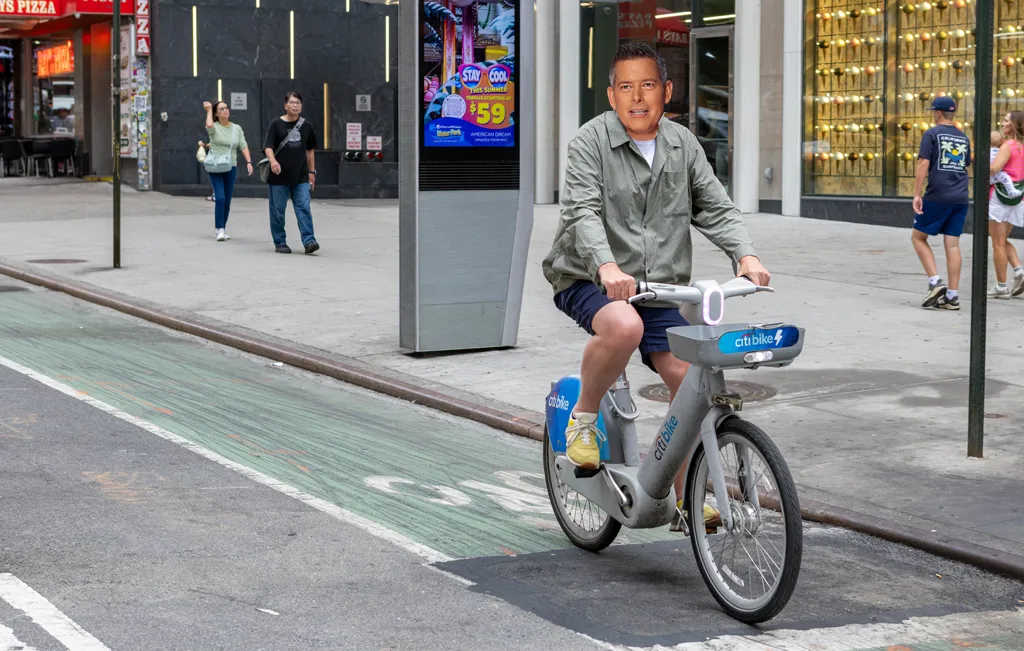
A new row in Washington over federal support for bike lanes has no direct legal effect on London, but it is a useful warning for anyone following how street-design debates can shift from evidence about safety and access into wider political arguments about who roads are for.
Streetsblog USA reports that US Transportation Secretary Sean Duffy has written to Senate committee leaders asking Congress to restrict grant funding for bike lanes and other bicycle infrastructure where such schemes are said to reduce motor-vehicle throughput. The request concerns the United States’ stalled surface transportation reauthorisation bill, not UK or London transport policy.
For London readers, the relevance is not the American legislative process itself. It is the framing: cycle lanes, road diets and traffic-calming measures being treated primarily as constraints on motor traffic rather than as tools that may also affect safety, accessibility, public health, emissions, bus reliability and local street conditions.
What has been reported in the US
According to Streetsblog USA, Duffy’s letter asks senators to “prioritise motor vehicle travel over bicycle lanes” and to restrict competitive and formula grant funding for bike lanes and similar infrastructure where they reduce motor-vehicle throughput.
The report says the request was sent to Republican and Democratic senators involved in the next federal surface transportation bill. It also says the House version of the bill that had moved through committee did not include language ending federal funding for bike lanes.
That distinction matters. On the information currently available from the cited report, this is a request from the US transportation secretary, not a law that has been passed. It may influence negotiations, but it should not be read as a completed policy change unless Congress adopts such language in legislation.
Key facts
| Issue | What is currently known |
|---|---|
| Policy stage | Reported request to US senators, not a confirmed enacted law |
| Main proposal | Restrict federal grant support for bike lanes and support removal of some existing lanes |
| London effect | No direct effect on TfL, borough or UK transport funding |
| Relevance for London | Shows how road-space allocation can become a funding and political test |
Why this is still relevant to London
London’s transport system is governed through a different institutional structure: Transport for London, borough highways authorities, the Mayor of London, central government funding settlements and local consultation processes all play different roles depending on the road, scheme and funding route. A US federal grant dispute does not change any of that.
The useful comparison is narrower. London street schemes often involve the same contested questions that appear in the US debate: whether road space should be reallocated from general traffic to protected cycle tracks, bus priority, wider pavements, trees, loading space or public realm; how emergency access is protected; and how disabled people, pedestrians, cyclists, bus users, freight operators and drivers are affected.
Those questions are not answered simply by counting one mode. A street can carry people, goods, emergency vehicles and local economic activity in several ways. A motor-vehicle throughput test may be relevant to some corridors, but it is not the only possible measure of whether a street works.
For London planners and residents, the practical lesson is to ask what evidence sits behind claims about congestion, delay, safety and access. Are the effects modelled before a scheme? Are they monitored after installation? Are bus journey times, walking conditions, collision patterns, loading needs and accessibility assessed alongside traffic flow? Those are the checks that turn a polarised road-space argument into a transport planning discussion.
The risk of a single-metric street debate
The phrase reported by Streetsblog — restricting support where bicycle infrastructure reduces motor-vehicle throughput — points to a broader problem for city streets. Throughput for private or general motor traffic is one transport outcome, but dense urban corridors usually have multiple objectives.
In London, a street may be expected to move buses, support walking to stations and town centres, allow disabled access, accommodate deliveries, manage kerbside demand, reduce collisions, support cycling, improve air quality and provide space for trees or drainage. A scheme that worsens one metric may improve another, which is why transparent appraisal matters.
This does not mean every cycle lane is automatically well designed, or that every road-space reallocation should proceed regardless of local impacts. Poor junction design, unclear loading arrangements, badly handled bus stop layouts or weak engagement with disabled users can undermine otherwise sound aims.
But it does mean that funding decisions based only on whether a lane reduces motor-vehicle capacity can miss the wider purpose of urban transport policy. The question for any London corridor should be more specific: what problem is the scheme meant to solve, what evidence supports it, who gains or loses access, and what changes after monitoring?
Emergency response and accessibility claims need evidence
The US report says Duffy’s letter links bike lanes and road narrowing to concerns about traffic, wheelchair access and emergency response. These are serious issues, but they require scheme-level evidence rather than broad assumptions.
Emergency access depends on more than the presence or absence of a cycle lane. Junction design, parking enforcement, congestion, bus lane layouts, kerb protection, signal timings and driver behaviour can all affect response times. Similarly, accessibility depends on detailed design: crossings, dropped kerbs, floating bus stops, tactile paving, footway width, seating, blue badge access and how people move between kerb, carriageway and pavement.
For London, this is where consultation documents and post-scheme monitoring become important. Residents and businesses should be able to see whether an authority has assessed disabled access, loading, bus operations and emergency routes before making permanent changes. If those details are missing, opposition can harden quickly, even where the strategic case for safer streets is strong.
The US dispute is therefore a reminder that active travel policy is vulnerable when authorities do not communicate the practical design trade-offs clearly. A cycle lane is not just a painted line or a political symbol; it is a physical intervention in a complex street.
What London readers should watch instead
Because this is a US federal story, the next useful checks for London readers are local rather than American. For any London cycling or street-redesign proposal, the relevant documents are usually consultation pages, committee papers, traffic orders, equality impact assessments, monitoring reports and scheme drawings from TfL or the relevant borough.
Readers should look for the project stage. Is a scheme being consulted on, trialled, made permanent, funded, redesigned or removed? Those stages are often blurred in public debate, but they carry different implications. A consultation is not an approval. A traffic order may be temporary or permanent. A monitoring report may support changes without settling every local concern.
The Washington row may also be worth following as an international policy signal. If US federal funding rules were changed, cities there could face a harder route to paying for protected cycling infrastructure or traffic-calming projects. That would be a significant shift for American urban transport, but it would remain separate from London’s own funding and legal framework.
For London Urbanism Desk readers, the immediate takeaway is modest: do not read this as a London policy change. Read it as an example of how quickly street-design funding can be reframed around motor traffic priority, and why local evidence, clear scheme objectives and transparent monitoring matter when road space is contested.
Source: Streetsblog USA, https://usa.streetsblog.org/2026/07/23/the-last-straw-duffy-asks-senate-to-restrict-funding-for-bike-lanes
Fuente
Streetsblog USA Publicacion original: 2026-07-23T21:36:43+00:00
Related updates

California’s unused dam safety powers hold lessons for London’s ageing flood infrastructure
A California audit reveals the state has never used its enforcement powers against dam owners, despite 57 dams in poor condition. As…
Read update
New York Poll Shows Overwhelming Bipartisan Support for Apartments Near Transit, Highlighting Contrast with London’s Own Housing Debate
A new poll from Open New York finds 79% of voters support building multi-family homes near rail stations, as the governor’s race…
Read update
Seattle City Attorney Launches New Community Court and Repeat Offender Programme Amid Public Defender Concerns
Seattle City Attorney Erika Evans has launched Connection Court, a new community court programme, alongside a punitive High-Priority Repeat Offenses system. The…
Read update
Seattle’s Centers & Corridors Zoning Update Delayed by Environmental Review Ruling
A state hearings board ruling has forced Seattle to rework the environmental impact statement for its twenty-year growth plan, pushing the next…
Read updateWiki relacionada

Urban Planning Terms: Density, Public Realm and Transit-Oriented Development
A living glossary for terms that appear again and again in planning and development stories.
Read update