
Streetfilms video on livable streets offers fresh insights for London’s street transformation
A new Streetfilms video revisits Donald Appleyard’s classic livable streets research, showing how traffic reduction can transform neighbourhood social life – lessons directly relevant to London’s Low Traffic Neighbourhoods and Healthy Streets agenda.
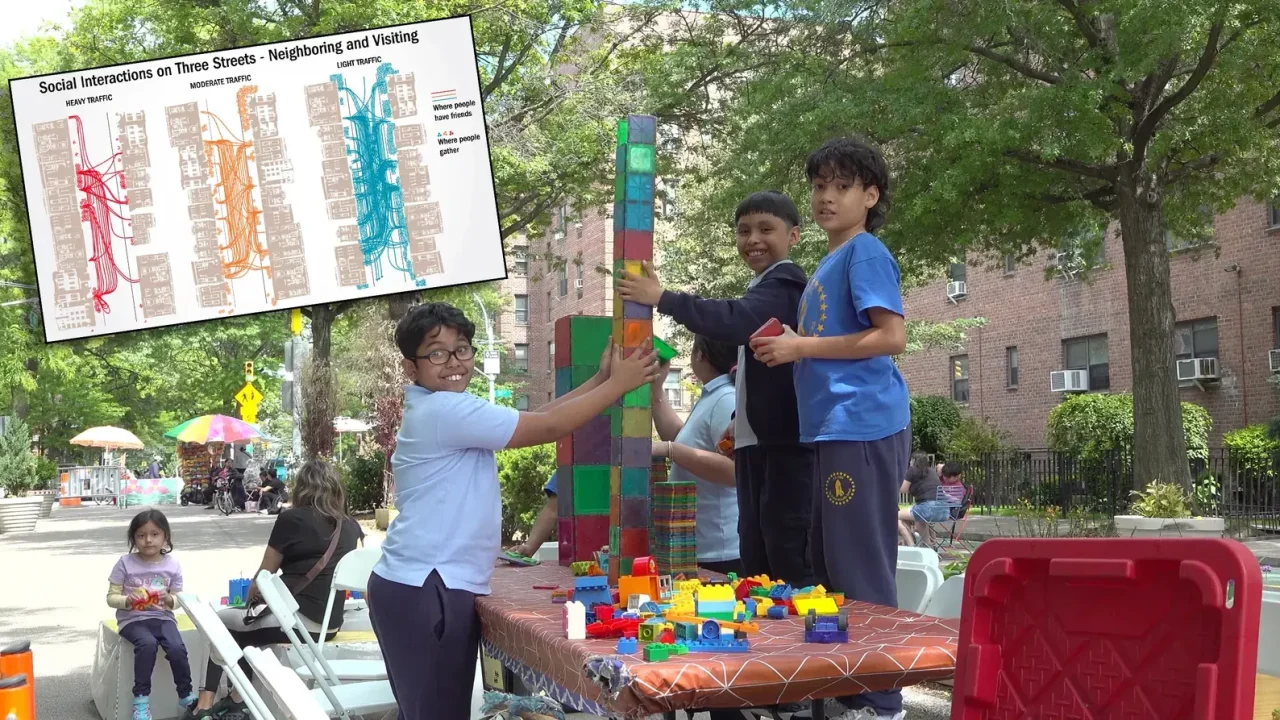
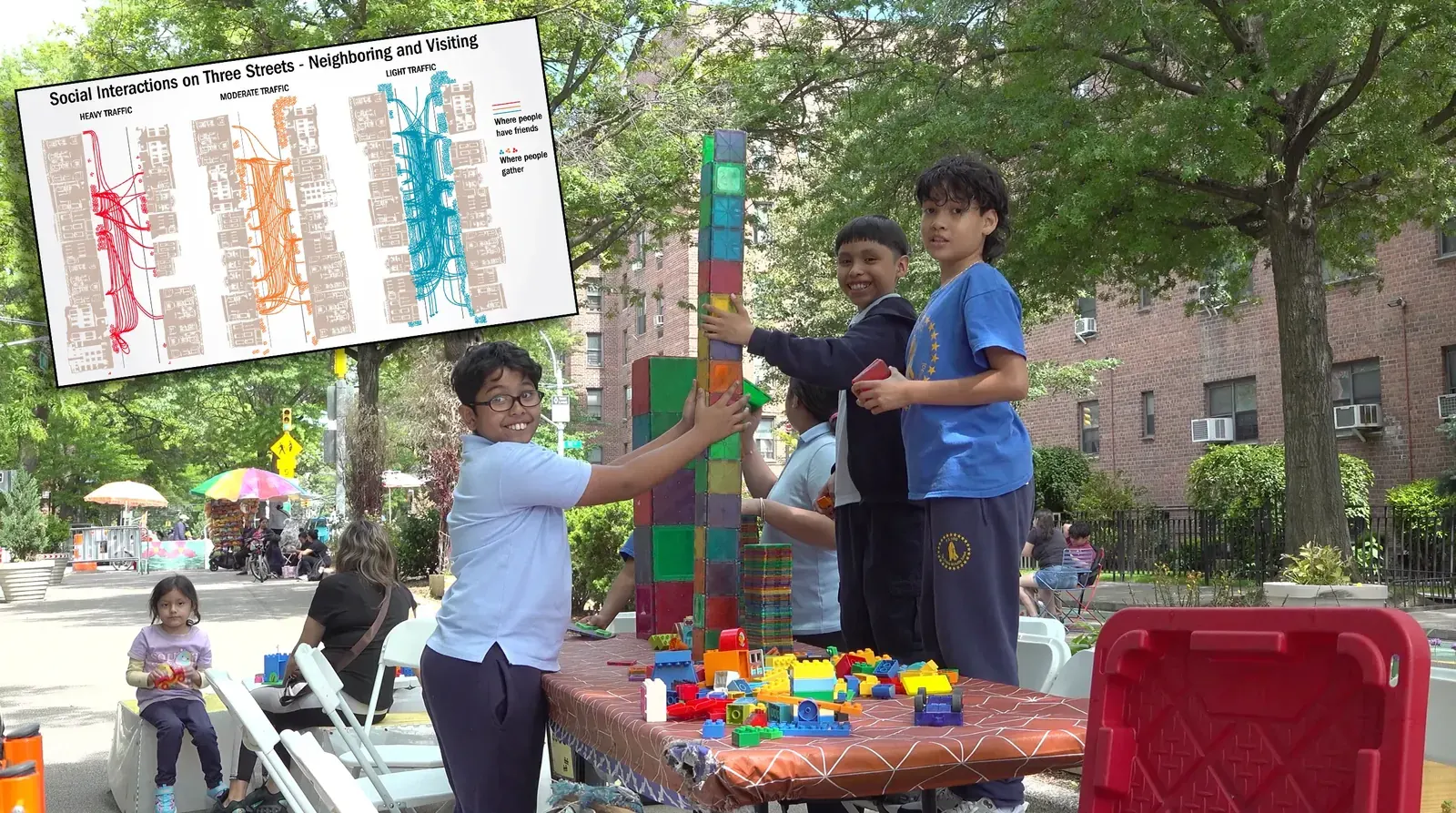
The ideas that shape London’s current street design – low-traffic neighbourhoods, filtered permeability, pedestrian priority – were not invented in City Hall. They trace back to a 1981 book, *Livable Streets*, by Donald Appleyard, which used San Francisco studies to prove that the more traffic a street carries, the less social life it sustains. That research, still influential among transport planners, is the subject of a new Streetfilms video released this week. While the video focuses on a New York open street, its core argument is directly relevant to London’s ongoing efforts to reclaim residential streets from through traffic.
The video, produced by award-winning journalist Clarence Eckerson Jr., is an excerpt from a forthcoming documentary titled *Close Encounters of the 34th Avenue Kind*, which examines one of New York’s most successful open-street experiments. But the framing device is Appleyard’s work: the finding that residents on streets with heavy traffic had fewer friends and neighbours, spent less time outdoors, and felt less ownership of the space in front of their homes. The video uses that lens to explain why 34th Avenue in Queens has become a model for car-free public space.
For London readers, the resonance is immediate. The capital’s Low Traffic Neighbourhood programme, expanded after the pandemic, is built on the same premise: that filtering out rat-running vehicles allows streets to become places for people, not just conduits for cars. TfL’s Healthy Streets framework, which underpins the Mayor’s Transport Strategy, includes indicators such as “people feel safe,” “not too noisy,” and “people choose to walk and cycle” – all of which are correlated with lower traffic volumes, exactly as Appleyard documented.
The Appleyard legacy and its London echoes
Donald Appleyard and his colleagues studied three streets in San Francisco that were similar in layout but carried light, medium, and heavy traffic. They found that residents on the light-traffic street knew an average of 3.0 neighbours per person, compared with 0.9 on the heavy-traffic street. The number of friends on the block fell from 6.3 to 3.1. Children’s play space shrank. The street as a social territory disappeared.
That research, published in 1981, became a foundational text for the complete-streets movement. Appleyard was killed by a speeding drunk driver a year later, and the book went out of print. Decades later, his son Bruce Appleyard – himself hit by a car as a child – updated and expanded the work into *Livable Streets 2.0*, which incorporates modern data and broader policy contexts.
In London, the same logic has driven dozens of Low Traffic Neighbourhoods across boroughs from Waltham Forest to Lambeth. The Waltham Forest Mini-Holland programme, initiated in 2013, was one of the earliest large-scale applications of filtered permeability, and its before-and-after surveys showed increases in cycling, walking, and outdoor social interaction. The approach has been formalised in TfL’s Streetspace guidance and the London Plan’s policy on street design.
What the new video adds
The Streetfilms video does not break new academic ground, but it presents Appleyard’s findings in a compelling visual format for a general audience. Eckerson’s documentary intercuts archival photographs of 1970s San Francisco streets with present-day footage of 34th Avenue, where car traffic has been replaced by seating, planters, children’s play equipment, and community events. The message is clear: the same transformation Appleyard described is happening today, block by block.
The video also highlights the role of residents in reclaiming streets. The 34th Avenue open street was not imposed by a distant agency; it grew from a community-led initiative during the pandemic, when New York closed parts of streets to cars to allow social distancing. That bottom-up pressure is a pattern London boroughs have seen too, especially in neighbourhoods where residents have campaigned for LTNs or School Streets.
Climate resilience through street design
The connection to climate resilience may not be immediate, but it is real. Streets with less motor traffic produce lower emissions, reducing local air pollution and contributing to the city’s net-zero targets. They also leave space for tree planting, rain gardens, and permeable surfaces – elements that help manage stormwater and reduce urban heat island effect. London’s Climate Resilience Review, published in 2024, highlighted the need to retrofit streets for cooling and drainage. Livable streets, as Appleyard conceived them, are a natural vehicle for that retrofit.
The video does not discuss climate explicitly, but the street it documents – 34th Avenue – has become a green corridor with planters and shade structures. In London, schemes like the Low Traffic Neighbourhoods in Hackney have been linked to reductions in nitrogen dioxide and increases in street tree planting. The co-benefits of traffic reduction for both social life and climate adaptation are increasingly recognised in planning guidance.
What London planners and residents can take away
The video is a useful reminder that the goals of the Healthy Streets approach are not abstract. They are grounded in empirical research from the 1970s that has been replicated in multiple cities. For London borough officers designing LTN consultations, the Appleyard findings provide a ready-made narrative: reducing traffic is not about penalising drivers, but about restoring streets as places where people know their neighbours, children play outside, and communities are stronger.
For residents sceptical of LTNs, the video offers a visual argument that may be more persuasive than a consultation document. The transformation of 34th Avenue from a noisy, car-dominated street to a lively public space is exactly the kind of change that supporters of filtered permeability in London describe.
Where to watch and what to read
The Streetfilms video is available on the Streetsblog NYC website. The full documentary, *Close Encounters of the 34th Avenue Kind*, is expected to screen at urbanism events in New York and elsewhere later this year. For those who want to delve deeper into the research, Bruce Appleyard’s *Livable Streets 2.0* is published by Routledge and available through academic libraries and online retailers.
In London, the GLA’s Healthy Streets resources and TfL’s Streetspace guidance provide the local policy framework. The London Datastore holds traffic count data and air quality measurements that can be used to track the effects of street changes on the ground.
| Key facts | |
|---|---|
| Research | Donald Appleyard’s *Livable Streets* (1981) compared three San Francisco streets with different traffic levels |
| Key finding | Residents on light-traffic streets knew 3.0 neighbours; on heavy-traffic streets, 0.9 |
| New video | Streetfilms excerpt from “Close Encounters of the 34th Avenue Kind” about New York’s open street |
| London relevance | Low Traffic Neighbourhoods, Healthy Streets, climate resilience through traffic reduction and green infrastructure |
Source: Streetsblog NYC, “Friday Video: Streetfilms on What Makes a Good ‘Neighborhood’ Street” (nyc.streetsblog.org/2026/07/31/friday-video-streetfilms-on-what-makes-a-good-neighborhood-street)
Fuente
Streetsblog NYC Publicacion original: 2026-07-31T04:00:00+00:00
Related updates

California’s unused dam safety powers hold lessons for London’s ageing flood infrastructure
A California audit reveals the state has never used its enforcement powers against dam owners, despite 57 dams in poor condition. As…
Read update
New York Poll Shows Overwhelming Bipartisan Support for Apartments Near Transit, Highlighting Contrast with London’s Own Housing Debate
A new poll from Open New York finds 79% of voters support building multi-family homes near rail stations, as the governor’s race…
Read update
Seattle City Attorney Launches New Community Court and Repeat Offender Programme Amid Public Defender Concerns
Seattle City Attorney Erika Evans has launched Connection Court, a new community court programme, alongside a punitive High-Priority Repeat Offenses system. The…
Read update
Seattle’s Centers & Corridors Zoning Update Delayed by Environmental Review Ruling
A state hearings board ruling has forced Seattle to rework the environmental impact statement for its twenty-year growth plan, pushing the next…
Read updateWiki relacionada

Urban Planning Terms: Density, Public Realm and Transit-Oriented Development
A living glossary for terms that appear again and again in planning and development stories.
Read update