
Sound Transit Faces Scrutiny Over Unrealistic Project Timelines
An op-ed by Trevor Reed highlights significant discrepancies between Sound Transit's projected timelines for the West Seattle Link Extension and its own historical data, raising concerns about transparency and project delivery.
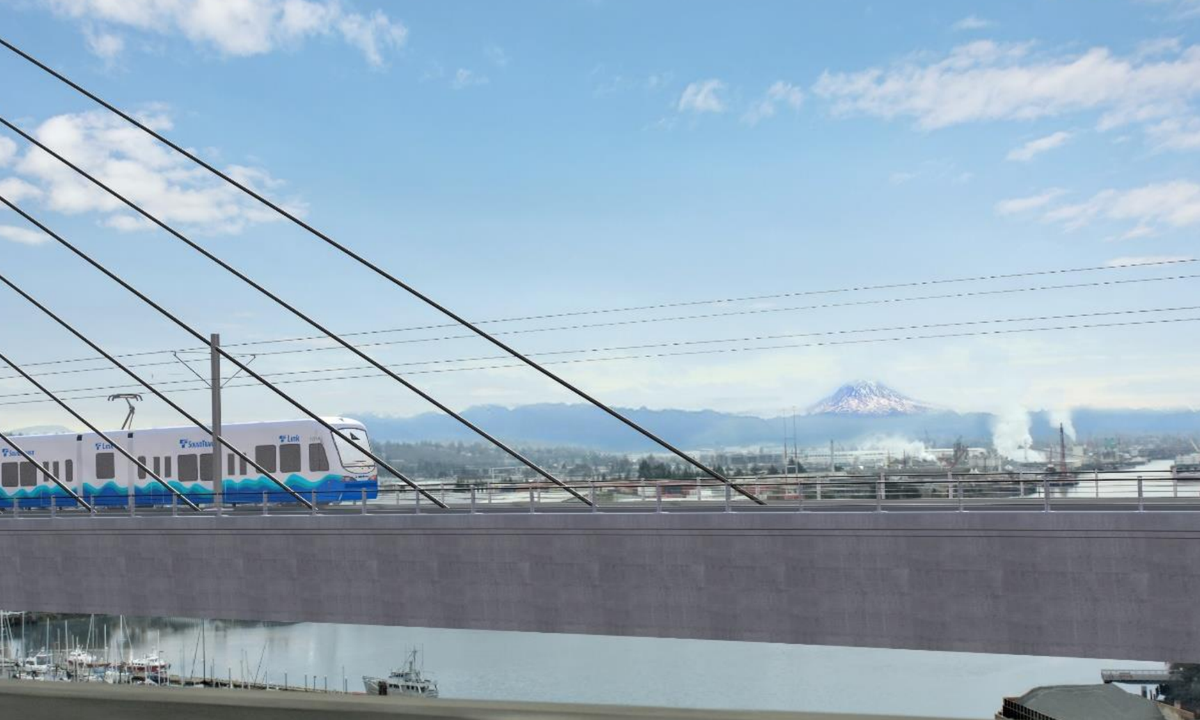
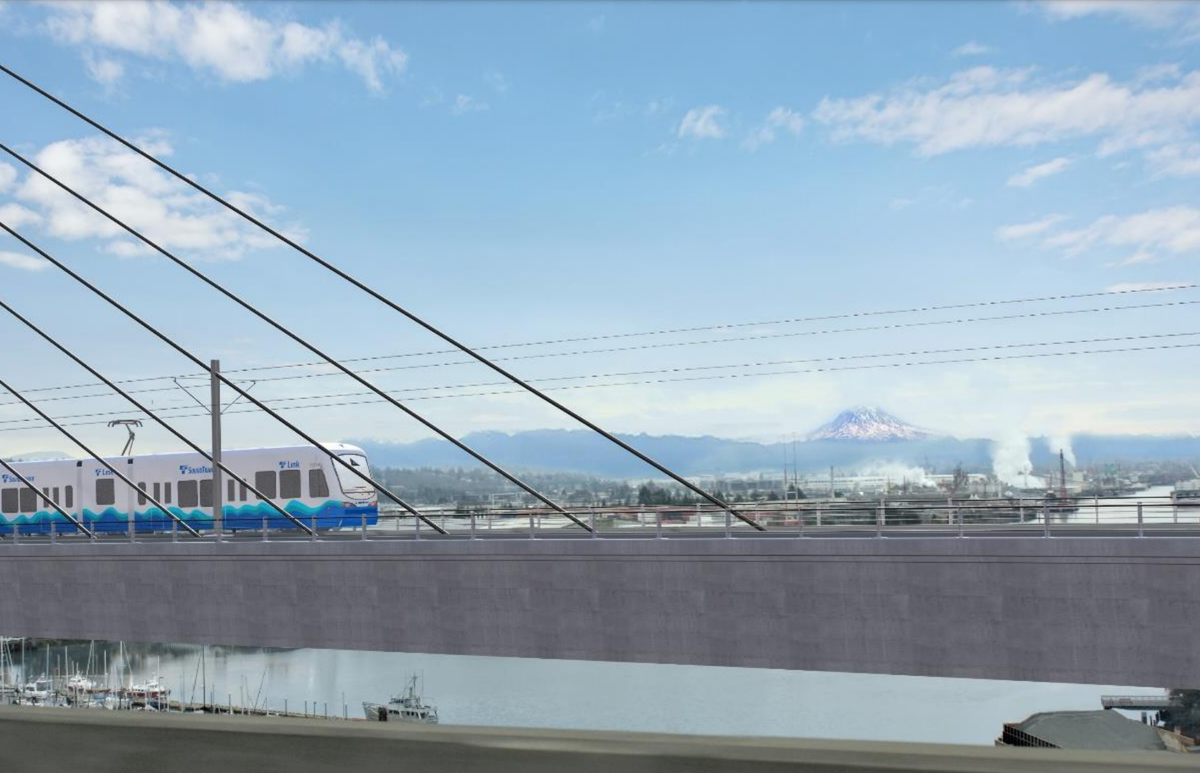
Doubts Mount Over Sound Transit’s Project Delivery Promises
Sound Transit is facing serious questions about the feasibility of its projected timelines for the West Seattle Link Extension and other projects within the Sound Transit 3 (ST3) plan. An op-ed by Trevor Reed, a transportation consultant and member of Sound Transit’s Community Oversight Panel, argues that the agency’s board is poised to approve a plan based on an “opening date” for the West Seattle Link Extension that is not supported by evidence. Reed contends that the current situation is dire, with projected timelines appearing more like fantasy than fact.
Key Facts
| Project | Stated Opening Date | Projected Opening Date (Reed’s Analysis) |
|---|---|---|
| West Seattle Link Extension | 2032 | 2036-2037 |
| Ballard Link to Smith Cove | Unknown | Likely further delayed |
| Tacoma Dome Link Extension | Unknown | Likely further delayed |
| Everett Link | Unknown | Status unclear, starting environmental review |
The core of the criticism lies in the discrepancy between Sound Transit’s claims and the agency’s own historical performance data. Reed points out that the West Seattle Link Extension is being presented as “shovel ready” with a groundbreaking expected in 90 days, alongside a 2032 opening date. However, his analysis, which draws on Sound Transit’s past grant agreements and project delivery times, suggests a significantly later opening.
Federal Grant Realities
Sound Transit has secured federal New Starts grants for several projects, including Central Link, University Link, Lynnwood Link, and Federal Way Link. Reed notes a consistent pattern: it takes, on average, 2.6 years from a Record of Decision (ROD) to a Full Funding Grant Agreement (FFGA). Excluding outliers, the time from ROD to opening for these projects averages 9.2 years.
Applying this average to the West Seattle Link Extension, which received its ROD on April 29, 2025, Reed optimistically projects an early 2034 opening. This timeline is considered optimistic because it assumes simpler highway alignments and faster review processes than those faced by earlier Link projects.
Challenging Assumptions
Several factors contribute to the optimistic nature of Sound Transit’s current projections, with some outside the agency’s control and others entirely within its purview. The Federal Transit Administration (FTA) has been a significant hurdle. The delay in receiving the ROD for West Seattle Link, which followed a period of hostility from the Trump administration, serves as a preview of these challenges. Since the administration took office over 14 months prior to the article’s context, the FTA had not entered into any FFGA agreements. Under normal circumstances, securing an FFGA could easily extend to 2028. The idea of securing a multi-billion dollar grant faster than usual, especially against a federal government currently approving no such agreements, is deemed unrealistic.
Furthermore, the explosion in project costs and efforts to contain them through initiatives like the Enterprise Initiative have impacted the West Seattle Link. The project has been in the Project Development phase of New Starts for nearly four years, significantly longer than the average of 2.2 years. The recent revelation in March of changes to the project, including the removal of Avalon Station and a new alignment, suggests the project may be earlier in its development phase than typical for such a duration. Based on current 30% design, a realistic groundbreaking date, assuming ‘normal’ performance from Project Development to FFGA, would likely occur in the second half of 2030.
Construction Time Concerns
Sound Transit’s proposed construction timeline for West Seattle Link is also under scrutiny. The agency has averaged 7.0 years for construction across recent deliveries but proposes less than 6 years for West Seattle Link. Reed argues that West Seattle Link is not a simple freeway alignment like Federal Way or Lynnwood. It involves tunneling and a cable-stayed bridge with substantial towers. The closest comparable project, University Link, took seven years from groundbreaking to revenue service. Even assuming a fast timeline similar to U-Link, the complex construction in West Seattle would likely add another year to the delivery date.
Under these more realistic, optimistic assumptions based on prior Sound Transit projects and FFGA agreements, Reed estimates a groundbreaking in 2029 or 2030, with service beginning in 2036 or 2037.
Delays for Other ST3 Projects
The analysis of West Seattle Link is possible because it has completed its environmental review and received a ROD, placing it in the New Starts pipeline. However, the delivery dates for other critical ST3 projects, such as Ballard Link to Smith Cove and Tacoma Dome Link Extension, are likely to face even greater delays. These projects have not yet reached the same benchmarks and are reportedly tracking worse.
Everett Link’s status remains unclear, as it only began its environmental review last year. Ballard Link is still stuck in the environmental review phase, needing to finalize its Environmental Impact Statement (EIS) before applying for a ROD, especially after a significant alignment overhaul in 2023 that introduced previously unstudied options. Tacoma Dome Link required a major revision after the agency belatedly realized its preferred I-5 alignment was unworkable due to the need to demolish a former Indian boarding school in South Federal Way, a site significant to the Puyallup Tribe, which had not provided its sign-off.
Given these challenges, Reed finds it extremely unlikely that any of these projects will achieve the FFGA milestone within the next three years, particularly with the ongoing headwinds from the federal administration. Even securing a ROD may prove difficult, given the current administration’s perceived hostility towards transit projects.
Call for Transparency
Reed criticizes the rush to vote on the current plan, arguing that it is not supported by Sound Transit’s own historical data. He echoes calls for transparency from Sound Transit Chair Somers, who has previously emphasized the importance of honesty and clarity with the public regarding project readiness. Somers stated, “I just wanted to make the point that using the term shovel ready — I like honesty, too. I think we need to be really clear with the public, if you look at West Seattle, […] There’s significant work that has to happen before we get to that point. I think terminology and being clear is really important to build trust.”
Reed concludes that before voting on delaying, deferring, or deleting projects, the board should direct Sound Transit to provide revised, evidence-based dates for every ST3 project. He warns that the board is proceeding without a clear understanding of the scale of the crisis facing Sound Transit and owes it to the public to provide clarity, transparency, and honesty.
Fuente: The Urbanist – Op-Ed: Sound Transit’s Board is About to Vote on a Fantasy https://www.theurbanist.org/op-ed-sound-transits-board-is-about-to-vote-on-a-fantasy/
Fuente
The Urbanist Publicacion original: 2026-05-27T18:31:09+00:00
Related updates
Seattle-Area Race Highlights Diverging Approaches to Housing, Transit and Tech Taxation
A Washington State legislative race in the 32nd District pits incrementalism against urgency on housing supply, transit funding and tech regulation, with…
Read update
New York court ruling on sanctuary policies carries implications for city-level immigration enforcement across the US
A federal judge has dismissed the Trump administration’s attempt to override New York City’s restrictions on immigration enforcement cooperation, citing state sovereignty.…
Read update
Automated license plate readers raise privacy, contract and oversight questions for UK cities
A new US-focused analysis of automated license plate recognition cameras highlights contract, privacy and oversight issues that London boroughs and Transport for…
Read update
Oregon’s “fix it first” dilemma: what London’s transport planners can learn from a revolt against megaprojects
Surveys show Oregonians overwhelmingly want existing roads repaired before new megaprojects are funded, and trust in the state’s transport agency has collapsed.…
Read updateWiki relacionada

Urban Planning Terms: Density, Public Realm and Transit-Oriented Development
A living glossary for terms that appear again and again in planning and development stories.
Read update