
The Enduring Impact of Sustained Urban Vision: Lessons from Sinclair Black’s Austin Legacy
A recent reflection from Strong Towns highlights the career of urban designer Sinclair Black, whose decades-long commitment to Austin, Texas, exemplifies a different kind of urbanism – one focused on sustained attention, visionary thinking, and the gradual integration of ideas into the city's fabric.
A recent analysis by Strong Towns shines a light on the career of American urban designer, planner, architect, educator, and author Sinclair Black, whose work in Austin, Texas, offers valuable insights into the long-term impact of sustained urban vision. Rather than focusing on individual, easily quantifiable projects, Black’s legacy is characterised by decades of consistent engagement and a unique approach to understanding and shaping his city.
The Unseen Work of Urbanism
The Strong Towns piece posits that while some professional achievements are visible and project-based, another, more profound type of urban work unfolds over decades. This work is often harder to measure or attribute to a single individual, as it evolves through different forms and is carried forward by many people over time. Sinclair Black’s career in Austin exemplifies this less tangible yet deeply impactful approach. His contributions are not defined by a singular, completed masterpiece but by a continuous process of observation, questioning, and fostering ideas that gradually become integral to the city’s identity.
A Lifetime of Attention to Place
Black’s methodology is distinguished by his “consistency of attention.” For over half a century, he has focused on Austin, repeatedly asking how the city could function better and what untapped potential lay within its existing structure. This sustained engagement transforms urban planning from a series of discrete interventions into an ongoing dialogue with the city itself. One notable example cited is his vision of Austin not merely as a collection of parcels and roads, but as a network of eighteen creeks, offering hundreds of miles of potential public space.
Key facts
| Feature | Description |
|---|---|
| Subject | Sinclair Black, American urban designer, planner, architect, educator, and author. |
| Location of Impact | Austin, Texas. |
| Core Philosophy | Sustained attention to a place, identifying latent potential, and fostering ideas that evolve over time, often carried forward by others. |
| Example Vision | Reimagining Austin’s 18 creeks as hundreds of miles of public space. |
From Vision to Public Realm
Black’s creek network idea did not begin as a capital project but as a fundamental shift in perception – “a way of seeing.” This initial vision evolved through studies, conversations with students and community groups, and modest publications. Over time, these efforts garnered funding, led to preservation initiatives, and supported the gradual development of parks and trails along these waterways. Much of this work continues today, often by individuals who may not be aware of the original source of the idea. This incremental, collaborative approach underscores a “Strong Towns version of change,” where the success lies not in a single achievement but in the enduring power and adoption of an idea.
The Obligation to Act
When asked for advice for architects feeling professionally stagnant, Black offered a simple yet profound response: if one possesses the ability to truly *see* something – to perceive potential others miss – there is an obligation to act on that insight. This perspective challenges conventional professional incentives, which often favour clearly defined, compensated, and completed projects. Black’s career demonstrates the value of investing energy in initiatives that may not have immediate resolutions, may take years to manifest, or may ultimately be nurtured by others.
Shaping Place, Not Monuments
A notable aspect of Black’s approach is a deep sense of humility. Unlike the traditional architectural emphasis on authorship and self-monumentalizing projects, Black’s focus is on shaping places to serve the people who use them. This results in work that becomes absorbed into the city’s fabric, transcending individual attribution. His recent book, a collection of 40 visions from his career, serves less as a retrospective of completed works and more as a compendium of “ways of seeing” – a testament to ongoing possibilities rather than final accomplishments.
The Reservoir of Experience
Black describes a lifetime of experience as a kind of reservoir – an accumulation of observations, influences, and insights that enable new perspectives and possibilities. Building such a reservoir requires sustained attention, patience for problems without immediate solutions, and a tolerance for ambiguity. Urban work at this scale involves grappling with systems and long-term patterns, where progress is incremental, outcomes are uncertain, and feedback loops are extensive. Yet, this sustained effort ultimately accumulates, moving the city forward in ways both visible and unseen.
Fuente: Strong Towns, https://www.strongtowns.org/journal/2026-5-18-a-lifetime-of-attention
Fuente
Strong Towns Publicacion original: 2026-05-18T00:00:00+00:00
Related updates
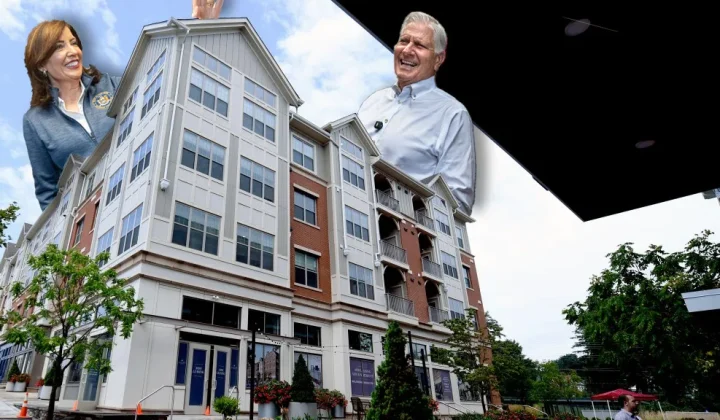
New York Poll Shows Overwhelming Bipartisan Support for Apartments Near Transit, Highlighting Contrast with London’s Own Housing Debate
A new poll from Open New York finds 79% of voters support building multi-family homes near rail stations, as the governor’s race…
Read update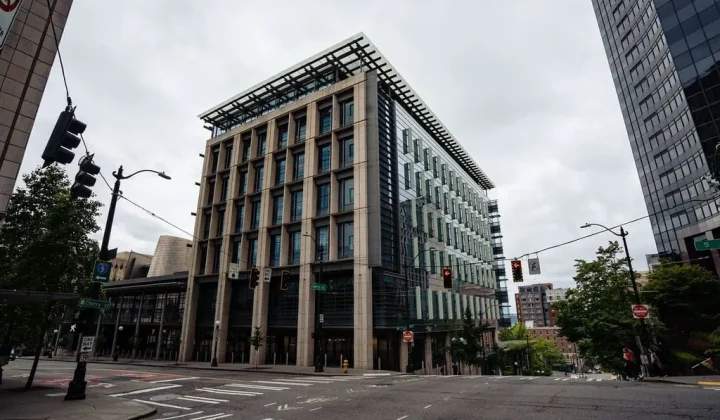
Seattle City Attorney Launches New Community Court and Repeat Offender Programme Amid Public Defender Concerns
Seattle City Attorney Erika Evans has launched Connection Court, a new community court programme, alongside a punitive High-Priority Repeat Offenses system. The…
Read update
Seattle’s Centers & Corridors Zoning Update Delayed by Environmental Review Ruling
A state hearings board ruling has forced Seattle to rework the environmental impact statement for its twenty-year growth plan, pushing the next…
Read update
FEMA disaster mitigation grants freeze threatens to stall UK resilience learning, planners warn
A US Government Accountability Office report says $2.2 billion in FEMA Building Resilient Infrastructure and Communities grants remain unresolved, delaying more than…
Read updateWiki relacionada

Urban Planning Terms: Density, Public Realm and Transit-Oriented Development
A living glossary for terms that appear again and again in planning and development stories.
Read update