
Seattle Mayor Proposes Doubling Transit Funding to Enhance Bus Frequencies
Mayor Katie Wilson has unveiled a plan to renew Seattle's transit measure, proposing a significant increase in sales tax to bolster King County Metro's services, aiming for more frequent bus routes across the city.
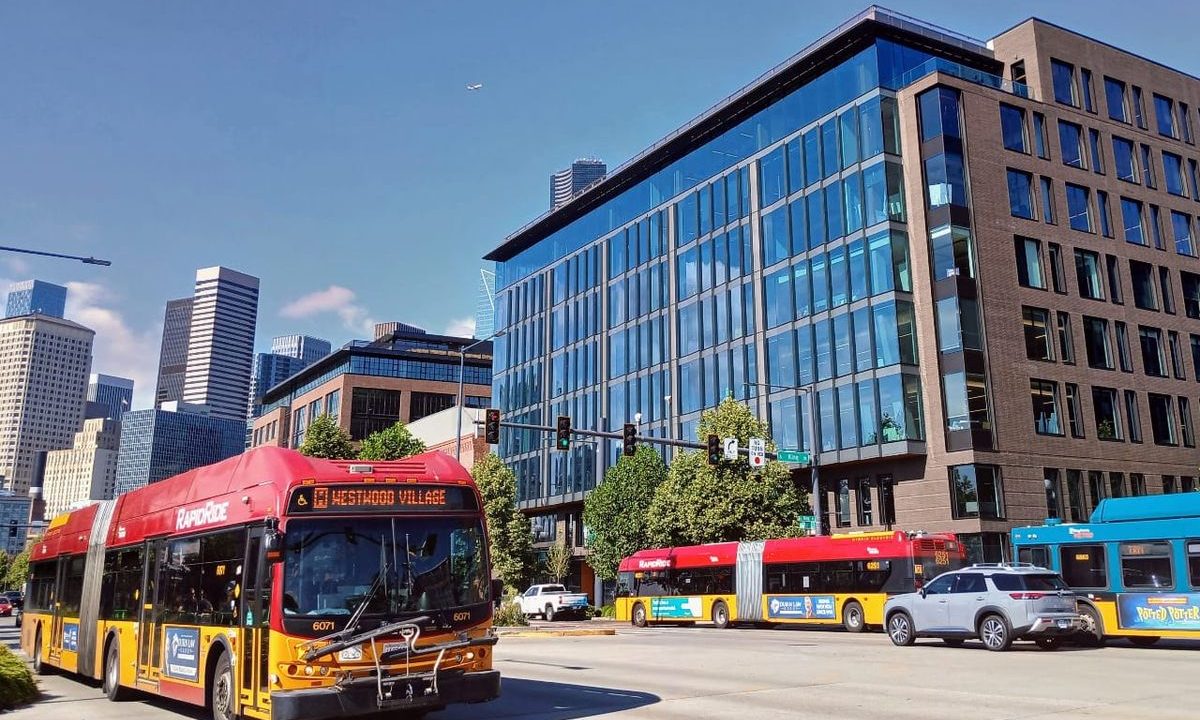
Seattle Mayor Katie Wilson has put forward a proposal to renew the city’s expiring transit funding measure, aiming to significantly increase investment in King County Metro service and improve bus frequencies across all Seattle neighbourhoods. The plan involves doubling the current 0.15% sales tax rate, established by the Seattle Transit Measure (STM) in 2020, to 0.3%. This increase would be the maximum allowed under state law for a transportation benefit district and would extend for 10 years, through 2036.
The proposed renewal is expected to boost King County Metro’s supplemental service hours from approximately 176,000 per year to 280,000. This substantial increase in service hours, the highest since 2018, is intended to allow dozens of bus routes to operate more regularly, particularly during off-peak times such as evenings and weekends. Mayor Wilson articulated the broader vision behind the proposal, stating, “When transit is frequent, reliable, and affordable, it does more than move people from one place to another. It gives people freedom. It gives families choices… It helps workers reach opportunity, and it helps students to build their future. It helps seniors stay independent, and it helps more people stay in the city they love.”
Key facts
| Feature | Details |
|---|---|
| Proposed Sales Tax Rate | 3% (doubling from 0.15%) |
| Measure Renewal Duration | 10 years (through 2036) |
| Projected Increase in Metro Service Hours | From ~176,000 to 280,000 annually |
| Funding Allocation | King County Metro service, transit infrastructure, ORCA passes, Seattle Streetcar |
Funding Breakdown and Allocation
The current 0.15% STM generates around $50 million annually, with approximately 40% directly allocated to King County Metro. The remaining funds support physical improvements to Seattle’s roads that benefit transit riders, such as bus lanes and upgraded bus stops. It also subsidises free ORCA passes for residents in subsidised housing and supports the operations of the Seattle Streetcar.
While a precise breakdown of the proposed renewal’s funding categories was not detailed at the announcement, interim Seattle Department of Transportation (SDOT) Director Angela Brady indicated that the categories would remain broadly similar. A significant development in the renewal is the planned doubling of free ORCA cards for residents in subsidised housing, from around 10,000 to 22,000, without a commensurate increase in city contributions, due to renegotiations between Metro and Seattle.
The funding structure has evolved since the measure’s inception. Initially, broad categories were used to accommodate future uncertainties. An “emerging mobility needs” category was introduced, partly in response to the West Seattle Bridge closure. Mayor Bruce Harrell further expanded these categories in 2024 to allow STM revenue to fund planning for Seattle’s Sound Transit 3 projects. Historically, operator shortages at Metro acted as a cap on service hour expansion, but the agency is reportedly in a stronger position regarding its workforce now. The final legislation may refine these spending categories.
Strategic Investment Priorities
Brady highlighted the focus of the proposed investments: “We are focused on making investments where they can make the biggest difference, especially in neighborhoods where people rely on transit the most, and in places where Seattle is planning for an increase in homes and jobs.” She also acknowledged the interdependence of transit service and supporting infrastructure: “Transit service is only as strong as the streets it runs on. That is why work on transit priority, bus stop improvements, signal upgrades, and targeted capital projects are so, so important. These are practical behind-the-scenes improvements, but for riders, they can mean a bus that comes more often, a connection that is safer, a trip that feels more reliable, or a commute that is that no longer requires a car.”
Addressing Affordability Concerns
Recognising concerns about adding to Seattle’s already high sales tax rates, Mayor Wilson framed the proposed measure as an affordability strategy. She argued that improved public transit reduces household expenses by enabling more residents to opt for car-free or car-light lifestyles. “Transportation is one of the biggest costs in a household budget, and most of that cost comes from owning a car, gas, insurance, repairs, parking, monthly payments, and maintenance all add up fast,” Wilson stated. “So, when we make our transit system better, we make it possible for more households to live car free or car life, and that could put hundreds or thousands of dollars back into a family’s budget, that is real affordability.” The alternative of a car tab fee, a potential mechanism available to cities through their transportation benefit districts, was deemed politically challenging due to ongoing issues with the Sound Transit 3 ballot measure’s car tab funding.
Historical Context of Transit Funding
Mayor Wilson has a long history of advocating for public transit in Seattle. In 2011, she was involved in the “Save Our Metro!” campaign, which opposed service cuts following the Great Recession. After a temporary measure involving a $20 car tab increase, Wilson co-founded the Transit Riders Union (TRU). TRU played a key role in establishing a low-income fare at Metro in 2014 and subsequently supported the passage of the 2014 Seattle Transportation Benefit District (STBD) after a countywide transit funding measure was rejected by voters outside Seattle.
The current proposal represents the third iteration of this funding source. In 2020, then-Mayor Jenny Durkan proposed renewing the STBD at its existing 0.1% sales tax rate and removing an attached car tab fee. Council President Lorena González advocated for increasing the rate to 0.15%, which directly led to the current increase in bus service. Wilson commented on the funding limitations: “When we’re investing in public transit, making it possible for people to live car free or car light, when we’re investing in affordable fares, those are really direct supports that are creating affordability for the people in our communities that need it most,” adding, “And it’s unfortunate that we don’t have more progressive options for funding our transit system, but that’s something that we can continue to work at at the state level.”
The proposed 0.15% increase in Seattle’s sales tax is set to be considered alongside a separate 0.1% increase by the King County Council, which aims to fund road maintenance in unincorporated areas. A vote on the county measure is tentatively scheduled for June 12.
Source: The Urbanist – Wilson Proposes Doubling Transit Measure to Beef Up Seattle’s Frequent Network – https://www.theurbanist.org/wilson-proposes-doubling-seattle-transit-measure-to-expand-bus-frequencies/
Fuente
The Urbanist Publicacion original: 2026-06-02T23:02:07+00:00
Related updates
New York court ruling on sanctuary policies carries implications for city-level immigration enforcement across the US
A federal judge has dismissed the Trump administration’s attempt to override New York City’s restrictions on immigration enforcement cooperation, citing state sovereignty.…
Read update
Automated license plate readers raise privacy, contract and oversight questions for UK cities
A new US-focused analysis of automated license plate recognition cameras highlights contract, privacy and oversight issues that London boroughs and Transport for…
Read update
Oregon’s “fix it first” dilemma: what London’s transport planners can learn from a revolt against megaprojects
Surveys show Oregonians overwhelmingly want existing roads repaired before new megaprojects are funded, and trust in the state’s transport agency has collapsed.…
Read update
California’s $11.25 billion housing bond: What London planners can learn from Proposition 1
California voters are deciding on an $11.25 billion general obligation bond to fund affordable housing. As London grapples with its own stalled…
Read updateWiki relacionada
Urban Planning Terms: Density, Public Realm and Transit-Oriented Development
A living glossary for terms that appear again and again in planning and development stories.
Read update