
Seattle’s Light Rail Surges to Become US’s Busiest Following Line 2 Expansion
New data reveals Sound Transit's Link system has surpassed Los Angeles and Boston in ridership, driven by the recent opening of the cross-lake extension.
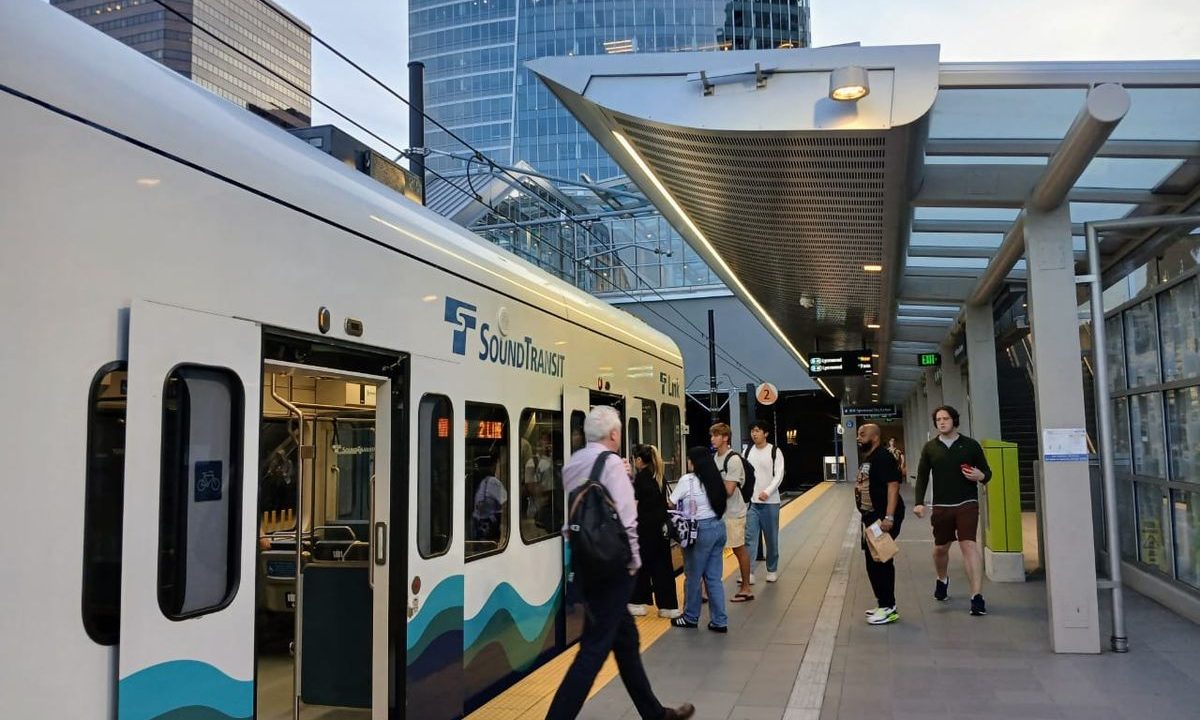
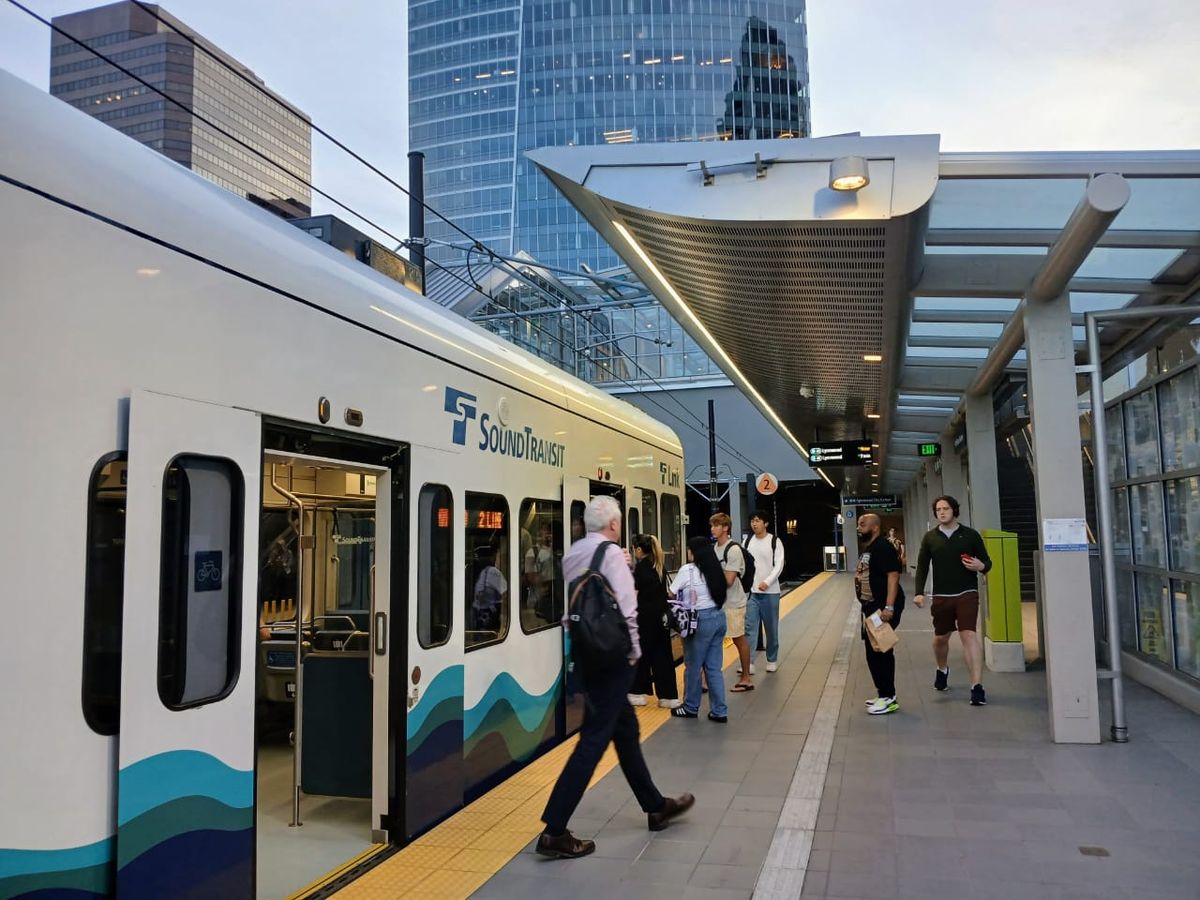
Seattle’s Link light rail system has become the busiest in the United States, a significant achievement driven by the recent expansion of the 2 Line across Lake Washington. New data from April indicates that Seattle’s light rail and streetcar lines are now carrying approximately 160,000 daily riders, a substantial increase that has propelled Sound Transit past major metropolitan systems like Los Angeles and Boston.
This surge in ridership directly follows the March 28th opening of the 2 Line’s cross-lake connection, which for the first time directly linked Bellevue and Seattle via light rail. Urban Institute researcher Yonah Freemark noted on social media that Seattle’s transit lines saw a 44% increase in ridership in April compared to March, carrying 4.8 million riders. This jump has placed Seattle’s system at the top of the nation’s light rail networks, exceeding Los Angeles Metro Rail, Boston’s MBTA, and San Diego’s MTS in monthly unlinked trips.
Link’s impressive performance, which includes the 1 and 2 Lines as well as the T Line streetcar in Tacoma, positions it as the eighth busiest rail system overall in the U.S., including heavy rail. This is particularly noteworthy given Seattle’s metropolitan population ranking, which is the 15th largest in the country. Cities with larger populations such as Dallas, Houston, and Atlanta have significantly lower transit ridership, contributing to their larger carbon footprints.
The grand opening of the 2 Line saw an exceptional ridership day with over 205,000 boardings, a figure that has now proven to be a sustained trend rather than a one-off event. The National Transit Database figures confirm this sustained growth.
Future Expansion Plans and Challenges
Sound Transit has ambitious plans for further expansion under the Sound Transit 3 (ST3) measure, approved by voters in 2016. The agency aims to serve 650,000 daily riders by the 2040s, with a vision of 116 miles of light rail and 46 miles of bus rapid transit. However, recent budgetary challenges have led the Sound Transit Board of Directors to scale back some of these plans, delaying or indefinitely holding certain projects. Despite these adjustments, the agency projects that the revised ST3 plan will still achieve 92% of its original ridership goals, approaching 600,000 daily riders.
This projected ridership would place Seattle second in the nation, behind New York City, in terms of daily rail boardings by 2026. However, competition remains fierce, with other major transit systems like Washington D.C. Metro, Chicago’s CTA, and Boston’s MBTA also anticipating growth.
Los Angeles is another key competitor, undertaking its own ambitious rail expansion through Measure M. While LA is historically a car-centric city, its transit system is also growing, though Seattle is currently adding riders at a faster pace. The ongoing D Line extension in Los Angeles, with new segments opening, poses a significant challenge to Seattle’s top spot. San Francisco’s Bay Area Rapid Transit (BART), with daily ridership around 200,000, and LA Metro Rail, just over 211,000, are the next cities Link could realistically surpass.
Interim Growth and Network Effects
Even without new major extensions opening until the mid-2030s, Link light rail is expected to continue its ridership growth. Factors contributing to this include network effects, population increase in the region, greater public awareness of the service, and evolving travel habits.
King County Metro is set to adjust bus routes in South King County and the Eastside later this fall to better connect with light rail stations, a move anticipated to further boost Link ridership. The upcoming opening of two infill stations—130th Street Station in Seattle in late 2026 and the future Graham Street stop in South Seattle around 2031—will also contribute to growth.
The development of 46 miles of Stride bus rapid transit (BRT) along the I-405 and SR-522 corridors between 2028 and 2029 will also play a crucial role. Many Stride stops will connect directly to Link stations, feeding passengers into the light rail network. Local transit agencies, including King County Metro, Pierce Transit, and Snohomish County’s Community Transit, are also working to expand local bus services, with a common priority of improving connections to Link stations.
The question of whether Link light rail will reach its ambitious target of 600,000 daily riders remains to be seen, but the current trajectory suggests a dynamic and evolving urban transit landscape in the Seattle region.
Key facts
| System | Ridership (April 2026, approx.) | Notes |
|—|—|—|
| Sound Transit Link (Seattle) | 160,000 daily | Now the busiest light rail system in the US |
| LA Metro Rail | ~211,000 daily | Second busiest light rail system, includes heavy rail |
| BART (San Francisco) | ~200,000 daily | Third busiest light rail system |
The expansion of the 2 Line and the ongoing development of supporting transit infrastructure are fundamentally reshaping urban mobility in the Seattle metropolitan area. This shift towards a more robust and utilized light rail system has significant implications for land use, development patterns around stations, and the reduction of car dependency. The focus on connecting different parts of the region more effectively through integrated light rail and bus rapid transit networks highlights a strategic approach to urban planning aimed at fostering sustainable growth and improving quality of life for residents. As Seattle continues to grow, its investment in public transit is proving to be a critical factor in managing that growth and enhancing accessibility.
Source: The Urbanist, https://www.theurbanist.org/sound-transit-most-used-light-rail-system-in-us/
Key facts
| Point | Detail |
|---|---|
| Source | The Urbanist |
| Date | 2026-06-06T14:00:10+00:00 |
| Topic | Crosslake Light Rail Pushes Sound Transit to Most-Used Light Rail System in US |
Fuente
The Urbanist Publicacion original: 2026-06-06T14:00:10+00:00
Related updates

Seattle-Area Race Highlights Diverging Approaches to Housing, Transit and Tech Taxation
A Washington State legislative race in the 32nd District pits incrementalism against urgency on housing supply, transit funding and tech regulation, with…
Read update
New York court ruling on sanctuary policies carries implications for city-level immigration enforcement across the US
A federal judge has dismissed the Trump administration’s attempt to override New York City’s restrictions on immigration enforcement cooperation, citing state sovereignty.…
Read update
Automated license plate readers raise privacy, contract and oversight questions for UK cities
A new US-focused analysis of automated license plate recognition cameras highlights contract, privacy and oversight issues that London boroughs and Transport for…
Read update
Oregon’s “fix it first” dilemma: what London’s transport planners can learn from a revolt against megaprojects
Surveys show Oregonians overwhelmingly want existing roads repaired before new megaprojects are funded, and trust in the state’s transport agency has collapsed.…
Read updateWiki relacionada

Urban Planning Terms: Density, Public Realm and Transit-Oriented Development
A living glossary for terms that appear again and again in planning and development stories.
Read update