
Private Investment Key to Accelerating E-Bus Transition, Says ITDP Report
A new report from the Institute for Transportation and Development Policy (ITDP) highlights the critical role of private sector investment and collaboration in accelerating the global transition to electric bus systems. The report emphasizes that while e-buses offer significant benefits for urban decarbonisation, air q
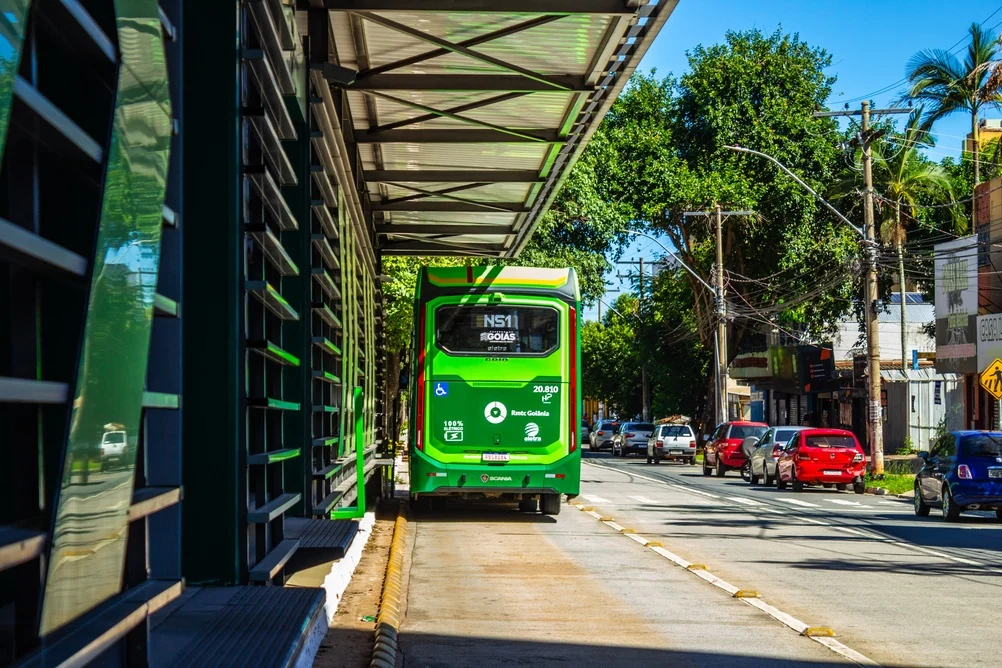
Cities worldwide are seeking to decarbonise their urban transport sectors while simultaneously improving access to opportunities for residents. Electric buses are identified as a key solution, offering the dual benefits of reducing urban emissions and pollution while connecting communities to essential services, education, and employment. However, a recent report from the Institute for Transportation and Development Policy (ITDP) underscores that the high upfront costs and capacity requirements for transitioning to e-bus systems have slowed progress.
The ITDP report, published on May 20, 2026, points out that development financing for sustainable urban transport, particularly bus electrification, currently represents only a small fraction of the overall financing needed. While private financing could bridge these budget gaps, public transport projects have historically struggled to generate the revenues or short-term returns that typically attract commercial investment. This contrasts with the significant focus of international climate financing on the electrification of private vehicles, with less than 10% directed towards high-volume public transport solutions like buses, non-motorised transport, or transit-oriented development.
The report argues that while electric cars and charging infrastructure are important for emission reduction, a strategic shift towards investing in high-volume electric public transport is equally urgent. Such a shift promises broader benefits for air quality, social inclusion, and urban livability, and is often more cost-effective to implement and maintain.
The Opportunity of E-Buses
The transition to comprehensive, integrated urban e-bus systems involves more than simply replacing diesel buses. Successful e-bus implementations combine vehicle electrification with improved planning, regulation, and service integration. For example, e-buses present opportunities to enhance informal transport networks. The potential for e-buses to attract private investment also incentivises governments to reform contracts and business models, fostering a more stable environment that can attract more riders and satisfy operators.
E-buses offer several advantages over conventional diesel fleets. They are quieter, cleaner, and more energy-efficient, significantly reducing air and noise pollution, especially near depots and main corridors. Modern e-buses are typically equipped with amenities such as air conditioning, accessible boarding, digital fare collection, and GPS, which enhance comfort, access, security, and reliability for passengers. Initial studies and anecdotal evidence suggest that e-buses can also increase bus ridership. On-board technologies like digital fare collection and GPS improve operational management, leading to reduced costs and enhanced service delivery. Furthermore, public transport electrification can strengthen national economies by reducing fuel imports and foreign-currency outflows, thereby boosting economic stability and growth – a compelling incentive for government investment.
Key facts
| Feature | Description | The need for private financing to bridge funding gaps for e-buses. |
| Benefits of e-buses | Quieter, cleaner, more energy-efficient; modern amenities (e.g., air conditioning, accessible boarding, digital fare collection, GPS); potential for increased ridership; reduced operational costs; strengthened national economies through reduced fuel imports. |
| Financing Barriers | High upfront costs for buses, depots, charging infrastructure; new business models for e-buses are less familiar to investors; long negotiation periods; high transaction costs; greater perceived risk. |
| Unlocking Private Financing | Leasing models (e.g., Bogotá); utility co-investments in charging infrastructure (e.g., Santiago, Addis Ababa); Development Finance Institutions (DFIs) crowding in private investment through guarantees and supporting pilot projects (e.g., Bogotá, São Paulo, Dakar). |
| |
| Focus Shift Needed | From primarily private vehicle electrification (cars, two-wheelers) to high-volume, electric public transport for broader benefits and cost-effectiveness. |
| Key Challenges | High upfront costs, new business models for e-buses are less familiar, long negotiation times, high transaction costs, perceived risk. |
Unlocking Private Financing
Despite the clear benefits, e-bus systems face significant financing hurdles. The upfront costs for buses, depots, and charging infrastructure are substantial, often posing a challenge for governments, particularly those with limited fiscal capacity. Compared to established road projects, the business models for e-bus systems are relatively new and less familiar to both public officials and private investors. This can lead to lengthy negotiation periods, high transaction costs, and an elevated perception of risk.
However, the ITDP report stresses that governments do not need to bear the entire financial burden alone. There is growing interest from investors, operators, and other private-sector players in e-buses. The electrification transition is reshaping traditional public transport business models, making these projects more appealing to a broader range of investors, including leasing companies, utilities, private equity funds, and fintech firms. These new entrants bring valuable technical expertise, innovation, and financial flexibility. Examples include leasing models that allow governments or operators to pay for e-buses over time, as seen in Bogotá, Colombia, and utility co-investments in charging infrastructure in Santiago, Chile, and Addis Ababa, Ethiopia.
Development finance institutions (DFIs), such as multilateral and national development banks, are playing a crucial role in scaling e-buses by leveraging mechanisms like guarantees to attract private investment. Many DFIs have supported e-bus pilot projects in cities like Bogotá, São Paulo, Brazil, and Dakar, Senegal. The next crucial step is to expand these projects and replicate successful models in many more urban centres.
Bridging the Sectors
The electric Bus Rapid Transit (BRT) system in Dakar, Senegal, serves as an important case study for designing public-private partnerships that effectively distribute costs and risks for e-bus deployment. In Dakar, Meridiam, a private infrastructure investor, purchased 121 electric buses and operated them under a net cost contract with CETUD, Dakar’s transport agency. Charging infrastructure was procured through a separate contract with another private company, while the government provided the necessary road works, BRT stations, and depots.
This innovative financing model, which facilitated Africa’s first all-electric BRT, earned Dakar the Sustainable Transport
Key facts
- Source: ITDP
- Date: 2026-05-20T18:55:19+00:00
- Topic: A Successful E-Bus Transition Requires Private Sector Investment and Collaboration
Fuente
ITDP Publicacion original: 2026-05-20T18:55:19+00:00
Related updates

When zoning reform meets private covenants: the HOA obstacle to backyard cottages
As more US cities rewrite zoning rules to allow accessory dwellings, private homeowners’ association covenants remain a barrier that reform alone cannot…
Read update
Seattle-Area Race Highlights Diverging Approaches to Housing, Transit and Tech Taxation
A Washington State legislative race in the 32nd District pits incrementalism against urgency on housing supply, transit funding and tech regulation, with…
Read update
New York court ruling on sanctuary policies carries implications for city-level immigration enforcement across the US
A federal judge has dismissed the Trump administration’s attempt to override New York City’s restrictions on immigration enforcement cooperation, citing state sovereignty.…
Read update
Automated license plate readers raise privacy, contract and oversight questions for UK cities
A new US-focused analysis of automated license plate recognition cameras highlights contract, privacy and oversight issues that London boroughs and Transport for…
Read updateWiki relacionada

Urban Planning Terms: Density, Public Realm and Transit-Oriented Development
A living glossary for terms that appear again and again in planning and development stories.
Read update