
New York’s Summer Streets Program Stays Put Amidst Calls for Expansion
Activists and some elected officials are pushing for a more expansive and connected car-free program, but the city's Department of Transportation has opted for a largely unchanged iteration of the annual event.
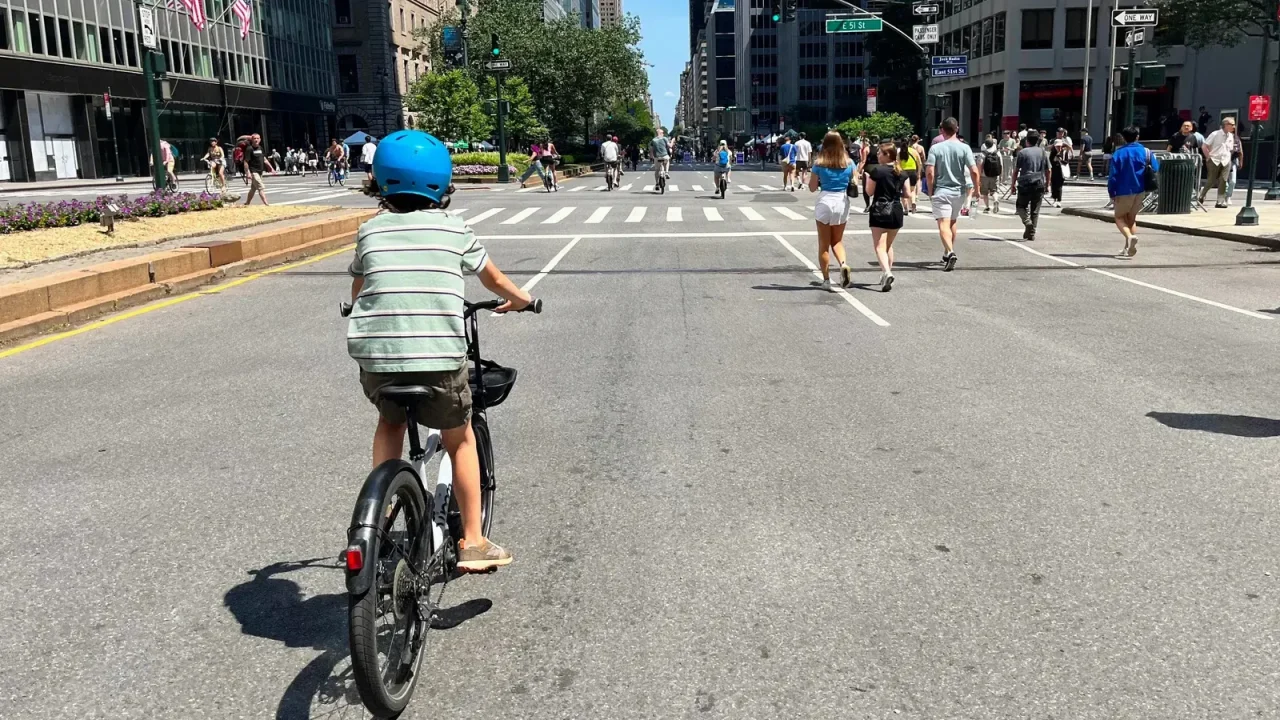
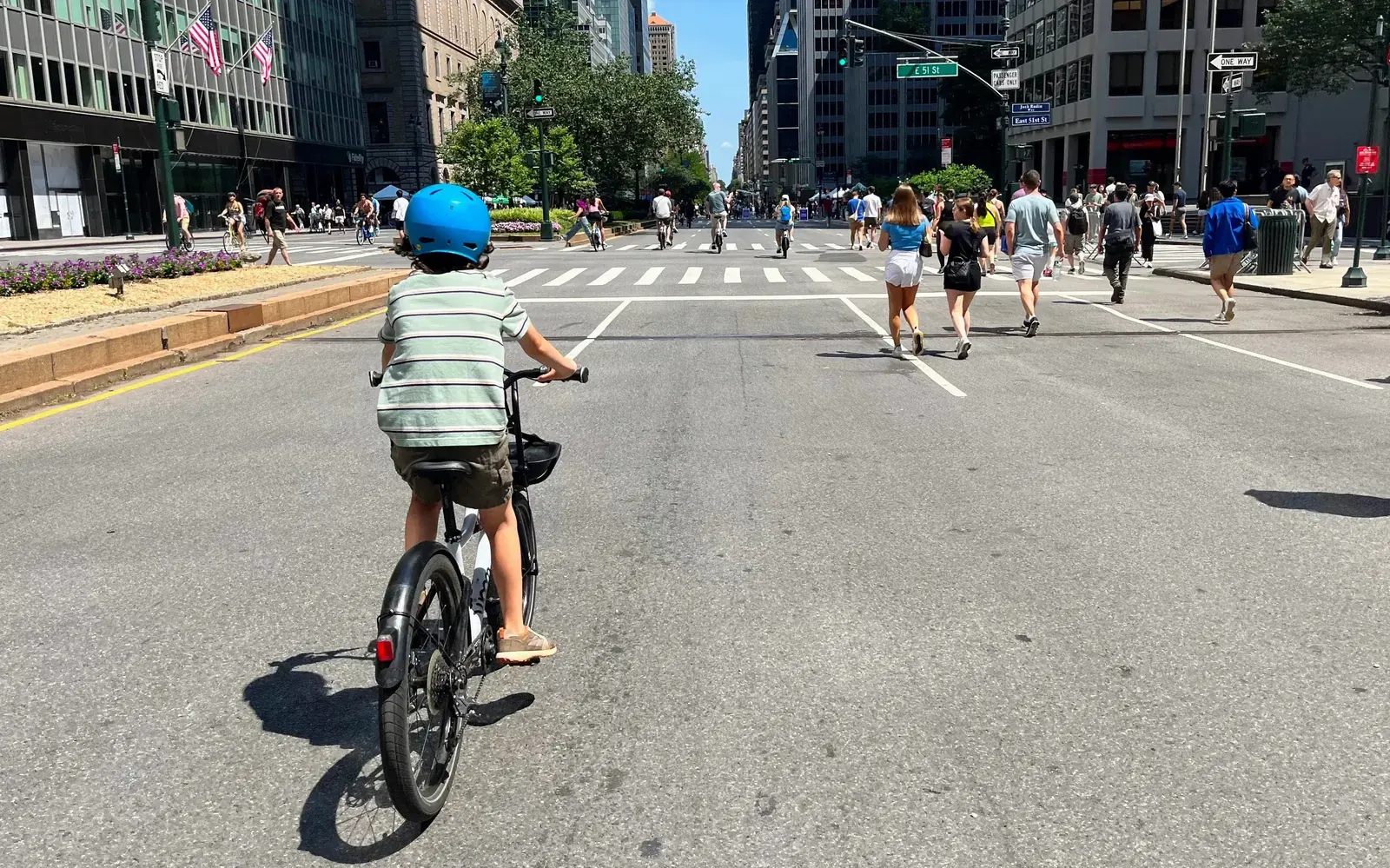
The annual Summer Streets program in New York City, a popular initiative that opens miles of roadway to pedestrians and cyclists, will largely remain the same in its upcoming iteration, despite increasing pressure from urbanism advocates and some elected officials to expand its reach and connectivity. The city’s Department of Transportation (DOT) has confirmed the program will continue with five Saturdays, covering approximately 21.8 miles across three boroughs, mirroring the previous year’s footprint.
This decision comes as a disappointment to many who have been advocating for a more ambitious approach to car-free spaces in the city. Livable streets activists, including organizations like Transportation Alternatives, have been vocal in their calls for an extended program that not only covers more miles but also creates a more cohesive network of car-free zones.
“We’re excited to see the return of Summer Streets — but this program can be so much more than it is today,” stated Ben Furnas, executive director of Transportation Alternatives. “It’s clear that New Yorkers love car-free spaces to run, walk, bike, gather, dance, or just play — and it’s past time to extend this beloved program to more streets and more weekends year-round. If other global cities like Bogotá can close dozens of miles of streets every week, New York City can, too.”
Transportation Alternatives has launched a petition urging Mayor Mamdani to implement car-free Summer Streets every weekend, highlighting international examples of more extensive car-free initiatives.
Adjusted Hours for Outer Boroughs
While the overall mileage and number of event days remain consistent, the DOT has made a minor adjustment to the program’s hours. For the Saturdays held in the outer boroughs (outside of Manhattan), the event hours will shift two hours later, from 9 a.m. to 5 p.m. This change is intended to accommodate residents who may have found the earlier 7 a.m. start time restrictive, allowing them more flexibility to enjoy the car-free streets.
“This year, we’re adjusting the hours of Summer Streets in the outer boroughs to help more New Yorkers enjoy these events later in the day,” explained DOT Commissioner Mike Flynn.
Historic Growth Sustained, Future Vision Unclear
DOT spokesperson Mona Bruno defended the program’s current scale by pointing to its evolution since its inception in 2008. At that time, Summer Streets covered a mere 6.9 miles over three days for six hours, totaling 124.2 “mile-hours.” This year’s program is projected to reach 872 “mile-hours.” Bruno emphasized that the administration is sustaining “historic growth” and is “developing an exciting vision for the future of the program.”
However, details regarding this future vision remain scarce. Reports earlier this year indicated that the Mamdani administration has not yet allocated significant funding for any potential expansion. This lack of concrete plans for growth has fueled the ongoing advocacy for a more robust Summer Streets program.
Advocacy for Enhanced Program
Earlier this year, a coalition of 29 local elected officials sent a letter to the new administration, calling on the city to “build on [the Summer Streets] momentum by expanding the program’s frequency and connectivity.” This sentiment has been echoed by many who believe New York City has the potential to offer public spaces that rival those in other global capitals.
The article draws parallels with international examples such as Paris Plage, which transforms a section of the Seine’s expressway into an urban beach, and Bogotá’s Ciclovía, a weekly event that closes over 75 miles of streets every Sunday. These examples are presented to illustrate the potential for larger-scale, more frequent car-free initiatives.
Despite the current limitations, several elected officials who previously advocated for improvements, including Bronx Borough President Vanessa Gibson and Manhattan Borough President Brad Hoylman-Sigal, offered praise for the DOT in this year’s press release, highlighting the department’s efforts in expanding the program over the years.
The Summer Streets program is scheduled to take place over five Saturdays. The specific dates and routes are available on the DOT website.
Source: Streetsblog NYC – https://nyc.streetsblog.org/2026/07/10/bummer-streets-annual-car-free-program-remains-pretty-much-the-same-under-mayor-mamdani
Key facts
| Aspect | Detail |
|—|—|
| Program | Summer Streets |
| Duration | Five Saturdays |
| Mileage | Approximately 21.8 miles |
| Boroughs | Three |
| Outer Borough Hours | 9 a.m. to 5 p.m. |
| Advocacy Goal | More frequent and connected car-free streets |
The decision to maintain the Summer Streets program largely as is, despite calls for expansion, highlights a tension between the city’s current approach to car-free initiatives and the aspirations of urbanism advocates. While the program offers a valuable opportunity for residents to experience car-free streets, the debate over its scale and frequency underscores a broader conversation about how New York City prioritizes and designs its public spaces for alternative modes of transport and community use. The DOT’s commitment to developing a “vision for the future” suggests that further changes may be considered, but for now, the annual celebration of car-free streets remains consistent.
Datos clave
| Punto | Detalle |
|---|---|
| Fuente | Streetsblog NYC |
| Fecha | 2026-07-10T17:46:07+00:00 |
| Tema | Bummer Streets? Annual Car-Free Program Remains Pretty Much The Same Under Mayor Mamdani |
Fuente
Streetsblog NYC Publicacion original: 2026-07-10T17:46:07+00:00
Related updates

Seattle-Area Race Highlights Diverging Approaches to Housing, Transit and Tech Taxation
A Washington State legislative race in the 32nd District pits incrementalism against urgency on housing supply, transit funding and tech regulation, with…
Read update
New York court ruling on sanctuary policies carries implications for city-level immigration enforcement across the US
A federal judge has dismissed the Trump administration’s attempt to override New York City’s restrictions on immigration enforcement cooperation, citing state sovereignty.…
Read update
Automated license plate readers raise privacy, contract and oversight questions for UK cities
A new US-focused analysis of automated license plate recognition cameras highlights contract, privacy and oversight issues that London boroughs and Transport for…
Read update
Oregon’s “fix it first” dilemma: what London’s transport planners can learn from a revolt against megaprojects
Surveys show Oregonians overwhelmingly want existing roads repaired before new megaprojects are funded, and trust in the state’s transport agency has collapsed.…
Read updateWiki relacionada

Urban Planning Terms: Density, Public Realm and Transit-Oriented Development
A living glossary for terms that appear again and again in planning and development stories.
Read update