
New York smoke-alert debate raises a London question on driving during bad-air days
A Streetsblog NYC item asks why city leaders do not tell drivers to avoid unnecessary trips when wildfire smoke worsens air quality. For London, the relevant issue is how transport advice, air-quality alerts and climate resilience planning are joined up.
A New York transport story has raised a question that is relevant to London’s climate resilience debate: when air pollution spikes, should public advice say more clearly that unnecessary driving can make already poor air worse?
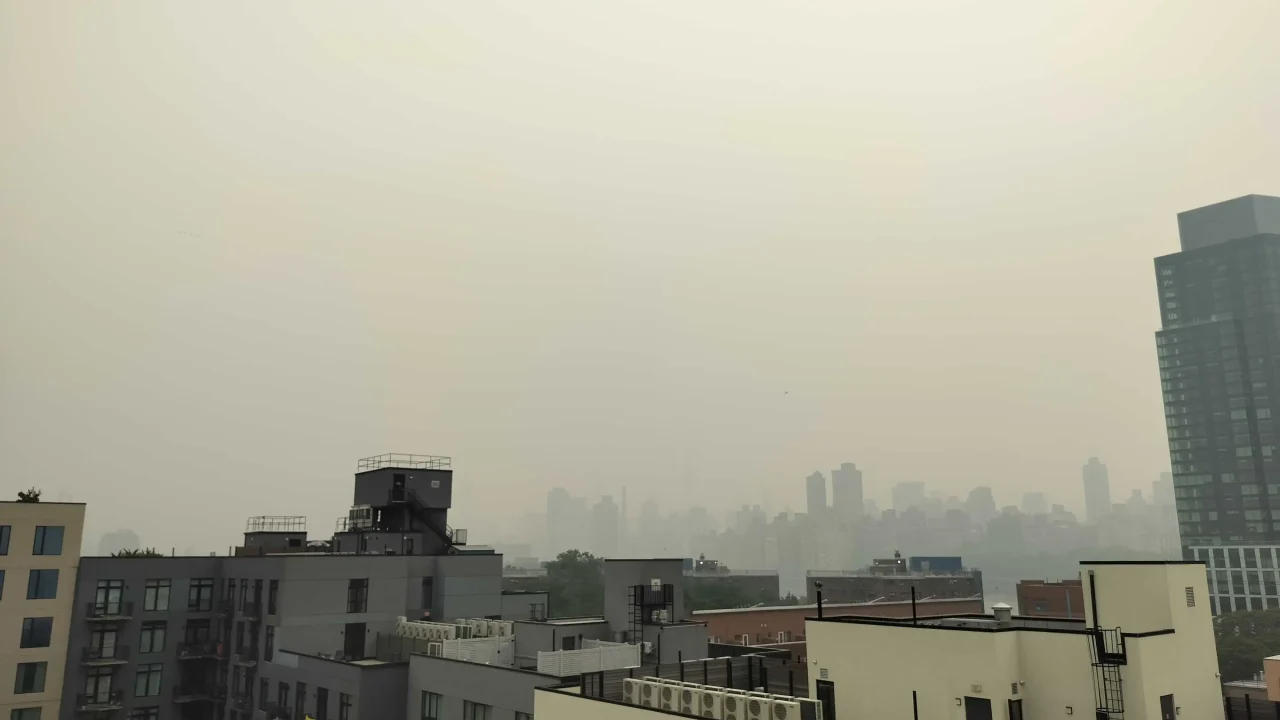
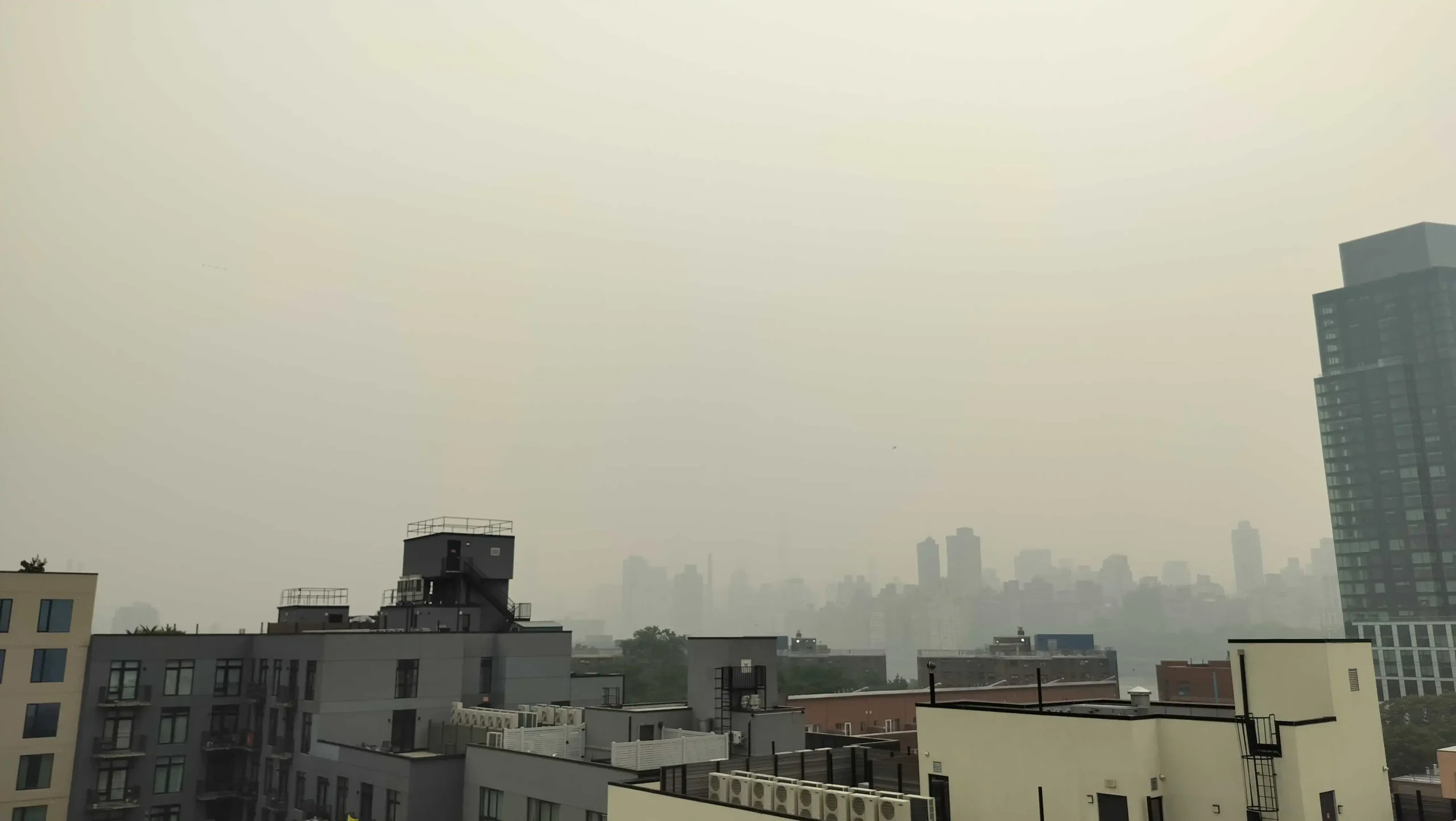
The source is a Streetsblog NYC headlines item published on 17 July 2026. It asks why New York’s mayor and governor have not told residents to avoid driving on days affected by wildfire smoke from Canada. The article recalls a severe smoke episode on 7 June 2023, when the Air Quality Index in New York reportedly exceeded 400, and argues that cars and trucks add local emissions at the same time that regional smoke is already making breathing conditions hazardous.
This is not a London policy announcement, consultation or scheme approval. The source does not report a change by Transport for London, City Hall, a London borough or the UK government. Its relevance for London is narrower but real: it points to a practical gap that cities with transport emissions, dense streets and climate-driven air-quality risks may need to examine.
Why this belongs in a London urbanism brief
London’s air-quality debate is often framed around long-term measures: road charging, low-emission zones, bus fleets, freight, school streets, walking and cycling, and the siting of development near major roads. Bad-air days add a different operational question. They are short-term events, but they test whether climate resilience, transport management and public health messaging are aligned.
The Streetsblog item is about New York, not London. It should not be read as evidence that London agencies are failing to issue any particular warning. The value for London readers is that it isolates a specific planning and governance issue: if smoke, heat or stagnant weather worsens air quality, do city alerts only tell people to protect themselves, or do they also ask transport users to reduce avoidable emissions?
For planners and transport authorities, that distinction matters. A city can advise vulnerable residents to stay indoors, limit exertion and monitor official forecasts. But it can also consider whether street operations, parking rules, fleet movements, construction logistics, delivery timing and discretionary car trips should be part of the response. Those are urban-management choices, not just personal health tips.
What the New York source says
Streetsblog NYC’s article argues that city and state leaders in New York have not used bad-air days to remind drivers that vehicle emissions worsen air pollution. It refers to wildfire smoke from Canada affecting New York and much of the United States, and says more smoke could be on the way.
The item also recalls comments made in 2023 by NY1 meteorologist John Davitt, who told Streetsblog that the link between poor air and driving was “obvious”. The source frames the issue through emergency messaging and transport behaviour, including the example of drivers being required to move cars for street cleaning during air-quality alert days.
The article is a media commentary and news-roundup item rather than an official emergency bulletin, technical air-quality assessment or transport policy document. It is useful as a prompt, but any London-specific claim would need to be checked against primary sources such as City Hall, Transport for London, borough emergency planning material, UK air-quality forecasts and public-health advice.
Key facts
| Item | Detail |
|---|---|
| Source item | Streetsblog NYC, published 17 July 2026 |
| Main issue | Whether officials should discourage unnecessary driving during severe smoke or bad-air episodes |
| London relevance | Links air-quality alerts with transport demand, street management and climate resilience |
| Caveat | No London policy change or local alert is reported in the source material |
The planning issue: alerts are not only health advice
Air-quality alerts are usually read as health information. They tell people when pollution is elevated and may advise reduced outdoor activity, especially for those with respiratory or cardiovascular conditions. For an urbanism audience, the same alert can also be understood as a signal about how the city is operating.
Transport is one of the sectors where short-term behaviour can change quickly. Some trips are essential: emergency services, care work, freight, public transport operations, accessible travel and journeys that cannot realistically be shifted. Other trips may be discretionary, time-flexible or capable of being made by public transport, walking or cycling where conditions allow.
The New York debate asks whether city leaders should make that distinction more explicit. For London, the comparable question would be whether official bad-air communications should connect the forecast to practical transport choices without overstating what individual drivers can solve during a regional smoke or pollution episode.
That is an important caveat. Wildfire smoke is not created by London traffic. Weather patterns, regional pollution, fires, industrial emissions and domestic sources can all affect measured air quality. But local road emissions can still add to the burden on affected streets. The planning issue is not whether driving is the only cause; it is whether avoidable emissions should be reduced when the background condition is already poor.
What it could change for streets and transport
If London authorities chose to treat severe bad-air days as a transport-management issue, the implications would reach beyond a single public message.
For streets, it could affect how councils handle idling enforcement, school travel advice, kerbside loading, temporary works and events. For transport, it could shape communication from TfL and boroughs about non-essential car use, public transport options and fleet operations. For development and construction, it could raise questions about dust, delivery scheduling and site logistics during poor-air episodes.
For public space, the issue is more complicated. People may be advised to reduce outdoor exertion on poor-air days, but many Londoners rely on streets, buses, pavements and stations for unavoidable daily movement. A resilience approach would therefore need to avoid simply transferring risk to people who cannot work from home, defer travel or choose a cleaner mode.
For city data, the debate highlights the need for clear, comparable information. New York’s article refers to the US Air Quality Index, including a very high reading in 2023. London and the UK use their own monitoring, forecasting and public-health systems, so numbers should not be compared casually across jurisdictions. Any London article making a firm claim about severity, trend or exposure should use the relevant UK or London data source and explain the metric.
The London checks that matter
For London readers, the practical next step is not to copy a New York debate wholesale. It is to check whether local agencies already have clear guidance connecting bad-air alerts with transport behaviour, and whether that guidance is easy to find when conditions deteriorate.
The strongest source trail would include official London air-quality pages, TfL travel advice, borough emergency planning material, UK government air-quality forecasts and public-health guidance. If a borough, City Hall or TfL has issued specific advice during a pollution or smoke event, that should be treated differently from general long-term policy about emissions.
It would also be important to separate several stages that are often blurred. A general air-quality strategy is not the same as an emergency alert. A clean-air policy is not the same as a bad-air-day transport instruction. A public-health warning is not the same as a street-management decision. For residents and professionals, those distinctions determine what can actually be acted on.
The Streetsblog item is strongest as a prompt for that audit. It does not prove that London lacks a policy, and it does not provide London-specific data. It does, however, identify a governance question that fits London’s climate-resilience agenda: when poor air arrives, is the city’s advice limited to exposure, or does it also address avoidable emissions from the way streets are used?
What to watch next
The next London-relevant evidence would be an official alert, consultation, committee paper, TfL update, borough plan or public-health document that explicitly links bad-air episodes with travel behaviour. Without that, the story should remain a context piece rather than a claim about a London policy gap.
Readers following the issue should look for three things: whether advice distinguishes essential from discretionary travel; whether it includes road traffic, idling, freight and construction activity; and whether it explains the data source behind any pollution warning. Those details would show whether air-quality resilience is being treated as a live operational issue for London’s streets, not only as a long-term emissions target.
Source: Streetsblog NYC, “Friday’s Headlines: Cough Cough Edition” — https://nyc.streetsblog.org/2026/07/17/fridays-headlines-cough-cough-edition
Fuente
Streetsblog NYC Publicacion original: 2026-07-17T04:01:00+00:00
Related updates

Seattle-Area Race Highlights Diverging Approaches to Housing, Transit and Tech Taxation
A Washington State legislative race in the 32nd District pits incrementalism against urgency on housing supply, transit funding and tech regulation, with…
Read update
New York court ruling on sanctuary policies carries implications for city-level immigration enforcement across the US
A federal judge has dismissed the Trump administration’s attempt to override New York City’s restrictions on immigration enforcement cooperation, citing state sovereignty.…
Read update
Automated license plate readers raise privacy, contract and oversight questions for UK cities
A new US-focused analysis of automated license plate recognition cameras highlights contract, privacy and oversight issues that London boroughs and Transport for…
Read update
Oregon’s “fix it first” dilemma: what London’s transport planners can learn from a revolt against megaprojects
Surveys show Oregonians overwhelmingly want existing roads repaired before new megaprojects are funded, and trust in the state’s transport agency has collapsed.…
Read updateWiki relacionada

Urban Planning Terms: Density, Public Realm and Transit-Oriented Development
A living glossary for terms that appear again and again in planning and development stories.
Read update