
New York City Commits $6.4 Million Annually to Expand Open Streets Program
Mayor Mamdani's budget secures a baseline of $6.4 million per year through 2030 for the popular Open Streets initiative, aiming to provide consistent funding and enable program growth, though advocates push for even greater investment.
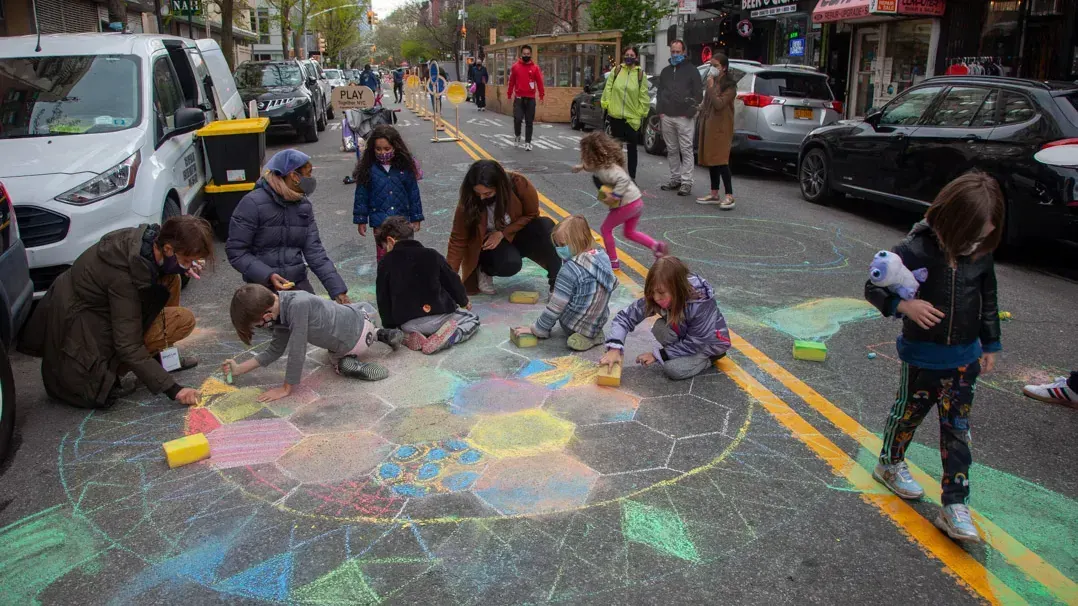
New York City is set to bolster its popular Open Streets program with a dedicated annual funding stream, as Mayor Mamdani’s proposed budget includes a baseline of $6.4 million per year through Fiscal Year 2030. This commitment aims to move the program beyond its reliance on temporary federal aid and fluctuating city contributions, providing a stable foundation for its future.
The new funding level exceeds the Department of Transportation’s (DOT) estimated needs for maintaining the program at its current scale, offering a significant increase compared to previous years. Last year, former Mayor Eric Adams allocated $2.1 million, but left the long-term financial planning to his successor. The consistent annual funding is expected to allow the DOT to plan more effectively and ensure the program’s continued operation.
Por que importa
DOT Deputy Commissioner Eric Beaton highlighted the importance of this baselined funding, stating that it eliminates the year-to-year uncertainty that previously hampered planning. This stability is crucial for the agency to manage resources and commitments effectively, ensuring that the Open Streets program can be sustained and potentially expanded across the city’s boroughs.
Mamdani had pledged to fully fund and expand the Open Streets program during his mayoral campaign. The DOT has welcomed this decision, with spokesperson Will Livingston emphasizing how Open Streets transform city blocks into vibrant community hubs that enhance educational opportunities and support local businesses.
Contexto
However, open streets advocates argue that while the increased funding is a positive step, it falls short of the investment needed for substantial expansion. They are pushing for a more ambitious three-year plan totaling $48 million.
John Surico, chairperson of the 31st Avenue Open Street in Astoria, expressed that while the current commitment is an improvement, “there’s still a ways to go to sustainably expand the program to all corners of the five boroughs.” He noted the program’s persistence is largely due to volunteer efforts, suggesting that increased city investment is necessary to translate into tangible resources for local organizers.
Volunteer organizers like Alex Morano, who helps manage the Vanderbilt Avenue open street in Prospect Heights, stressed that the program’s survival depends on community dedication rather than solely on city investment. While no one is officially turned away for lack of funding, many organizers face significant financial constraints that limit their ability to launch new initiatives or maintain existing ones.
The economic benefits of Open Streets are increasingly being recognized. A 2024 Department of City Planning study indicated that commercial strips with Open Streets experienced lower vacancy rates compared to those without. Furthermore, a report by Comptroller Tom DiNapoli found faster job growth on streets participating in the Open Streets program than on comparable streets without it.
Jackson Chabot, advocacy director for Open Plans, stated that “great public spaces don’t magically manage themselves.” He advocates for sustained investment in public space management to transform street closures into thriving community assets, suggesting this can also create local jobs.
In response to the budget proposals, organizers from nearly a dozen Open Streets initiatives sent a letter to the City Council Transportation and Infrastructure Committee, urging them to support three key proposals during negotiations with the mayor. Majority Leader Shaun Abreu, who chairs the Transportation Committee, has voiced support for increased funding, emphasizing its role in supporting small businesses and encouraging residents to engage with public spaces.
Key facts
| Feature | Detail |
|—|—|
| Annual Funding Baseline | $6.4 million per year |
| Funding Through | Fiscal Year 2030 |
| Previous Funding (Adams Admin) | $2.1 million |
| Advocate Goal | $48 million over three years |
| Economic Impact | Lower commercial vacancies, faster job growth on Open Streets |
The expansion of the Open Streets program represents a significant shift in how New York City views its street infrastructure, prioritizing public space, community engagement, and local economic development. This sustained financial commitment signals a long-term strategy to integrate car-free public spaces into the fabric of urban life, potentially influencing urban planning practices in other cities.
Source: Streetsblog NYC, https://nyc.streetsblog.org/2026/06/15/mamdani-adds-funding-for-open-streets-as-organizers-press-for-more
Datos clave
| Punto | Detalle |
|---|---|
| Fuente | Streetsblog NYC |
| Fecha | 2026-06-15T04:03:00+00:00 |
| Tema | Mamdani Adds Funding for Open Streets As Organizers Press for More |
Fuente
Streetsblog NYC Publicacion original: 2026-06-15T04:03:00+00:00
Related updates
Seattle-Area Race Highlights Diverging Approaches to Housing, Transit and Tech Taxation
A Washington State legislative race in the 32nd District pits incrementalism against urgency on housing supply, transit funding and tech regulation, with…
Read update
New York court ruling on sanctuary policies carries implications for city-level immigration enforcement across the US
A federal judge has dismissed the Trump administration’s attempt to override New York City’s restrictions on immigration enforcement cooperation, citing state sovereignty.…
Read update
Automated license plate readers raise privacy, contract and oversight questions for UK cities
A new US-focused analysis of automated license plate recognition cameras highlights contract, privacy and oversight issues that London boroughs and Transport for…
Read update
Oregon’s “fix it first” dilemma: what London’s transport planners can learn from a revolt against megaprojects
Surveys show Oregonians overwhelmingly want existing roads repaired before new megaprojects are funded, and trust in the state’s transport agency has collapsed.…
Read update