
New York Charter Reforms Aim to Speed Up Outdoor Dining and Transport Projects – What London Could Learn
Mayor Mamdani’s Commission on Government Efficiency has proposed five ballot questions for New Yorkers this November, including a 75% cut in outdoor dining approval times and a 33% faster timeline for bike and bus lane projects. The reforms offer a live case study for London, where similar tensions between streamlining
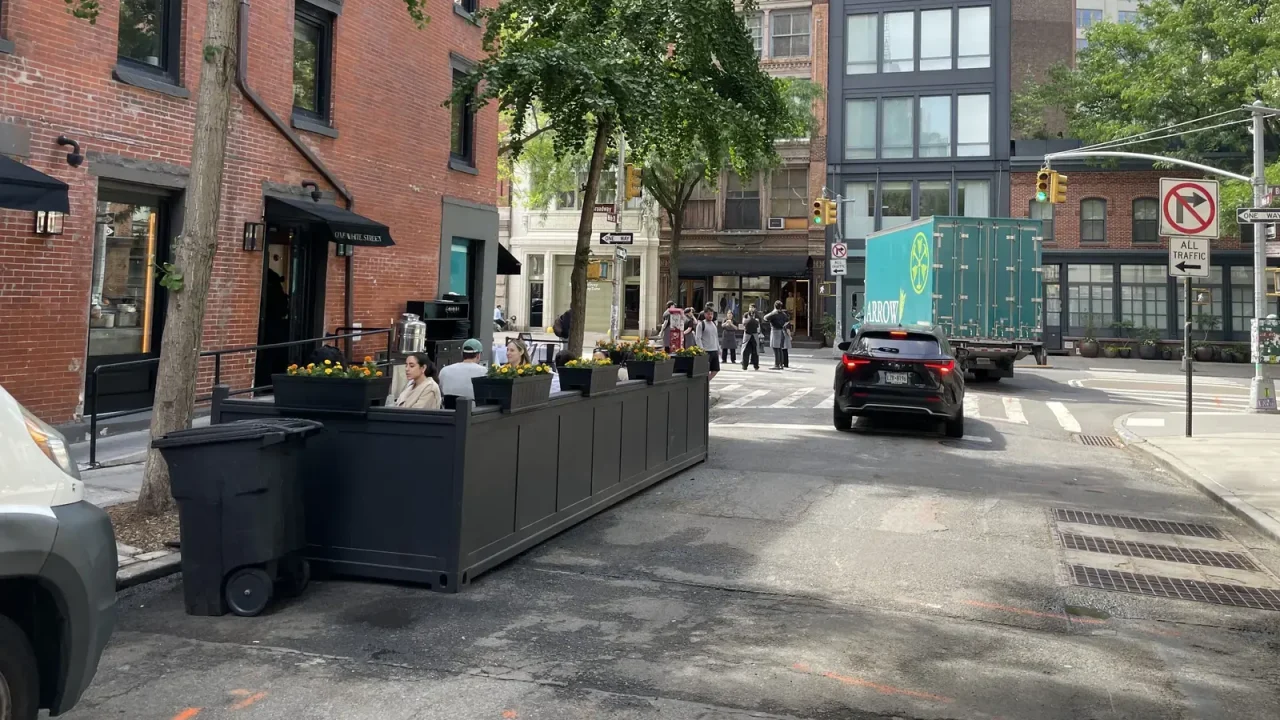
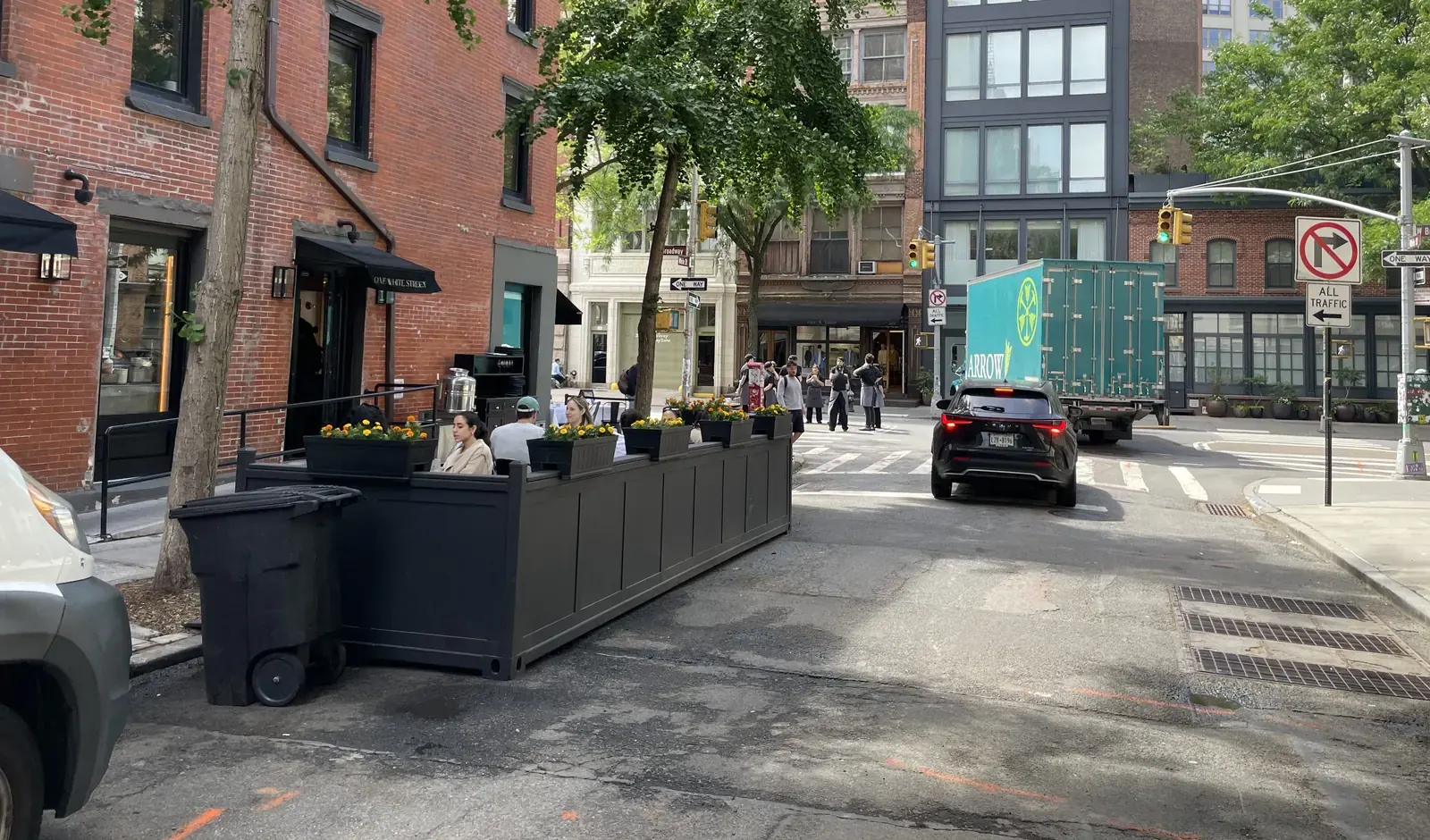
New York City voters could decide this November on a package of charter amendments that would dramatically cut the time needed to approve outdoor dining permits and accelerate bike and bus lane construction. The proposals, released on 23 July by Mayor Mamdani’s Commission on Government Efficiency (COGE), aim to unclog bureaucratic hurdles that advocates say have slowed street safety improvements and small business recovery since pandemic-era deregulation was rolled back.
For London readers following similar debates over pavement licensing and the pace of TfL’s Streetspace programme, the New York experiment offers a direct comparison point. Both cities grapple with how to balance fast delivery of public-space and transport projects against the need for consultation, legal due process and local accountability.
Outdoor dining: from eight months to two
The most concrete reform is Ballot Question 1, which would create a single permit for street and sidewalk dining and remove mandatory public hearings and City Council disapproval for sidewalk cafes. Currently, a restaurant owner may wait eight months or more to secure permission to place tables and chairs outside. Under the proposed change, the process would take roughly two months – a 75% reduction.
COGE estimates the reform would save small businesses up to $1,800 in application fees and thousands of dollars in staff time. Community input would not be eliminated entirely: the proposal still requires notice to the relevant community board, borough president and council member, and the Department of Transportation could still choose to hold a public hearing at its discretion.
The background to the proposal is a steep decline in outdoor dining participation after the city reintroduced stricter rules in 2023. During the pandemic, emergency measures allowed roughly 11,770 restaurants to operate outdoor seating. After City Council and the then-Mayor’s administration imposed new regulations – including a winter ban on roadway cafes and multiple layers of outside review – that number collapsed to just 1,549 fully permitted operations, according to COGE.
Transport projects: 33% faster bike and bus lanes
Ballot Question 3 targets the city’s “major transportation projects” – any bike or bus lane longer than 1,000 feet (roughly three blocks). Currently, such projects require review from several agencies outside the Department of Transportation, leading to delays. Last year alone, DOT had 37 such projects, of which 13 were delayed; all but two of the stalled projects were bike lanes, the commission said.
The proposed amendment would reduce the consultation requirement: DOT would need to confer only with the heads of other agencies (such as the Fire Department), rather than with individual firehouses or other local units. The aim is to cut construction timelines by a third and reduce the risk of bad-faith litigation, which Street safety advocates have long argued holds up life-saving infrastructure.
However, the question bundles street safety with two unrelated measures – faster sale or lease of small city-owned properties and quicker leasing of office space for municipal workers. The good government group Reinvent Albany strongly criticised the amalgamation, arguing voters who support the bike and bus lane reforms may oppose the other provisions, and that the questions should have been separate. City Hall defended the bundle on the grounds that all three changes affect how city land and space is approved.
London parallels: pavement licensing and street redesign
In London, the equivalent debates are playing out on different procedural terrain. Pavement licensing was introduced on a temporary basis under the Business and Planning Act 2020, allowing restaurants to serve customers outdoors without a full highways licence. The regime was made permanent in 2021, but boroughs retain discretion over application fees, duration and conditions. Processing times vary widely; some councils aim for 28 days, while others take longer. Unlike New York’s current eight-month wait, London’s process is already relatively short, but restaurateurs still complain about inconsistent rules and charges.
On transport infrastructure, TfL’s Streetspace programme, launched during the first COVID-19 lockdown, faced a judicial review from a motoring group that argued road closures and cycle lanes were imposed without proper consultation. The High Court dismissed the challenge in 2021, but the case highlighted the tension between rapid delivery and legal due process. More recently, the expansion of the Ultra Low Emission Zone and the opening of the Silvertown tunnel have reignited debates about the speed of decision-making versus community engagement.
The proposed New York reforms, if approved, could provide a real-world data point: do accelerated approvals lead to more outdoor dining and safer streets, or do they erode public trust? London planners and policymakers will be watching.
Key facts
| Proposed reform | Current timeline | Proposed timeline | Reduction |
|—————-|—————-|——————|———–|
| Outdoor dining application | 8 months or more | 2 months | 75% |
| Major transport projects (bike/bus lanes) | Variable, with 13 of 37 delayed in 2025 | 33% faster timelines | Third |
What happens next
COGE is scheduled to vote on the final proposals later today at the Landmarks Preservation Commission hearing room in Manhattan. If approved by the commission and then by voters in November, the changes would take effect on 1 March 2027. The outdoor dining and transport reforms are two of five ballot questions; the others cover procurement, building permitting, and rainy-day reserves.
For London advocates and officers examining similar issues, the New York case underscores the difficulty of bundling popular measures with less popular ones, and the importance of clear public communication. Whether the speed gains outweigh the loss of direct council oversight will be tested at the ballot box.
Source: Streetsblog NYC, “Mamdani’s Charter Panel To Speed Up Outdoor Dining Process by 75%, Bus and Bike Lanes by 33%”, 23 July 2026. Reported based on COGE proposals shared with Streetsblog. (https://nyc.streetsblog.org/2026/07/23/mamdanis-charter-panel-to-speed-up-outdoor-dining-process-by-75-bus-and-bike-lanes-by-33)
Datos clave
| Punto | Detalle |
|---|---|
| Fuente | Streetsblog NYC |
| Fecha | 2026-07-23T13:48:39+00:00 |
| Tema | Mamdani’s Charter Panel To Speed Up Outdoor Dining Process by 75%, Bus and Bike Lanes by 33% |
Fuente
Streetsblog NYC Publicacion original: 2026-07-23T13:48:39+00:00
Related updates

California’s unused dam safety powers hold lessons for London’s ageing flood infrastructure
A California audit reveals the state has never used its enforcement powers against dam owners, despite 57 dams in poor condition. As…
Read update
New York Poll Shows Overwhelming Bipartisan Support for Apartments Near Transit, Highlighting Contrast with London’s Own Housing Debate
A new poll from Open New York finds 79% of voters support building multi-family homes near rail stations, as the governor’s race…
Read update
Seattle City Attorney Launches New Community Court and Repeat Offender Programme Amid Public Defender Concerns
Seattle City Attorney Erika Evans has launched Connection Court, a new community court programme, alongside a punitive High-Priority Repeat Offenses system. The…
Read update
Seattle’s Centers & Corridors Zoning Update Delayed by Environmental Review Ruling
A state hearings board ruling has forced Seattle to rework the environmental impact statement for its twenty-year growth plan, pushing the next…
Read updateWiki relacionada

Urban Planning Terms: Density, Public Realm and Transit-Oriented Development
A living glossary for terms that appear again and again in planning and development stories.
Read update