
Malls as future midtowns: a US argument that lands on London’s town centres
A Planetizen feature argues shopping malls are becoming the midtowns of the future. The piece is US-focused commentary, not a planning decision — but it raises checkable questions about London's own low-density retail sites, their ownership and what borough planning committees actually have in front of them.
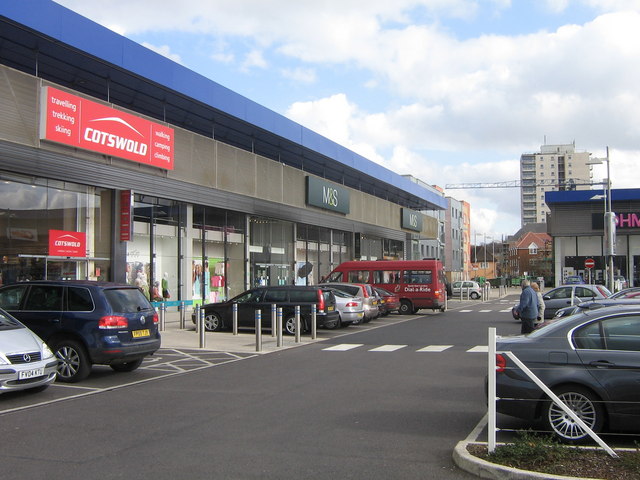
A feature published by the US planning outlet Planetizen on 29 October 2026 argues that shopping malls are becoming the “midtowns of the future”. The piece is by Zachary Whalen. It is an argument about how large retail sites can change role, not a report on a planning application, committee decision or funding announcement.
That distinction matters for London readers. Only the headline and summary of the article were available when this draft was prepared. Its case studies, figures and geography could not be verified, so nothing below should be read as a summary of evidence the article may contain. What follows sets out what the framing claims, why it is not a London story on its own, and which local documents would actually settle the equivalent question here.
What the source argues
The headline’s claim is a role change, not a construction claim: enclosed retail centres, built around car access and single-use floorspace, are being reframed as the dense, mixed, walkable centres that midtown districts provide. In planning terms that is an argument about land use mix, density, street networks and the management of privately held public space — the questions that decide whether a retail site can behave like a town centre rather than a shed with shops in it.
None of that is a London finding. Planetizen covers North American planning and urbanism; the article’s examples, if any, sit in a different policy system, with different ownership structures, different retail economics and different local government powers. Treat it as a line of argument to test, not a template to copy.
Why it is not a London story on its own
London Urbanism Desk covers London urbanism, the GLA, Transport for London, borough planning, housing, streets and UK planning policy with a London consequence. A US trend feature with no London site, institution or decision attached does not meet that bar by itself. Forcing a “London is the same” angle onto it would invent a comparison the source does not make.
The legitimate on-topic angle is narrower: the same structural pressure on retail floorspace is visible in London’s town centres, and the planning system already has tests for what replaces it. Those tests are where the real reporting sits.
The London question the piece raises
Retail floorspace in London has been under sustained pressure for more than a decade as comparison shopping moved online and large-format anchors withdrew. Outer London centres and retail parks in particular hold large, low-density, single-use sites, often close to existing rail and bus links.
Two parts of the English planning system govern what happens next. The London Plan sets a town-centre-first approach, requiring main town centre uses to be directed to designated centres and tested sequentially before out-of-centre sites are entertained. Separately, national permitted development rights allow some commercial floorspace, including retail, to convert to housing without a full planning application — a route that produces homes but gives the local planning authority far less leverage over design, affordable housing or public realm.
That combination is the real London version of the “mall as midtown” argument: whether a large retail site becomes a genuinely mixed piece of town centre or a residential conversion with a car park retained.
Decision stages to check
No London scheme is identified in the source, and none should be described as approved, funded or under construction on the strength of it. For any specific site, establish the stage first:
- Draft local plan allocation, in consultation or submitted for examination.
- Pre-application discussion, which is not public in most boroughs.
- Validated planning application, published on the borough’s planning portal with a consultation window.
- Committee resolution, which is not the same as a decision notice.
- Permission granted subject to a section 106 agreement, which may not be signed.
- Construction start, which may lag permission by years.
Each stage carries different weight. A committee resolution is a recommendation that can still be called in, judicially reviewed or stalled by an unsigned legal agreement.
What a credible mall-to-midtown test would need
Five things decide whether a retail site can carry a midtown role in London, and all five are checkable in public documents.
Ownership. A single-owner site with an active asset manager can be re-planned coherently. Fragmented ownership across many small units makes assembly slow and expensive.
Viability and affordable housing. Conversion and redevelopment appraisals determine what tenure mix survives. Borough viability assessments, published with major applications, show the assumptions being used.
Transport capacity. Adding homes and workspace to a car-oriented site changes trip patterns. TfL’s responses to planning consultations, and borough transport assessments, record whether bus, rail and walking networks can absorb it.
Public realm and management. Space that reads as public but is privately managed raises questions about access, events, seating and exclusion. Estate management plans and section 106 schedules are where those answers appear.
Climate and drainage. Large areas of surface parking are also large areas of impermeable and heat-retaining ground. Site-level flood risk assessments and urban greening strategies show whether redevelopment improves or worsens that.
Key facts
| Item | Detail |
|---|---|
| Source | Planetizen feature, “Malls are becoming the midtowns of the future” |
| Author | Zachary Whalen |
| Published | 29 October 2026 |
| Status | Argument piece on US retail sites; no London decision, application or funding reported |
What to check next
Readers following a specific London retail site should start with the borough’s planning portal for a validated application and its consultation dates, then the committee report for the officer recommendation and any viability or transport evidence attached. Cross-check the site against the adopted local plan and the London Plan’s town centre policies to see whether the proposal is allocated, windfall, or contrary to the sequential approach.
Where a scheme relies on permitted development rather than a full application, the prior approval submission — not a planning committee — is the document that matters, and the scope for securing affordable housing or public realm through it is limited. That gap between conversion and proper plan-making is the part of this debate London can actually evidence.
Source: Planetizen News, https://www.planetizen.com/features/138758-malls-are-becoming-midtowns-future
Fuente
Planetizen News Publicacion original: 2026-10-29T12:00:00+00:00
Related updates

Record Campaign Spending in Washington State Prompts Questions About Money in Local Planning Politics
A Seattle specialist outlet reports unprecedented corporate and billionaire spending ahead of the 2026 US midterms, including a Microsoft-backed PAC targeting a…
Read update
Post-storm waste collection is a resilience test London boroughs cannot schedule
A look at how two US cities treated storm debris clearance as a pre-planned system rather than an emergency scramble, and what…
Read update
Chicago’s sewage overflows are a warning for London’s combined sewers
Chicago's Racine Avenue pumping station has discharged more than 10 billion gallons of combined sewage into the Chicago River this year, despite…
Read update
St. Louis bets on conversions and innovation zones for its downtown: the test London has already run
St. Louis is leaning on office-to-residential conversions, innovation zones and private-sector partnerships to revive its urban core. The instruments are familiar in…
Read updateWiki relacionada

Urban Planning Terms: Density, Public Realm and Transit-Oriented Development
A living glossary for terms that appear again and again in planning and development stories.
Read update