
London’s Own Scofflaw Problem: Foreign-Registered Vehicles Avoid ULEZ and Congestion Charge, Raising Climate and Safety Questions
A New York investigation reveals that out-of-state toll dodgers are also reckless speeders. London faces a parallel challenge as thousands of foreign-registered vehicles evade ULEZ and Congestion Charge fees, weakening air-quality gains and exposing gaps in enforcement.
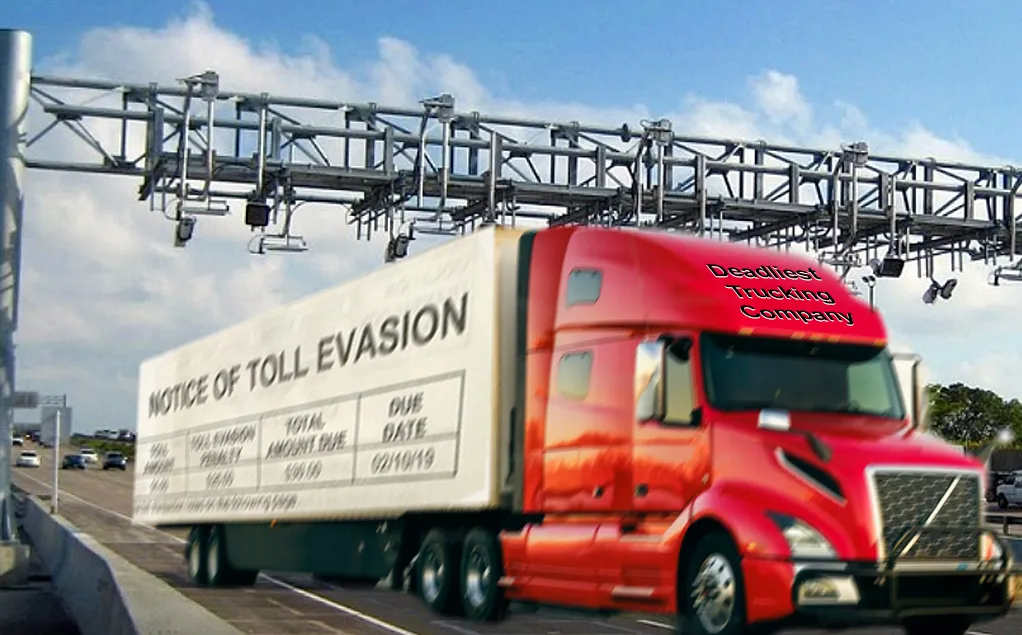
A recent investigation by Streetsblog NYC found that out-of-state motorists who repeatedly dodge tolls on New York’s bridges and tunnels are also responsible for hundreds of speeding tickets, red-light violations, and serious crashes. The story, which examined Port Authority lawsuits against toll evaders, revealed a pattern of reckless driving that endangered pedestrians and cyclists. While the focus is New York, the underlying issue resonates strongly in London, where foreign-registered vehicles are known to avoid the Congestion Charge and Ultra Low Emission Zone (ULEZ) fees, simultaneously undermining air-quality targets and road safety.
The NYC Case: Toll Evasion as a Gateway to Reckless Driving
The Streetsblog analysis reviewed 17 large lawsuits filed by the Port Authority in February 2026 against drivers and companies that collectively owed $1.5 million in unpaid tolls. One trucking company, JGM Trucking, owed $143,000 after 1,966 toll violations since 2020. Its drivers had accumulated 94 speeding tickets, 52 red-light tickets, and were involved in two crashes, including one that left a pedestrian hospitalised for a week. The data showed that toll evaders are often the same drivers who speed, run red lights, and ignore parking fines. Of the 204 vehicles identified, 155 had active tickets, totalling $92,000 in unpaid city fines.
The investigation underscores a broader enforcement failure: despite automated camera systems, the city has not consistently towed repeat offenders. Advocacy groups argue that the same drivers who cheat the toll system are also the most dangerous on the road.
London’s Parallel: Foreign-Registered Vehicles and Unpaid Charges
London has a similar but less documented problem. Transport for London (TfL) has reported that foreign-registered vehicles owe an estimated £100 million in unpaid Congestion Charge and ULEZ fees accumulated since 2019. These vehicles are not subject to the same enforcement tools as UK-registered ones. TfL can issue penalty charge notices (PCNs) but has limited ability to recover debts from overseas owners. The Driver and Vehicle Licensing Agency (DVLA) has agreements with some European countries, but post-Brexit data-sharing gaps have made enforcement harder.
The scale of the issue is significant. In 2023, TfL recorded over 250,000 foreign-registered vehicles entering the capital each year. Many of these vehicles are not compliant with ULEZ standards, meaning they should pay a daily charge of £12.50 (or £15 for Congestion Charge). When they evade, they not only deprive TfL of revenue but also contribute to higher emissions in the city. The same vehicles may also be involved in other traffic offences, though data on speeding and red-light violations by foreign-registered vehicles is less readily available.
A TfL spokesperson previously told the London Assembly that the agency is working with the Department for Transport to improve cross-border enforcement, but the current system relies on voluntary compliance after the first PCN. If a driver from outside the UK ignores the charge, TfL can refer the debt to debt collection agencies, but success rates are low.
Impact on Climate Resilience: Air Quality and Enforcement Gaps
London’s ULEZ is a cornerstone of the city’s climate resilience strategy, aiming to reduce nitrogen dioxide and particulate matter levels. The scheme is projected to cut emissions by 30% by 2030. However, when foreign-registered vehicles evade the charge, they undermine these gains. A single non-compliant diesel vehicle can emit more than 10 times the NOx of a compliant one. If thousands of such vehicles enter London daily without paying, the overall air-quality improvement is diluted.
Moreover, the same enforcement gap that allows toll evasion also enables unsafe driving. The NYC investigation linked toll dodging to speeding and red-light running. While London lacks a comparable study, the pattern is likely similar. Foreign-registered drivers who routinely ignore ULEZ and Congestion Charge may also be more likely to speed or run red lights, knowing that enforcement is weaker. The Metropolitan Police and TfL have automatic number plate recognition (ANPR) cameras, but these are primarily used for charge enforcement, not for building a comprehensive profile of repeat offenders.
Key facts
| Factor | London | New York (for context) |
|---|---|---|
| Unpaid tolls/charges by foreign/out-of-state vehicles | Estimated £100 million (2019–2023, TfL) | $1.5 million (Port Authority, 2026 suits) |
| Number of vehicles involved | Over 250,000 foreign-registered vehicles per year | 204 vehicles in 17 lawsuits |
| Grant of related speeding/red-light tickets | Not systematically tracked | 460 speeding tickets, 100 red-light tickets |
| Enforcement recovery rate | Low – limited by cross-border data sharing | Mixed – city can tow after $350 threshold but often fails |
What Needs to Change: Enforcement and Data Sharing
The NYC story offers a cautionary tale for London. The Port Authority’s switch to cashless tolling in 2022 created a new avenue for evasion, and the city’s failure to tow vehicles with more than $350 in fines allowed scofflaws to continue driving dangerously. In London, the electronic enforcement of ULEZ and Congestion Charge is similarly reliant on the driver’s honesty to pay. Without a mechanism to enforce penalties across borders, the system is weak.
Advocates such as the Riders Alliance in New York have called for mayoral action. In London, groups like the London Cycling Campaign and Clean Air in London have urged TfL to seek greater powers to register foreign vehicles with the DVLA, impound vehicles that repeatedly evade charges, and share data with police for traffic enforcement. The government’s planned National Road User Charging framework could include a central database for foreign vehicles, but no timeline has been announced.
For now, London’s climate resilience goals depend on closing these enforcement gaps. The city cannot afford to have a significant portion of high-emission vehicles driving through its clean air zone without paying, while also possibly endangering pedestrians and cyclists. The next step is for TfL to publish a comprehensive analysis of traffic offences by foreign-registered vehicles, similar to the Streetsblog investigation, to inform policy.
Source: Streetsblog NYC – “The Scofflaw Menace: Out-of-State Toll Dodgers Are Also Reckless Super Speeders In NYC” (https://nyc.streetsblog.org/2026/07/29/the-scofflaw-menace-out-of-state-toll-dodgers-are-also-reckless-super-speeders-in-nyc)
Fuente
Streetsblog NYC Publicacion original: 2026-07-29T04:09:26+00:00
Related updates
New York court ruling on sanctuary policies carries implications for city-level immigration enforcement across the US
A federal judge has dismissed the Trump administration’s attempt to override New York City’s restrictions on immigration enforcement cooperation, citing state sovereignty.…
Read update
Automated license plate readers raise privacy, contract and oversight questions for UK cities
A new US-focused analysis of automated license plate recognition cameras highlights contract, privacy and oversight issues that London boroughs and Transport for…
Read update
Oregon’s “fix it first” dilemma: what London’s transport planners can learn from a revolt against megaprojects
Surveys show Oregonians overwhelmingly want existing roads repaired before new megaprojects are funded, and trust in the state’s transport agency has collapsed.…
Read update
California’s $11.25 billion housing bond: What London planners can learn from Proposition 1
California voters are deciding on an $11.25 billion general obligation bond to fund affordable housing. As London grapples with its own stalled…
Read update