
King County Authority for Homelessness Services Downsized Amidst Rising Unsheltered Population
Seattle and King County are re-absorbing homelessness service contracts from the King County Regional Homelessness Authority (KCRHA), citing financial concerns and a need for tighter oversight as the region's unsheltered homelessness increases.
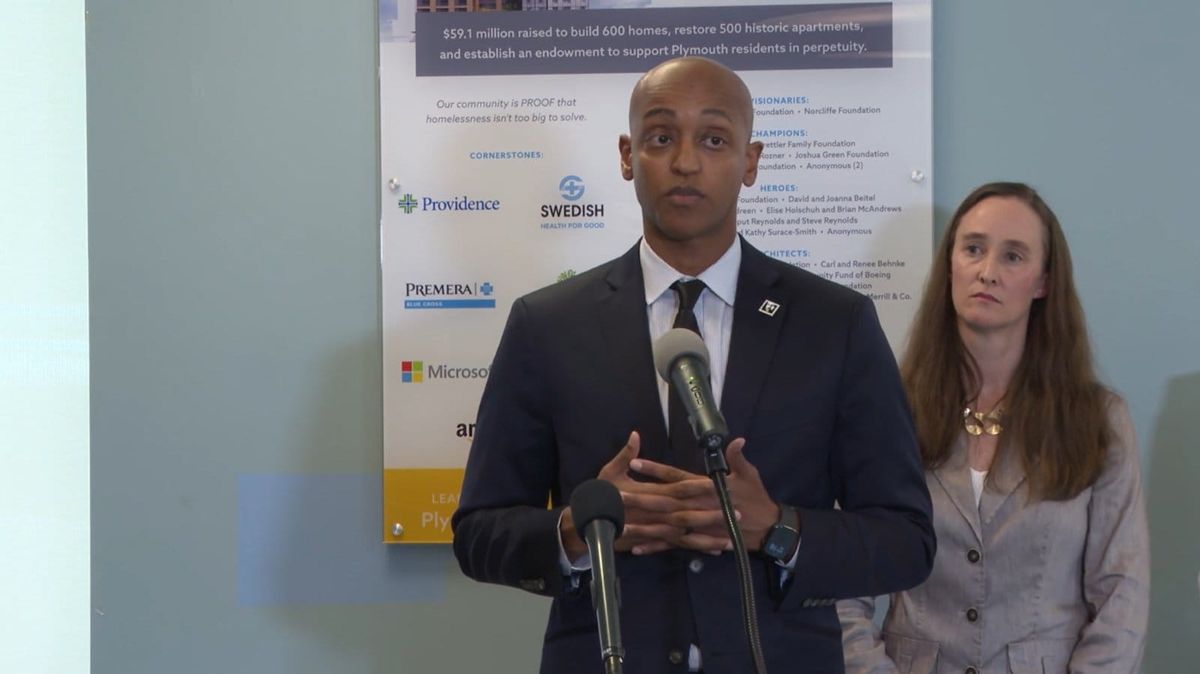
Seattle and King County are set to significantly reduce the scope of the King County Regional Homelessness Authority (KCRHA), a move driven by increasing homelessness figures and serious financial irregularities within the agency. Executive Girmay Zahilay and Seattle Mayor Katie Wilson announced that the two jurisdictions will reclaim over 400 contracts, collectively worth approximately $160 million, for homelessness services. These contracts will be returned to Seattle’s Human Services Department (HSD) and King County’s Department of Community and Human Services (DCHS) by the start of next year.
The decision signals a partial dismantling of the KCRHA, which was established in late 2019 and began operations in 2021 with the aim of creating a unified, regional approach to tackling homelessness. However, the agency has faced persistent challenges, including a lack of buy-in from many of the region’s cities, insufficient independent taxing authority, and ongoing dependence on its primary funders.
“Mayor Wilson and I have inherited a lot of issues, but we will not maintain the status quo just because change is hard,” Zahilay stated at a press conference. “So today we are taking further action to stabilize, right-size, and reset KCRHA. Our aim is to strengthen this organization’s foundation, improve accountability, and put the agency in the strongest possible position to fulfill the responsibilities that are entrusted to it.”
Financial Scrutiny and Leadership Turnover
The restructuring follows a forensic audit of KCRHA’s finances, which uncovered significant accounting problems. As of July 2025, the authority reported a negative cash balance of $44.7 million. The audit also revealed $13 million in expenses that could not be accounted for, including $8 million for which the agency later claimed it had not properly billed the City and County, and over $4 million in administrative overspending.
These financial issues have compounded existing leadership and operational challenges. The KCRHA’s first CEO, Mark Dones, departed in mid-2023 amid reports of declining faith from service providers due to delayed payments and disagreements over housing strategies. His successor, Kelly Kinnison, also faced internal conflict, with employees alleging retaliation.
Mayor Wilson acknowledged the difficulties, stating, “When I reflect on the reasons for those challenges [of the KCRHA], one that sticks out to me is that this agency was given incredible responsibility without sufficient capacity or authority to really effectively create and drive an overall strategy for addressing the homelessness crisis in our region, and I think that the audit really reflects this reality, and also, of course, brings to light specific problems that have to be urgently addressed.”
Continued Regional Collaboration and Oversight
Despite the downsizing, city and county officials emphasized their commitment to a regional approach to homelessness. They pledged to continue engaging in “broad stakeholdering” to determine the future structure of homelessness services. Additionally, King County and Seattle will proceed with plans to embed an independent financial compliance team within KCRHA to enhance financial oversight, improve internal controls, and ensure timely payments to service providers.
The KCRHA will retain some key functions. It will continue to serve as the region’s applicant for federal Continuum of Care funds, which currently amount to approximately $67 million annually, although noting that funding levels have been affected by changes in the US administration. The authority will also maintain responsibility for the region’s homelessness data management systems, conduct the biannual Point-in-Time Count, and operate severe weather shelters.
Rising Unsheltered Homelessness
The announcement coincides with the release of the biannual 2026 Point-in-Time Count report, which highlights a growing crisis of unsheltered homelessness in King County. The report estimates that 18,365 people are experiencing homelessness on any given day or night, a 9% increase from 2024. While the rate of overall homelessness growth has slowed compared to the previous 24% increase, the number of unsheltered individuals has risen by 21% in the last two years.
This surge in unsheltered homelessness is partly attributed to a loss of 689 shelter beds between 2025 and 2026, particularly impacting family shelter capacity. The Coalition on Homelessness noted that “almost twice as many people (64% of the total) are living outside or in places no person was meant to inhabit while local shelters and transitional housing programs are full.”
Disproportionate Impact and Contributing Factors
The Point-in-Time Count further underscores the disproportionate impact of homelessness on communities of color. Black and Hispanic individuals each represent an estimated 24% of the homeless population in King County. The report also details co-occurring vulnerabilities among those experiencing homelessness, with 15% reporting experiences of domestic violence, 27% reporting a serious mental health condition, and 33% reporting a substance use disorder. These figures are notably higher for individuals experiencing unsheltered homelessness.
Daniel Malone, executive director of the Downtown Emergency Service Center (DESC), commented that “Homelessness is not growing because proven solutions aren’t working. It’s growing because the flow of people becoming homeless continues to exceed the number of people we can help exit homelessness.” He identified housing affordability as the primary driver of the crisis, stating, “Research consistently shows that housing affordability is the strongest driver of homelessness, and without addressing that root cause, our community will continue to struggle to keep pace.”
The downsizing of KCRHA, coupled with the persistent rise in unsheltered homelessness and the acknowledgment of deep-seated affordability issues, signals a complex and challenging period for regional efforts to address homelessness in King County. The focus now shifts to how the re-centralized services and ongoing regional collaboration will navigate these escalating challenges.
Key facts
| Aspect | Detail |
|—|—|
| Authority being downsized | King County Regional Homelessness Authority (KCRHA) |
| Contracts re-absorbed by | City of Seattle (HSD) and King County (DCHS) |
| Value of re-absorbed contracts | Approximately $160 million |
| Latest Point-in-Time Count (2026) | 18,365 people experiencing homelessness |
| Increase in unsheltered homelessness (last 2 years) | 21% |
| Identified root cause of homelessness | Housing affordability |
Source: The Urbanist, “Zahilay and Wilson Partially Dismantle KCRHA Amid Rising Homelessness”, https://www.theurbanist.org/zahilay-and-wilson-partially-dismantle-kcrha-amid-rising-homelessness/
Datos clave
| Punto | Detalle |
|---|---|
| Fuente | The Urbanist |
| Fecha | 2026-07-09T22:46:08+00:00 |
| Tema | Zahilay and Wilson Partially Dismantle KCRHA Amid Rising Homelessness |
Fuente
The Urbanist Publicacion original: 2026-07-09T22:46:08+00:00
Related updates

Seattle-Area Race Highlights Diverging Approaches to Housing, Transit and Tech Taxation
A Washington State legislative race in the 32nd District pits incrementalism against urgency on housing supply, transit funding and tech regulation, with…
Read update
New York court ruling on sanctuary policies carries implications for city-level immigration enforcement across the US
A federal judge has dismissed the Trump administration’s attempt to override New York City’s restrictions on immigration enforcement cooperation, citing state sovereignty.…
Read update
Automated license plate readers raise privacy, contract and oversight questions for UK cities
A new US-focused analysis of automated license plate recognition cameras highlights contract, privacy and oversight issues that London boroughs and Transport for…
Read update
Oregon’s “fix it first” dilemma: what London’s transport planners can learn from a revolt against megaprojects
Surveys show Oregonians overwhelmingly want existing roads repaired before new megaprojects are funded, and trust in the state’s transport agency has collapsed.…
Read update