
Could Ithaca’s Zoning Overhaul Offer Solutions for London’s Housing Crisis?
As London grapples with a persistent housing shortage and escalating costs, the city of Ithaca, New York, is implementing a comprehensive zoning rewrite that could offer valuable insights. This initiative aims to boost housing supply, reduce regulatory hurdles, and enhance urban walkability.
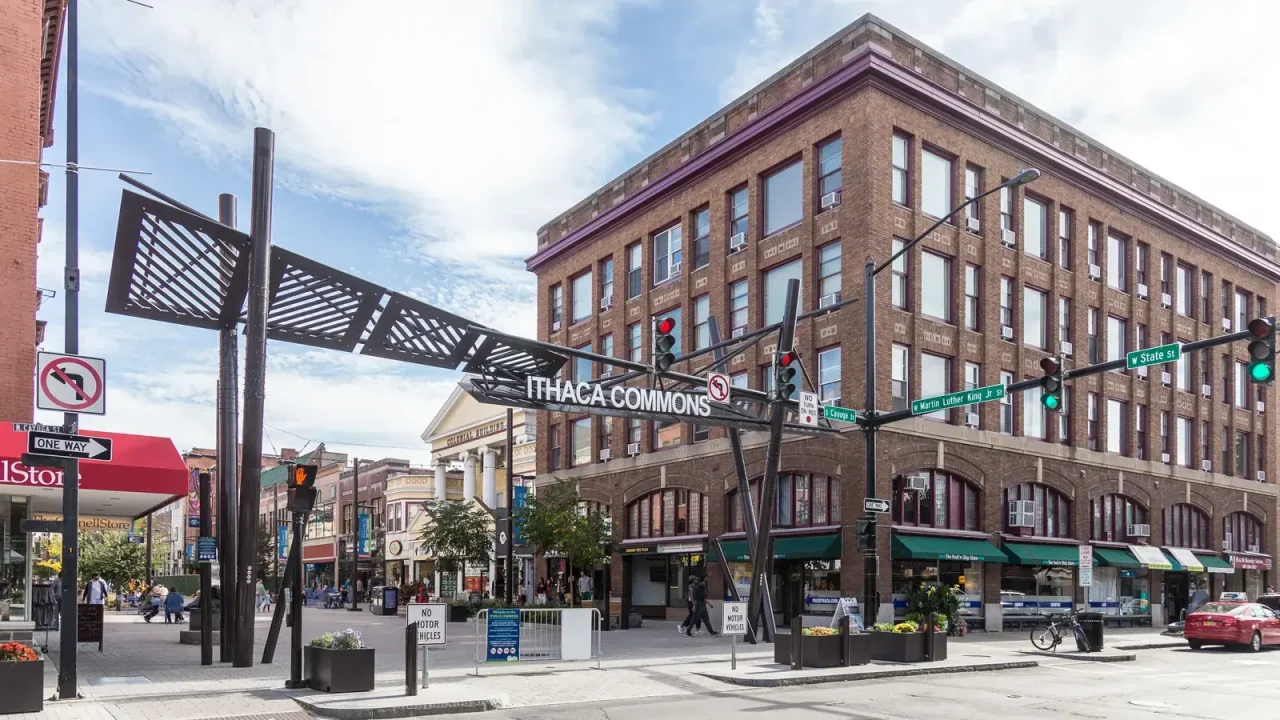

London faces a critical housing shortage, with demand consistently outstripping supply, leading to some of the highest property prices and rents in the world. As policymakers and urban planners in the capital seek innovative solutions, the city of Ithaca, New York, provides a compelling case study through its “Zone Ithaca” initiative. This extensive overhaul of the city’s zoning code, expected to conclude in 2027, aims to modernise land-use regulations to address a persistent housing crisis, echoing many of the challenges London currently faces.
Rethinking Urban Density and Character
Ithaca’s Mayor Robert Cantelmo believes that the city can accommodate a growing population without sacrificing its unique character. The core of “Zone Ithaca” involves making it easier to build housing, relaxing zoning rules that limit density, and eliminating parking requirements that consume valuable land and drive up construction costs. This approach is intended to foster more walkable neighbourhoods, supporting local businesses and reducing reliance on cars – a vision that resonates strongly with London’s urban planning goals.
The initiative reflects a broader understanding that adding new residents can enhance walkability and local services, provided growth is managed intentionally. For London, where increasing density is often met with concerns about infrastructure strain and loss of character, Ithaca’s proactive engagement process and focus on integrated community benefits offer a valuable perspective.
Key Details of Ithaca’s Zoning Reform
| Aspect | Detail | Source |
|---|---|---|
| Initiative Name | Zone Ithaca | Streetsblog NYC |
| Completion | Expected 2027 | Streetsblog NYC |
| Primary Goal | Modernise land-use regulations, address housing shortage | Streetsblog NYC |
| Key Strategy | Increase density, relax zoning rules, eliminate parking requirements | Streetsblog NYC |
| Mayor’s Vision | More walkable neighbourhoods, support local businesses, reduce car dependency | Streetsblog NYC |
Tackling Parking Minimums
One of the most significant aspects of Ithaca’s reform is the targeted elimination of parking minimums. The city began this process in 2023 by removing requirements for off-street parking in several downtown districts. Mayor Cantelmo advocates for extending this policy citywide, arguing that mandatory parking requirements are outdated, inflate housing costs, and reduce land available for homes. He states that the market, rather than city mandates, should determine parking needs.
This stance mirrors a national shift in planning philosophy, with cities like Minneapolis, Buffalo, San Jose, and Austin rolling back or eliminating parking minimums. For London, where parking provision is a perennial debate, especially in new developments and Controlled Parking Zones, Ithaca’s experience could inform discussions on how to balance car ownership with housing affordability and sustainable transport. Structured parking can add tens of thousands of pounds to the cost of a single housing unit, costs often passed on to residents.
Supporting Local Economies and Services
Beyond simply adding housing units, Ithaca’s mayor sees increased density as a means to revitalise neighbourhood services. He argues that more residents create the customer base necessary to support local grocery stores, pharmacies, and other small businesses that struggle in less dense areas. This is particularly relevant for London, where many neighbourhoods face the challenge of maintaining local high streets and ensuring access to essential services without long commutes.
The example of a closed pharmacy in Fall Creek, Ithaca, highlights how difficult it can be for smaller commercial establishments to survive without sufficient nearby customers. By promoting density, Ithaca aims to make such services viable, reducing the need for residents to drive across town for everyday errands and thereby improving the overall quality of life.
Tenant Experience and Community Consensus
The reforms in Ithaca appear to be yielding positive results for tenants. Katie Sims, former co-chair of the Ithaca Tenants Union, noted a noticeable improvement in conditions since 2020. She attributes this to new apartment construction, slower enrolment growth at Cornell University, and stronger tenant protections, leading to a less desperate housing market. Her personal experience of negotiating a rent decrease underscores a significant shift in tenant power.
Sims also believes that the zoning rewrite reflects a broad community consensus in Ithaca regarding increased density, walkability, and bikeability, particularly for a college town. While London’s context is vastly different, the idea of building public and political consensus for density and sustainable urban living is a critical challenge that Ithaca’s public engagement process may offer lessons for.
Source: https://empire.streetsblog.org/ithaca-eyes-a-new-zoning-map-that-keeps-its-character
Fuente
Streetsblog NYC Publicacion original: 2026-07-22T04:02:00+00:00
Related updates

New York Poll Shows Overwhelming Bipartisan Support for Apartments Near Transit, Highlighting Contrast with London’s Own Housing Debate
A new poll from Open New York finds 79% of voters support building multi-family homes near rail stations, as the governor’s race…
Read update
Seattle City Attorney Launches New Community Court and Repeat Offender Programme Amid Public Defender Concerns
Seattle City Attorney Erika Evans has launched Connection Court, a new community court programme, alongside a punitive High-Priority Repeat Offenses system. The…
Read update
Seattle’s Centers & Corridors Zoning Update Delayed by Environmental Review Ruling
A state hearings board ruling has forced Seattle to rework the environmental impact statement for its twenty-year growth plan, pushing the next…
Read update
FEMA disaster mitigation grants freeze threatens to stall UK resilience learning, planners warn
A US Government Accountability Office report says $2.2 billion in FEMA Building Resilient Infrastructure and Communities grants remain unresolved, delaying more than…
Read updateWiki relacionada

Urban Planning Terms: Density, Public Realm and Transit-Oriented Development
A living glossary for terms that appear again and again in planning and development stories.
Read update